Who is Balen Shah, former rapper-turned politician poised to become Nepal’s next Prime Minister?
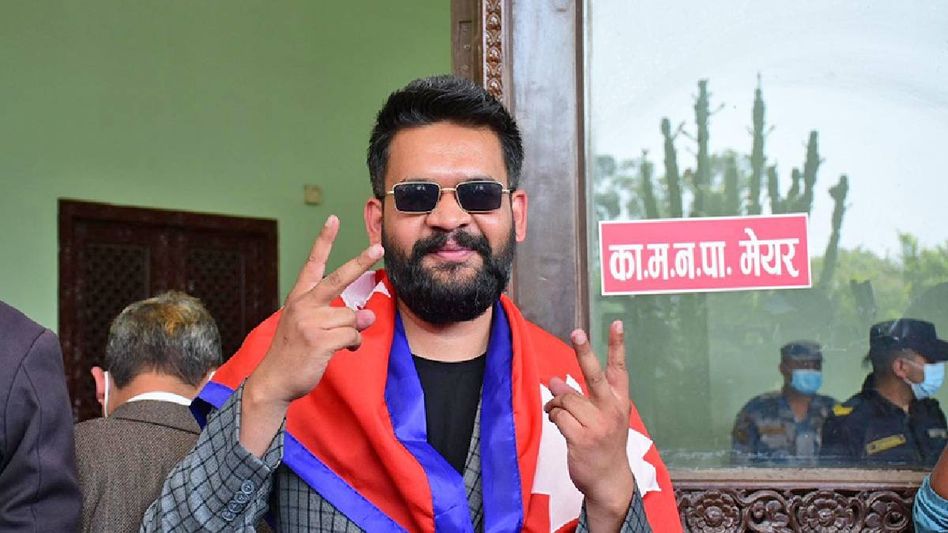
A 35-year-old former rapper who once channelled public anger through music may now be poised to lead the Himalayan nation. Balendra Shah, popularly known as “Balen”, has emerged as a surprise frontrunner for the post of Prime Minister in Nepal after early trends in the country’s general elections showed his party surging ahead, signalling what could become one of the most dramatic generational and political shifts in Nepal’s modern democratic history.

- Mar 07, 2026,
- Updated Mar 07, 2026, 6:38 PM IST

A 35-year-old former rapper who once channelled public anger through music may now be poised to lead the Himalayan nation. Balendra Shah, popularly known as “Balen”, has emerged as a surprise frontrunner for the post of Prime Minister in Nepal after early trends in the country’s general elections showed his party surging ahead, signalling what could become one of the most dramatic generational and political shifts in Nepal’s modern democratic history.
Shah, the former mayor of Kathmandu and once a vocal rap artist critiquing corruption and governance failures, launched his prime ministerial campaign with a symbolic and culturally resonant address in Janakpur, the capital of Madhesh Province and traditionally regarded as the birthplace of Goddess Sita. Beginning his speech with “Sarvapratham, Mata Janaki ke pranaam,” Shah chose to speak in Maithili, a language widely used across Nepal’s southern plains and India’s Mithila region, marking a rare departure from the hill-centric political traditions of the country.
As vote counting from Friday’s general elections continues, Shah’s party, the Rastriya Swatantra Party (RSP), is leading in more than 100 of the 275 seats in Nepal’s House of Representatives, according to early trends. Shah himself is reportedly maintaining a commanding lead in the Jhapa-5 constituency against veteran leader and former prime minister KP Sharma Oli of the Communist Party of Nepal (Unified Marxist–Leninist).
If these trends hold, Shah’s ascent could represent a profound break from Nepal’s entrenched political order. For decades, national leadership has largely been dominated by elites from hill-origin communities, particularly Brahmin and Kshatriya groups. Shah, however, traces his roots to the Madhesi community—people from Nepal’s southern Terai plains who share deep cultural and linguistic ties with neighbouring India.
Born on April 27, 1990, in Kathmandu’s Naradevi area, Shah’s family originally hails from Mahottari district in the Madhesh region before relocating to the capital. His rise has also revived debates about identity and representation in Nepal. The Madhesi population—nearly one-third of Nepal’s citizens—has long demanded greater political participation and equality, most prominently during the Madhesi movements that called for fair representation in governance and administration.
A Madhesi prime minister, political observers say, would therefore carry immense symbolic significance for a community that has historically felt marginalised within Nepal’s political establishment.
Shah’s political journey itself has been unconventional. Before entering public office, he gained popularity as a rapper performing under the name “Balen,” using his music to highlight corruption, urban decay and governance failures. His lyrics resonated strongly with Nepal’s younger generation.
In 2022, Shah shocked the country’s political establishment by winning the Kathmandu mayoral election as an independent candidate, defeating nominees from major parties including the Nepali Congress and the UML.
During his tenure as mayor, Shah focused on visible civic reforms, addressing Kathmandu’s chronic waste management crisis, clearing illegal encroachments on public land, improving traffic management and modernising pedestrian infrastructure. While many praised his assertive approach to governance, critics accused him of using heavy-handed tactics, particularly in demolishing illegal structures and relocating settlements along riverbanks.
Earlier this year, Shah resigned as mayor to formally enter national politics under the banner of the RSP after reaching a power-sharing understanding with party chief Rabi Lamichhane, who continues to lead the party while backing Shah as its prime ministerial candidate.
His campaign has centred on anti-corruption reforms, youth empowerment and strengthening Nepal’s federal structure—issues that have resonated strongly with Gen Z and millennial voters frustrated with decades of political instability and perceived corruption among traditional parties.
By beginning his campaign in Janakpur and delivering his first major address in Maithili, Shah also signalled a deliberate outreach to Madhesi voters and a broader message about inclusive national identity.
Should current electoral trends translate into parliamentary power, Nepal could soon witness a political moment unprecedented in its history, a millennial former rapper from the Madhesh community leading a new generation’s challenge to the country’s long-established political order.