
Dalai Lama unveils National Book Trust title on future of India’s forest governance
Dalai Lama launches a book focusing on sustainable forest governance in India. The book stresses community participation and reforms for balancing conservation with development


- Dec 05, 2025,
- Updated Dec 05, 2025, 2:20 PM IST

- Dalai Lama unveils book on sustainable forest management in India.
- Book emphasizes women's and communities' roles in forestry.
- Focus on balancing development with conservation needs.
A renewed call for stronger community-driven forest governance took centre stage as the Dalai Lama unveiled the National Book Trust’s latest publication, Forest Resources in India: Integrative Governance and Community Participation for Sustainable Future, at McLeod Ganj on Friday.
Authored by Sushil Kumar Singla, Rakesh B Sinha and Krishan Kumar Raina, the book examines how India can strengthen sustainable forest management at a time of rising pressure on natural resources. During the launch, the Dalai Lama signed a copy of the publication, while lead author Singla briefed him on its research findings and policy themes.
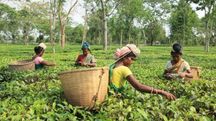
The authors argue that India’s forest future depends on governance models that actively involve women, tribal communities and local institutions, noting that traditional conservation practices remain relevant to modern environmental challenges. The work also highlights the need for States and Union Territories to share responsibility in balancing development demands with ecological protection.
A key focus of the book is the integration of agriculture, environment, climate change policy and tribal development — sectors the authors say cannot operate in isolation if India is to maintain long-term ecological stability.
The epilogue underscores India’s progress toward its national forest policy target of bringing one-third of the country under forest and tree cover, crediting constitutional provisions and regulatory frameworks for sustained improvements. It also warns that excessive caution in policymaking should not prevent reforms aimed at improving efficiency and enabling both “Ease of Doing Business” and “Ease of Living”.
Calling for regulatory simplification and wider public-private collaboration, the authors argue that forestry must expand its role in supporting livelihoods, strengthening rural self-sufficiency and contributing to national GDP.
MORE NEWS











Copyright©2026 Living Media India Limited. For reprint rights: Syndications Today
