Is India forgetting the Right to Freedom of Religion?
For decades, Christians in India have faced episodes of violence, humiliation, social boycott, churches being burned, prayers disrupted, and lives lost often followed by silence rather than outrage. That silence has not always meant acceptance; it has often meant restraint, faith, and the painful choice to endure rather than inflame.

- Feb 01, 2026,
- Updated Feb 01, 2026, 9:58 PM IST

A Christian pastor in Odisha brutally assaulted -Viral video circulating online, a man identified as a Hindu extremist is seen harassing apastor inside a church - Hindu nationalist groups vandalised Christmas decorations while chanting nationalist slogans, at a shopping mall in Chhattisgarh, India on December 24, 2025 - Indian Christians targeted – Why are attacks on Christians on the rise?
This is not about one incident. For decades, Christians in India have faced episodes of violence, humiliation, social boycott, churches being burned, prayers disrupted, and lives lost often followed by silence rather than outrage. That silence has not always meant acceptance; it has often meant restraint, faith, and the painful choice to endure rather than inflame. Many Christians have continued to believe in the Constitution even when it failed to protect them on the ground, choosing dignity over retaliation and peace over provocation. But the question that remains is uncomfortable: when a community is repeatedly targeted and yet expected to remain quiet to prove its patriotism.What does that say about our understanding of religious freedom? Silence should not be mistaken for consent, and endurance should not be used to justify injustice. A democracy cannot rely on the patience of its minorities to mask the erosion of their rights.
India’s Constitution guarantees the Right to Freedom of Religion under Articles 25–28. It promises every citizen the liberty to profess, practise, and propagate faith without fear. Yet, in everyday life, religion increasingly appears less like a personal choice and more like a site of anxiety, surveillance, and conflict.If the right still exists on paper, why does it feel so fragile in practice?
On 26 Januarythe nation celebrated Republic Day with parades, flags, patriotic songs, and social media posts expressing pride in the Constitution. But only weeks earlier Christmas decorations were vandalised, removed, and attacked. Churches were questioned, celebrations disrupted, and fear quietly normalised.Destroying Christmas decorations is not merely an attack on a festival. It raises a deeper question. Can a constitutional right be eroded not by law, but by silence and social approval?
What does it mean to celebrate the Constitution while ignoring its violations?
How many remember Article 25, which guarantees every individual the freedom to practise their faith? How many recognise that this freedom applies equally to Christians celebrating Christmas, Muslims offering prayers, Sikhs practising their traditions, and Hindus performing rituals? Republic Day is not merely a festival of symbolism. It marks the moment India chose to be governed by a Constitution built on liberty, equality, and freedom of religion. When these principles are applauded in speeches but denied in everyday life, is that patriotism or performance?
If one community’s celebration can be torn down without protest, whose freedom is truly secure?
|he Constitution does not protect only the faith of the majority. It protects everyone, especially minorities because that is the foundation of a democratic republic. When citizens cheer constitutional values on Republic Day but remain silent when religious symbols are vandalised, what does that silence signify? Forgetfulness? Fear? Or selective respect for rights?Is the Constitution being remembered in words but forgotten in action?
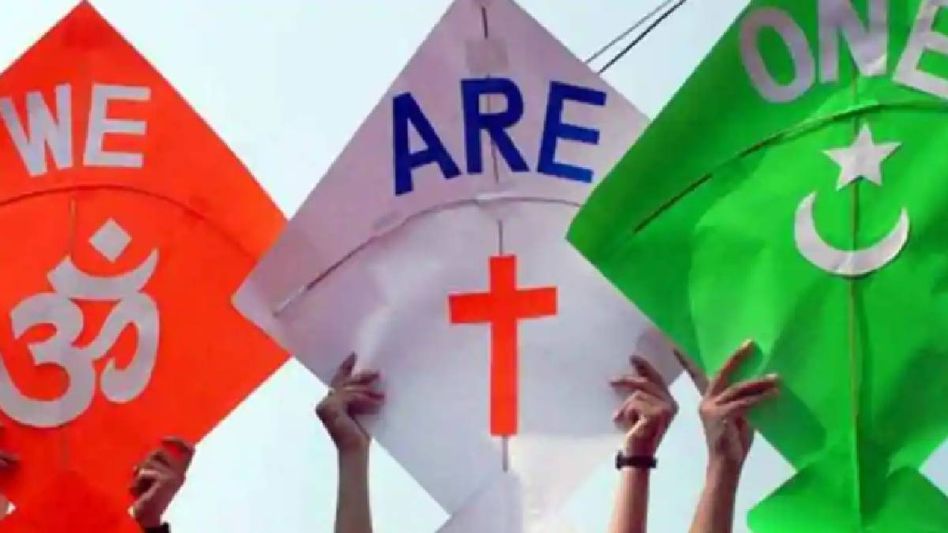
The tricolour does not represent one religion, one language, or one identity. It stands for a promise that India belongs equally to all who live in it. When any community is made to feel unwelcome in its faith, does that promise still hold?If the Constitution is reduced to a prop for one day in January and set aside for the rest of the year, are we celebrating the Republic or slowly hollowing it out?Do we honour constitutional rights only when they align with our beliefs?Because a republic does not survive on slogans alone. It survives on constitutional conscience the everyday choice to defend rights even when it is inconvenient.
When attacks on religious freedom are ignored, what message are we sending about the future of those freedoms?A right not defended is a right at risk. Freedom of religion, at its core, asks a simple question of every citizen.
Does faith in India still need permission?