Making of India’s razor blade legacy: Through a daughter’s eyes
A business empire may have been built on steel and strategy, but Ace of Blades opens with something far more fragile: a daughter’s memory of watching ambition take shape at home. What follows quietly asks a compelling question—how different does success look when it is remembered not by the market, but by family?

- Jan 19, 2026,
- Updated Jan 19, 2026, 9:11 AM IST

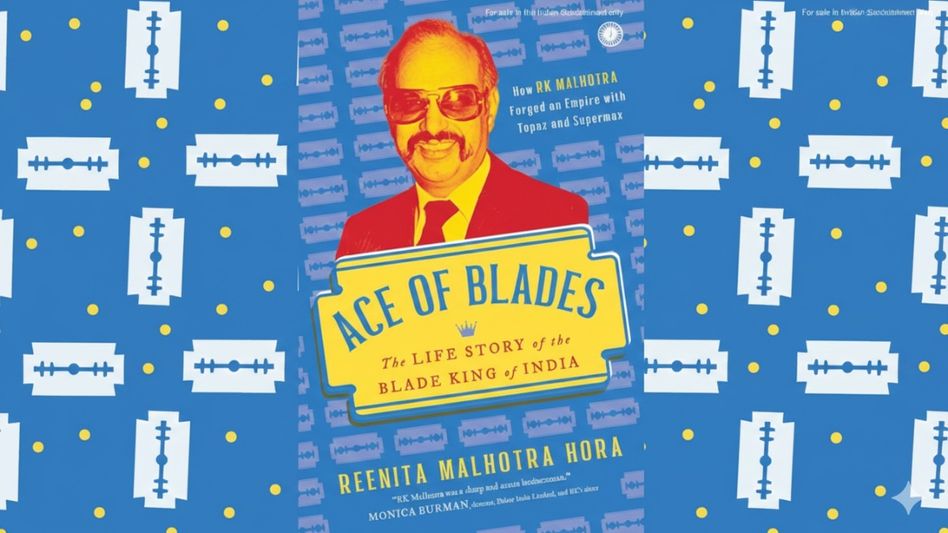
‘Ace of Blades’ by Reenita Malhotra Hora is not just a narration of success; it is a daughter’s honest and deeply personal account of her father’s firm resolve to transform mere ideas into a flourishing business.
As the author pens a detailed narrative of her father, Rajinder Kumar Malhotra — fondly known as RK, a celebrated business tycoon often called the “Father of India’s razor blade industry” and the force behind iconic brands like "Topaz" and "Supermax", the reader is offered a rare, intimate lens. What emerges is not just the portrait of a man driven to succeed, but also the reflection of a daughter’s observations — what she saw, felt, and understood as she watched her father build his legacy.
Interestingly, and quite unlike most books of this genre, the author does not begin by glorifying the protagonist or immediately highlighting the mission at the heart of the story. Despite being the daughter of the central figure, Reenita consciously refrains from singing laurels from the very beginning. Instead, she moves forward steadily, guiding the reader through the early years and allowing the narrative to unfold organically.
Even though the story is close-knit and engagingly presented, at times it feels as though the focus leans more towards the daughter than the man himself — RK. One might argue that many readers would pick up the book primarily to read about the man who achieved excellence in delivering quality razor blades and reshaped an entire industry.
That said, giving Reenita the benefit of doubt, the book — divided into three parts — progresses gradually, held together by an engrossing storyline and a series of anecdotes that, to a large extent, keep the reader invested.
For enthusiasts of business, startups, entrepreneurship, and biographies, 'Ace of Blades' proves to be a compelling read that manages to hold attention.
Beyond chronicling the rise of India’s razor blade industry, the book delves into layers of family dynamics. The author writes at length about her grandparents, her father, uncles, extended relatives, and the many complexities that naturally unfold within a family, along with the influential connections they shared.
Reenita Malhotra Hora also weaves in several personal opinions throughout the narrative. For instance, her reflections on Punjabi marriages and related cultural observations, which, from my perspective, hold little relevance in a book of this nature, slightly distract from the central theme.
They say frustration often precedes success, with failure walking closely beside it, especially in business. RK’s journey was no exception. He was one among many strugglers striving to succeed, a reality the book quietly but clearly conveys.
Hardships, after all, are an inseparable part of life, and stories that acknowledge them tend to resonate deeply. They inspire, motivate, and, in their own way, thrill the reader. For anyone seeking a narrative rooted in perseverance and resilience, 'Ace of Blades' makes for a worthy pick.
If you ask me, this book deserves at least one read. It is not monotonously narrated, as is often the case with books on business and businessmen, heavy with theory and timelines. Instead, it feels warm and accessible. Perhaps because it is told by a daughter, and perhaps because it is not just a success story, but a deeply personal account.
And really, who wouldn’t want to know more about the journey of the man lovingly remembered as the 'Father of India’s razor blade industry'?