This Assam Author Explores the Mystery of Divine Energy
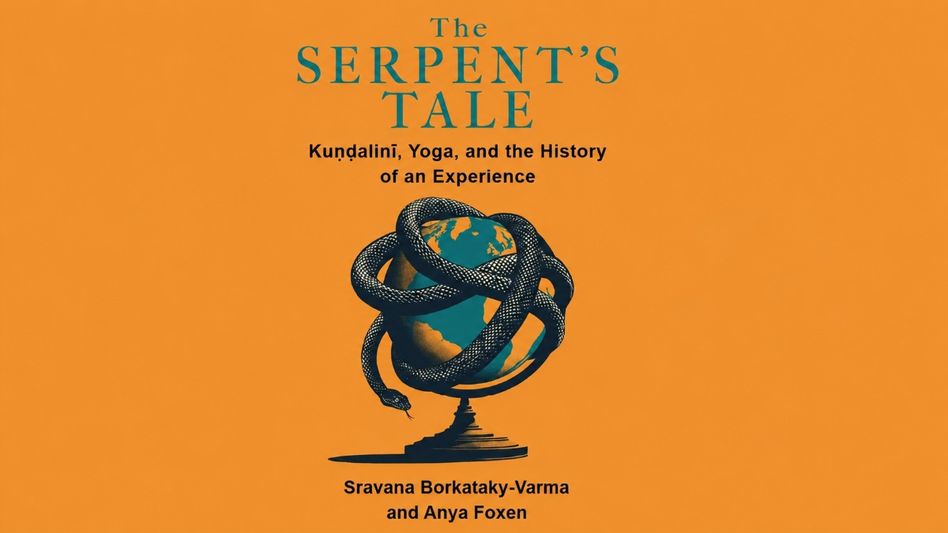
Sravana Borkataky-Varma and Anya Foxen's The Serpent's Tale traces Kundalini through Assam's living traditions and serpent symbolism. The book places a complex spiritual history within a modern global conversation without imposing judgment.

- Jun 10, 2026,
- Updated Jun 10, 2026, 2:13 PM IST

- The book links Kundalini's history with Assam's continuing spiritual practices
- Serpent imagery anchors the narrative through mythology, fear, reverence and belief
- Detailed references and Hindu anecdotes make the dense material richly layered
For a book rooted in the history of Kundalini, one of the most fascinating aspects of Sravana Borkataky-Varma and Anya Foxen's ‘The Serpent's Tale: Kundalini, Yoga, and the History of an Experience’ is its engagement with Assam and the living traditions that continue to shape the understanding of this divine feminine energy. While the book journeys through centuries of history, mythology, spirituality, and philosophy, Assam emerges as one of its most intriguing landscapes.
The authors tend to decipher Kundalini through the image of the serpent. As they write: "Most of the important snakes in South Asian culture, imagery, and lore can be identified with the Nāgas, a class of divine serpentine shape-shifters."
From there unfolds a vast body of information on snakes and the ways communities across the world – particularly across Asia – have perceived, revered, feared, and placed faith in them. What makes the discussion compelling is its attention to living traditions in the East, where Kundalini is not merely a historical concept but part of an evolving spiritual discourse.
A content warning (best mentioned now) immediately raises curiosity and hints at the complexity of the traditions being examined: "The tail end of this chapter addresses living traditions of Kuṇḍalinī practice in Assam and West Bengal, including explicitly sexual dimensions…"
Rich in pictorial descriptions, historical references, and detailed explanations, ‘The Serpent's Tale’ is an engaging read. It is, however, not for the generic fantasy or fiction lover. This is a serious and information-heavy work that boasts no indolence whatsoever. What makes it particularly rewarding are the anecdotes from Hindu mythology that accompany and enrich the discussion.
What attracted me most about this book is its ability to convey and explain. An interested reader opens a Pandora's box with every page. The authors consistently connect philosophy, mythology, history, and lived traditions in a manner that encourages deeper exploration.
What struck me as enigmatic is that the authors' thoroughly researched work may not make its way to every reader with equal ease. The terminology is complex, and someone reading purely for enjoyment rather than learning may find themselves struggling with a dictionary.
In my opinion, the book appeals at least a little more to a female audience, largely because Kundalini itself is explored as a feminine force. I also appreciated how highly the book speaks of the human body, encouraging readers to look inward and examine themselves with greater awareness.
This is undoubtedly a book for the intellectual and is undeniably complex. Consider this extract: “Raising Kuṇḍalinī (or Caṇḍalī) though the cakras in a visionary ascent through the layers of reality first emerged in the context of certain Śaiva and Buddhist tantric schools as a method of laya yoga, the yoga of dissolution, which involved dissolving—or, more literally, “reabsorbing”—the mind (cittalaya) into the unitary reality of Śiva."
The authors adopt a refreshingly no-nonsense approach. They do not merely celebrate the serpent's symbolism; they also acknowledge its contradictions. The book explains how the serpent is treated as divine and sacred by some, while others continue to associate it with fear and negativity.
Every aspect is examined through the lens of centuries of history, spirituality, sexuality, terrestrial elements, religious figures, and cultural traditions, with yoga often serving as a balancing force among them.
The work is not merely bold; it is encouraging. At times, it makes one want to look inward and explore dormant instincts and the possibility of awakening one's own Kundalini. Along the way, readers encounter figures such as Vivekananda, Ramakrishna, Aurobindo, Paramahansa Yogananda, Gopi Krishna, Amrit Desai and Osho.
The final chapter feels less like a conclusion and more like the end of a beginning. Perhaps no passage captures this better than the authors' own words: "We deliberated whether to include this material, but ultimately decided to do so for several key reasons… we have chosen to present the raw data to our readers without imposing value judgments upon our interlocutors’ words. And finally, we want to emphasize that this, too, is Kuṇḍalinī. This, too, is modern because it is happening now. This, too, is global because, although it is happening in a small temple town in West Bengal, women like Kamala Ma and Sundari Ma know that the world is much larger than their charnel grounds. They know what people say."
Perhaps this extract speaks for itself. And perhaps it is for the reader to decide whether Kundalini is something to be awakened – or simply understood.