This book takes a trek into Sikkim’s sinister side
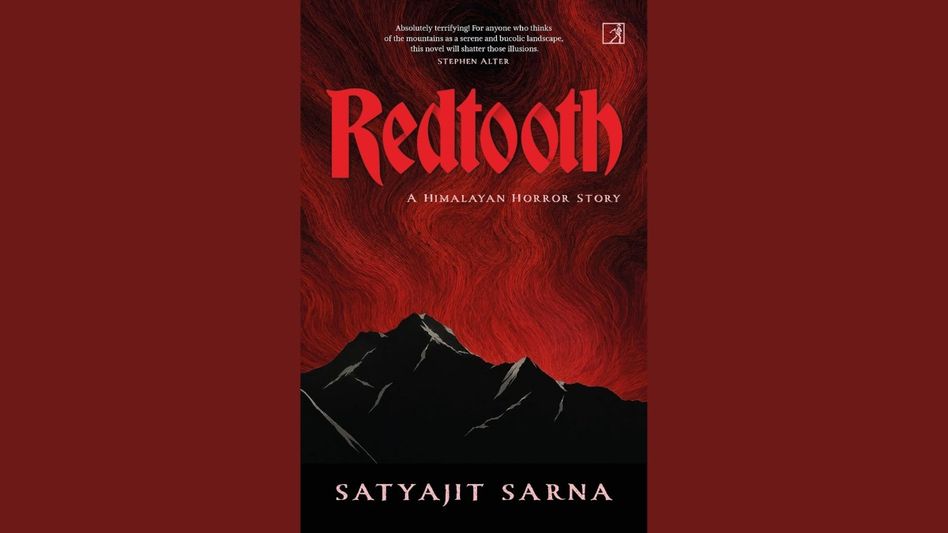
A group of trekkers confronts unsettling supernatural incidents in Satyajit Sarna’s Redtooth. The novel’s vivid imagery and regional folklore sustain suspense despite lengthy digressions.

- Nov 05, 2026,
- Updated Nov 05, 2026, 3:49 PM IST

- Sarna’s vivid imagery turns Himalayan landscapes into an immersive setting
- Lengthy character sketches repeatedly slow the narrative as tension gathers
- Trekkers’ humour and natural banter give their camaraderie convincing warmth
Ever read a book that makes you feel as though you are a part of the story? One of those thrillers that leave you with an eerie feeling and an almost unattainable desire to escape? Satyajit Sarna’s ‘Redtooth’ somehow manages to do just that. Now, I am no pro, but trust me when I say that I felt lost in the minds of the characters and heaved a sigh of relief when I finally turned the last page.
‘Redtooth: A Himalayan Horror Story’ is not exactly horrifying. I would describe it as a work of fiction with elements of a thriller, steeped in folklore and local beliefs. There is more to it than conventional horror, with references to mythical creatures, witchcraft and the supernatural.
Set in Sikkim, Sarna’s book opens with vignettes of the majestic Himalayas and some rather brilliant imagery that leaves you gawking. The emphasis, throughout, is on culture, traditions, local beliefs and folklore – aspects that remain central to ‘Redtooth’.
“We’re going to be alone on the mountain,” reads an early extract – an easy guess at what the author is getting at. Oh! We are talking about a group of trekkers, after all. Happening, isn't it?
Another extract beautifully upholds the author's gift for imagery: “The valley was velvety dark, like an abyss, and the lights of the houses on the far hillside glimmered like gems” – quite enough to draw you into the setting.
What did not quite work for me, however, was the author's insistence on taking his time with the characters. Sarna takes us back to the pandemic era and builds his narrative through elaborate introductions to each member of the trekking group, their personalities, past experiences and individual traits. While some of these details eventually find their place in the larger narrative, the sheer length of the descriptions surely tested my patience. At several points, I found myself waiting (impatiently) for the story to move forward.
That said, Sarna brings in a fair amount of humour, which, more or less, becomes the foundation of the trekkers' camaraderie. The chatter and banter within the group feel remarkably real, and their interactions lend the narrative a certain appeal. Yet, I kept waiting – frustratedly – for the horror to begin. It eventually does, but only in the latter half of the book. The unsettling incidents build up gradually, creating a sense of anguish among the hikers and, eventually, the readers.
Consider this extract: “Then his reflection turned its back on him. Suddenly, he could see the back of his own head, as if he somehow had stepped into the far side of a mirror. Kapil stepped back involuntarily…”
One thing I appreciated about the author’s approach was his attempt to make ‘Redtooth’ more than just another horror story. He also touches upon the deteriorating environmental conditions that have long been a concern in Sikkim. These elements lend the book a distinct regional character and make the setting more than just a picturesque backdrop for a trekking expedition.
However, there were moments when the author’s indulgence in elaborate descriptions became tedious. Just when the narrative begins to build a sense of dread, it takes a detour into a character's past or personal experiences, often leaving the horror hanging in the background. The interruptions can be irritating, particularly when you are waiting for the story to gather momentum.
What particularly ticked me off, though, was the introduction of politics and several other references that seemed rather misplaced. I mean – why the need for “‘Abh toh mandir banega…’”? I understand that he was trying to build a story, but certain diversions felt entirely unnecessary and did little to further the narrative.
Albeit the slow pace, the author does manage to keep the suspense alive through reasonably realistic situations and spine-chilling scenarios. I would certainly give him credit for writing an entertaining read, even if the narrative could have done with some restraint.
As a reviewer, I would give him credit for an entertaining read and, especially, for his brilliant imagery and evocative descriptions. As a reader, however, I would definitely question the need for such lengthy character sketches and the many digressions that keep the story from progressing at a reasonable pace.
But might I tell you that this thriller does not have a happy ending? It is sure to wreck you, and if you are up for that, definitely pick up ‘Redtooth’.