Between bullets and barricades in Manipur: How we survived a crossfire
The morning of April 14 did not begin with chaos to be honest. It began with silence and it was calm...the kind that stays with you after witnessing pain too close to ignore. A day earlier, inside a hospital room, we had spoken to Oinam Binita, as I mentioned in Chapter One. Her words did not leave us. They stayed in our minds through the night and are still with me as I write this second chapter. It was not just an interview; it felt like something heavier, something that does not fade easily. Even without saying much, both of us understood the weight of what we had seen and heard. But by morning, we were back on our feet again, because in this work, you don’t get much time to pause. The story had to continue, and the ground never waits.

- May 02, 2026,
- Updated May 02, 2026, 11:03 PM IST

In Imphal: Reporting Amid Uneasy Calm
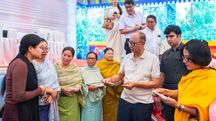
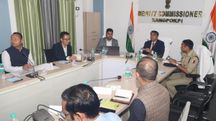
We met Keny at the DIPR office in the heart of Imphal. The city appeared functional on the surface—vehicles moving, some offices open, fragments of routine intact. But beneath that surface was a quiet tension, a sense that normalcy here was negotiated, not natural. We moved through relief camps, listening to stories that felt painfully repetitive displacement, uncertainty, waiting without timelines. Children played in tight spaces, adults spoke in measured tones, and everywhere there was a question no one asked out loud: how long will this last?
We were working on a story that we will reveal in our third chapter, and to do so, we had to visit a few relief camps. So, we began our journey.
A State Divided: The Line You Cannot Cross
For that story, we also had to go to Churachandpur.
When it was time to move, the invisible boundary became clear. Keny could not cross. The divide between the valley and the hills is no longer just geographic, it is much wider than that. She stayed back. Rahman da didn’t. And that difference would soon become important.
The Trigger: Seizure, Rumour and Escalation
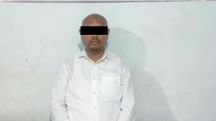
As we moved towards Churachandpur, events elsewhere were already getting out of control. At Tulihal Airport, a joint team of the Central Industrial Security Force, Manipur Police, and the Assam Rifles carried out an operation. They arrested a man and found more than 6.7 kilograms of suspected brown sugar hidden in his luggage.
At first, it looked like a normal police case. But during questioning, the man gave some information about hidden arms in the Kwakta area of Bishnupur district. Based on this, security forces quickly planned another operation to search that area.
This is where things started going wrong.
In a place like Manipur, where the internet is often shut down, information does not move clearly. It breaks, changes, and spreads as rumours. Soon, people started hearing different versions of the story. Some said a Kuki person was inside the security vehicle. Some said the forces were not who they claimed to be.
No one knew the truth for sure.But the rumours spread fast. And in the absence of clear information, suspicion took over.
Bishnupur Ignites, Again...
By early afternoon, near Thinungel in Bishnupur district, the situation started to change quickly. A group of local residents gathered on the road after rumours spread about the movement of the security forces. People were confused and suspicious, especially because some personnel were in civil dress.
At first, the crowd only tried to stop the vehicles and ask questions. But the tension kept rising. Within minutes, the gathering turned into a blockade. The convoy was surrounded, and movement was stopped completely.
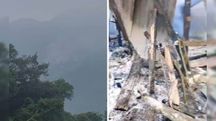
Then things got out of control. Some people in the crowd turned aggressive. Two vehicles linked to the security forces were damaged and later set on fire. There were also attempts to stop and detain the personnel. The situation became chaotic, with shouting, panic, and no clear control.
What was supposed to be a follow-up operation had now turned into a violent clash.
A buffer zone had suddenly become a flashpoint.
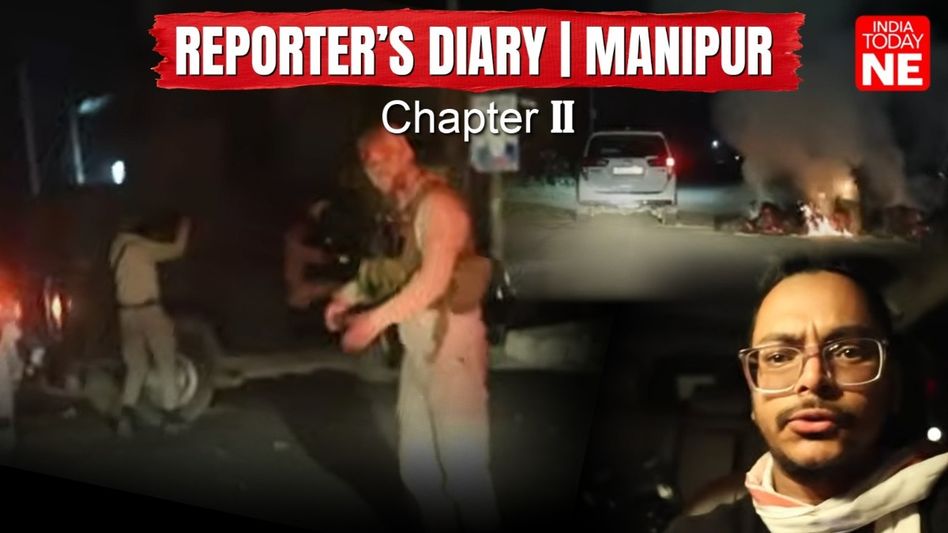
Tap to watch our ground report:
Churachandpur: Stories Cut Short
By the time we reached Churachandpur in the evening, things there were relatively calm. But the tension was still present, as news from Bishnupur district had already started to spread. We continued our work, moving through relief camps, speaking to people and documenting their stories. However, as the situation in Bishnupur worsened—with reports of violence and clashes—the updates reached Churachandpur as well. Locals became concerned and advised us to leave as soon as possible. At that point, continuing our shoot no longer felt safe. We decided to wrap up quickly and head back. But the challenge was clear—there was only one way to return to Imphal, and it passed through Bishnupur, the very area where the situation was now out of control.
The Return Route: Choosing Risk
As we began our return, the change in the environment was clear. The roads that felt normal earlier now looked tense and uncertain. We started seeing more and more security forces deployed along the route, while civilian movement had almost disappeared. Shops were shut, and very few vehicles were on the road. The air felt heavy, carrying a sharp smell of something burnt mixed with chemical irritants, likely from tear gas. It was no longer just a journey back—it felt like we were slowly moving closer to something serious unfolding ahead.
Warning Signs: Edge of the Conflict Zone
We were stopped by security forces, and this time the warning was very clear. They told us that the situation ahead was still volatile and that if we chose to go forward, it would be completely at our own risk. They also mentioned that they could not guarantee our safety beyond that point. As we waited there, we could hear the sounds from a distance—occasional gunfire and the dull bursts of tear gas shells being fired. It made the situation feel very real. For the first time that day, we paused and thought about whether we should continue. But Rahman da stayed calm. He spoke to the personnel, looked for possible alternative routes, and kept reassuring us that we would manage. After some time, the forces allowed us to move ahead, but the warning they gave us stayed in our minds as we moved forward.
Caught in Crossfire
What followed was not gradual—it happened suddenly. After the police near the station in Bishnupur district allowed us to move ahead at our own risk, we decided to go forward. One moment we were moving slowly, and the next, we were right inside the conflict zone. The sounds that we had been hearing from a distance were now all around us—gunshots, tear gas shells, and people shouting. Tear gas filled the air and started entering our vehicle, making our eyes burn and breathing difficult. We kept the windows slightly down so people could see our press tag, but that also meant the gas affected us more.
At one point, something passed very close to my ear, fast and sharp. I could feel it, but I could not see it. I still don’t know whether it was a bullet or a rubber pellet. Abhijit da immediately ducked under the seat. I was recording with one hand, almost automatically, and with the other hand I was trying to calm myself. It wasn’t courage, it just felt like there was no time to think. In that moment, we were no longer just covering the story. We were inside it, trying to get out safely.
Checkpoints and Suspicion
Multiple checkpoints followed, and each one was tense. We were stopped again and again, and every time we had to clearly prove who we were. In a situation like this, where there was no clear information and a lot of fear, every unknown vehicle was treated with suspicion. People were alert, and even a small mistake could have made things worse. Rahman da kept the window down and kept telling everyone that we were from the press. We also showed our press tags so that people could see it clearly. This simple step helped us slowly gain their trust. The checking was careful, sometimes delayed, and the questions were repeated. But one by one, after making sure of our identity, the barricades were opened, and we were allowed to move forward.
Back to Imphal: The Aftermath
When we finally reached Imphal, the sense of relief was overshadowed by realization. The vehicle bore visible signs of what we had just passed through—marks, residue, subtle but undeniable damage. It was a physical record of the route we had taken. For us, it had been the most intense and frightening experience of our lives. But what stayed longer was the understanding that for many people in Manipur, this was not an exception. It was part of a lived reality.
That is the unsettling truth. In regions marked by prolonged conflict, the extraordinary gradually becomes routine. Risk is calculated into daily movement. Uncertainty becomes a constant. And survival becomes an instinct rather than an outcome. As we processed what we had witnessed and endured, one thought remained unavoidable—what we experienced as a moment of crisis is, for many here, simply another day.
With Abhijit Laskar, Hrijoy Das Kanungo, filing from Guwahati