CADA demands rollback of liquor legalisation in Manipur after spurious liquor deaths
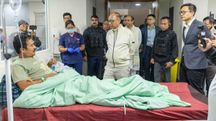
The Coalition Against Drugs and Alcohol (CADA) has demanded that the Manipur government roll back its decision to legalise liquor in selected areas of the state following the deaths of at least 15 people and the hospitalisation of more than 400 others after they allegedly consumed spurious liquor in Chakpikarong in Chandel district.
- Nov 21, 2026,
- Updated Nov 21, 2026, 5:40 PM IST

The Coalition Against Drugs and Alcohol (CADA) has demanded that the Manipur government roll back its decision to legalise liquor in selected areas of the state following the deaths of at least 15 people and the hospitalisation of more than 400 others after they allegedly consumed spurious liquor in Chakpikarong in Chandel district.
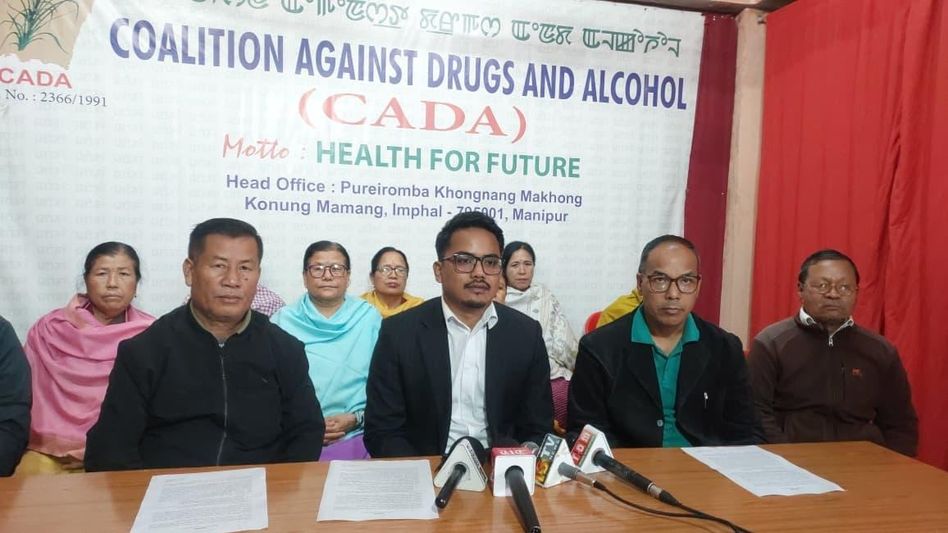
Addressing a press conference at its office, CADA Secretary General T. Geetchandra Meitei said the incident, which reportedly began on November 15, had claimed at least 15 lives, while more than 400 people were undergoing treatment at various hospitals, including Shija, Babina, RIMS and JNIMS.
Expressing concern over the incident, Geetchandra said the deaths and hospitalisations had raised serious questions about the state's liquor policy and the safeguards in place to prevent the sale and consumption of unsafe alcohol. He urged the government to reconsider its decision to lift prohibition in selected areas and restore a complete ban across Manipur.
Recalling the history of the anti-liquor movement in the state, Geetchandra said women-led campaigns against alcohol consumption and its adverse social impact began in the 1970s. The movement eventually led to the enactment of the Manipur Liquor Prohibition Act in 1991. However, the Act was amended in 2002 to allow the government to lift prohibition in certain areas.
He said the state government decided on December 6, 2023, to lift prohibition in selected areas as part of its move towards legalising liquor.
According to Geetchandra, the government had cited several reasons for the policy shift, including an estimated annual revenue generation of Rs 600 crore, regulation of liquor sales through licensed outlets, reduction in health risks associated with illicit liquor and the creation of employment opportunities for unemployed youth.
However, he questioned whether the objectives cited by the government had been achieved and said the latest incident had renewed concerns over the potential consequences of increased liquor availability.
Geetchandra also said CADA had earlier sought a white paper from the government detailing the implications of the proposed policy before proceeding with liquor legalisation. However, the demand remained unaddressed, he alleged.
Referring to a similar incident at Oinam Sawombung in 2017, in which five people died and more than 70 others were hospitalised after consuming liquor, he said the Chakpikarong incident was not the first such tragedy in the state.
CADA further expressed concern over the growing number of liquor outlets and businesses associated with the trade, arguing that increased availability could contribute to higher alcohol consumption.
Questioning the government's preventive and regulatory mechanisms, Geetchandra said enforcement measures initiated after the Chakpikarong incident would not be sufficient unless a comprehensive system was put in place to prevent the sale and distribution of adulterated liquor.
The organisation has urged the state government to review its liquor legalisation policy and amend the Manipur Liquor Prohibition Act, 1991, to reinstate a complete prohibition on liquor across the state.
Geetchandra maintained that public health and social welfare must take precedence over revenue generation, calling on the government to reassess the long-term implications of its liquor policy.