Congress urges President Murmu to protect Assam’s downstream interests over Upper Siang project
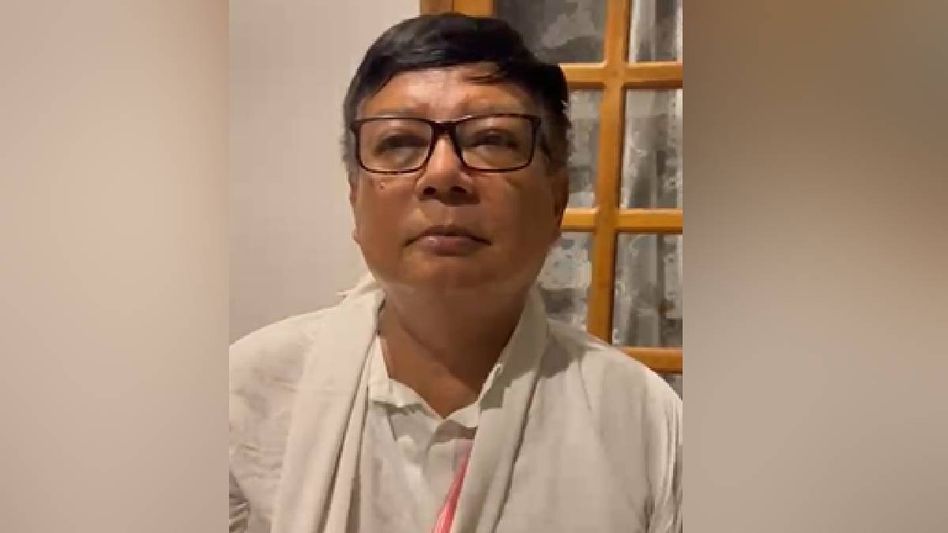
Former Assam Leader of Opposition and former Congress MLA Debabrata Saikia has approached President Droupadi Murmu, seeking intervention to safeguard Assam's downstream interests, public safety and ecological security in connection with the proposed Siang Upper Multipurpose Project (SUMP) in Arunachal Pradesh.

- Sep 30, 2026,
- Updated Sep 30, 2026, 7:01 PM IST

Former Assam Leader of Opposition and former Congress MLA Debabrata Saikia has approached President Droupadi Murmu, seeking intervention to safeguard Assam's downstream interests, public safety and ecological security in connection with the proposed Siang Upper Multipurpose Project (SUMP) in Arunachal Pradesh.
In a six-page representation dated September 30, Saikia urged the President to seek detailed reports from the governments of Assam and Arunachal Pradesh and ensure that Assam's concerns are formally examined before any irreversible decision is taken on the proposed project.
The Siang flows through Arunachal Pradesh before entering Assam and becoming part of the Brahmaputra river system. Saikia argued that a project involving large-scale storage and regulation of the river's waters should therefore be assessed from the perspective of the entire downstream basin, particularly Assam.
The representation noted that the Upper Siang project remains at the preliminary feasibility stage. NHPC's annual report states that the Ministry of Jal Shakti entrusted NHPC with preparing the project's Preliminary Feasibility Report (PFR) and that alternatives at Uggeng, Dite Dime and Parong were examined.
Saikia also pointed to ongoing exploratory work linked to the proposed project. NHPC issued tenders in July 2026 for 380 metres of exploratory drilling at both the Parong and Uggeng dam axes.
Against this backdrop, Saikia has sought a comprehensive Assam-specific downstream impact assessment, covering possible effects on flood peaks, river discharge, sediment movement, erosion, river morphology, wetlands, fisheries, agriculture, drinking-water sources, navigation, biodiversity and livelihoods.
He has also called for detailed dam-break and extreme-event modelling, including scenarios involving extreme rainfall, landslides, earthquakes, cascading infrastructure failures and emergency reservoir releases. He urged that district-wise inundation maps for potentially affected areas in Assam be made available to the state government, district administrations and the public.
The former Congress leader further sought independent scrutiny of the project's geological and seismic safety, including assessment of reservoir-induced seismicity and the interaction between earthquakes, landslides and reservoir conditions.
Another key demand is a cumulative basin-level assessment examining the combined impact of existing, under-construction and proposed projects in the wider Siang-Brahmaputra basin.
Saikia also questioned whether the Assam government has been formally consulted on the project and whether it has issued any consent, concurrence, no-objection certificate or other communication regarding the proposal. He called for relevant correspondence and technical submissions to be placed in the public domain, subject to legitimate confidentiality requirements.
The representation seeks meaningful participation of downstream communities, including farmers, fishermen, riverine communities, experts from Assam's academic and technical institutions and civil-society organisations.
Saikia has also proposed a real-time information-sharing mechanism under which Assam would receive data on rainfall, upstream discharge, reservoir levels, inflows, outflows and proposed releases. He called for an early-warning system extending from the project area to vulnerable downstream districts.
Importantly, Saikia clarified that his representation should not be viewed as opposition to development, renewable energy or infrastructure in Arunachal Pradesh.
His argument, he said, is that projects with potential interstate consequences should proceed only after adequate scientific scrutiny, transparency, consultation and disaster preparedness.
“The Brahmaputra is Assam's lifeline,” Saikia said in the representation, stressing that decisions capable of materially altering the river system could have consequences extending beyond the tenure of any government.
He has urged the President to take up the matter with the Ministry of Jal Shakti, Ministry of Environment, Forest and Climate Change, Central Water Commission, National Dam Safety Authority and National Disaster Management Authority, among other competent authorities.
His representation comes as Arunachal Pradesh Chief Minister Pema Khandu has said the government is not rushing the Siang project beyond its current feasibility stage and that the immediate focus remains on completing the PFR and assessing the project's technical viability.