From Ziro to Manipur, indigenous knowledge in Northeast needs scientific backing: NITI Aayog member
Joram Aniya said in Imphal that indigenous knowledge systems in the Northeast need scientific validation and support. She said the aim should be to preserve useful traditional practices by making them workable for future generations.

- Sep 28, 2026,
- Updated Sep 28, 2026, 2:26 PM IST

- Younger people leaving villages are making labour-intensive traditional farming harder
- Aniya cited Ziro's Apatani model combining paddy, fish farming and millet
- She said biotechnology could help curb erosion and conserve soil
Traditional knowledge systems are gradually disappearing as younger generations move away from traditional livelihoods, and modern science must find ways to adapt and sustain practices that remain relevant, NITI Aayog member Joram Aniya said in Imphal on Monday.
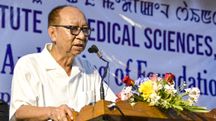
Speaking at a lecture on indigenous knowledge systems organised by the Institute of Bioresources and Sustainable Development (IBSD) at Takyel, Aniya said traditional practices should not simply be preserved as cultural heritage but studied and improved using scientific methods.
She said communities had developed an understanding of agriculture and natural resources through generations of observing their surroundings. In villages, changes such as the flowering of plants, appearance of fruits and shifts in weather were traditionally used to determine agricultural cycles.
“Such knowledge has been accumulated through generations,” Aniya said, stressing that the challenge was to prevent it from being lost as lifestyles change.
She cited the Apatani agricultural system of Ziro in Arunachal Pradesh, where paddy cultivation is combined with fish farming and crops such as millet are grown along field bunds. According to Aniya, the system illustrates how agriculture, biodiversity and traditional practices can function together.
But she said maintaining such systems is becoming increasingly difficult as younger people leave villages for education and employment elsewhere. The labour required to maintain agricultural structures, including field bunds, is also a concern.
Aniya called for scientific and technological interventions to address these challenges without dismantling the traditional systems themselves. Biotechnology, she said, could potentially be used to reduce soil erosion and improve soil and water conservation while retaining existing biodiversity.
“The objective should be to support the traditional system rather than replace it,” she said.
She also pointed to traditional community-based systems for regulating hunting and managing natural resources, saying these practices could offer lessons for biodiversity conservation.
Aniya said indigenous knowledge should be tested and documented through modern scientific research rather than being dismissed as folklore. At the same time, she said scientists should take into account knowledge passed down through generations when developing solutions for local communities.
She linked the issue to the Viksit Bharat 2047 goal, asking researchers and scientific institutions to consider how traditional knowledge and biodiversity could be preserved while making such systems relevant to future generations.
BRIC-IBSD director (additional charge) Nanaocha Sharma said the institute was working on the conservation and sustainable use of bioresources in the Northeast. He said the institute had filed for GI tags for two varieties of black rice from Manipur.
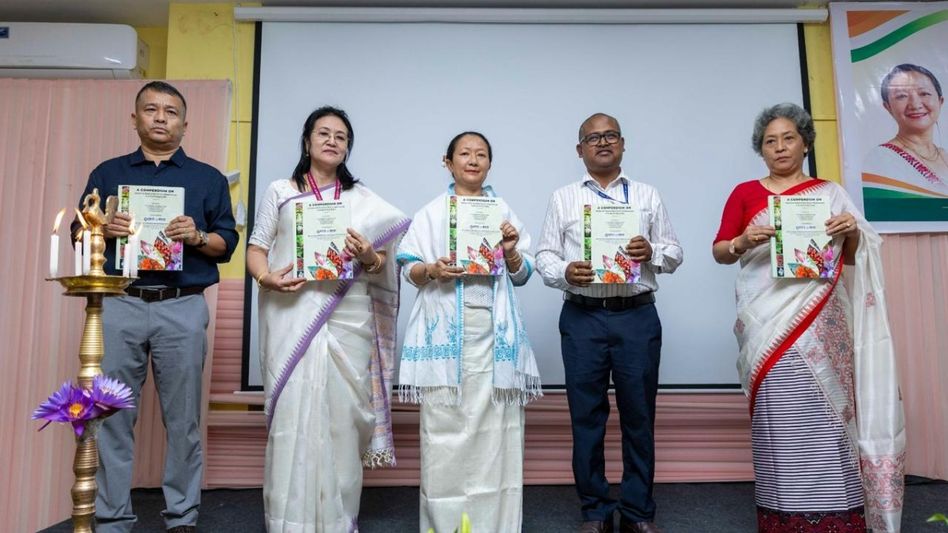
The lecture was also followed by the release of a compendium on medicinal plants belonging to the Zingiberaceae family found in Northeast India.