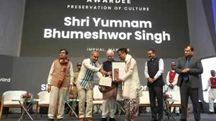
‘How can we be non-indigenous?’: Kuki-Zo forum seeks constitutional solution to Manipur crisis
The question of identity, historical recognition and political rights of the Kuki-Zo community took centre stage on November 16, with representatives and experts calling for constitutional safeguards, civilian protection and a political solution to the crisis in Manipur.

- Nov 16, 2026,
- Updated Nov 16, 2026, 9:47 PM IST

The question of identity, historical recognition and political rights of the Kuki-Zo community took centre stage on November 16, with representatives and experts calling for constitutional safeguards, civilian protection and a political solution to the crisis in Manipur.
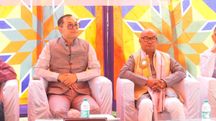
The demand for a separate administration, allegations of marginalisation and the plight of people displaced by ethnic violence featured prominently at a gathering organised by the Kuki-Zo Women's Forum, Delhi and NCR, at the Constitution Club in New Delhi on the occasion of Janjatiya Gaurav Divas.
Held under the theme "Honour the War. Recognise the People. Deliver the Solution", the event brought together speakers from academia, history, law and the Kuki political movement.
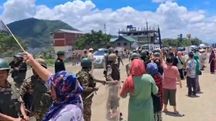
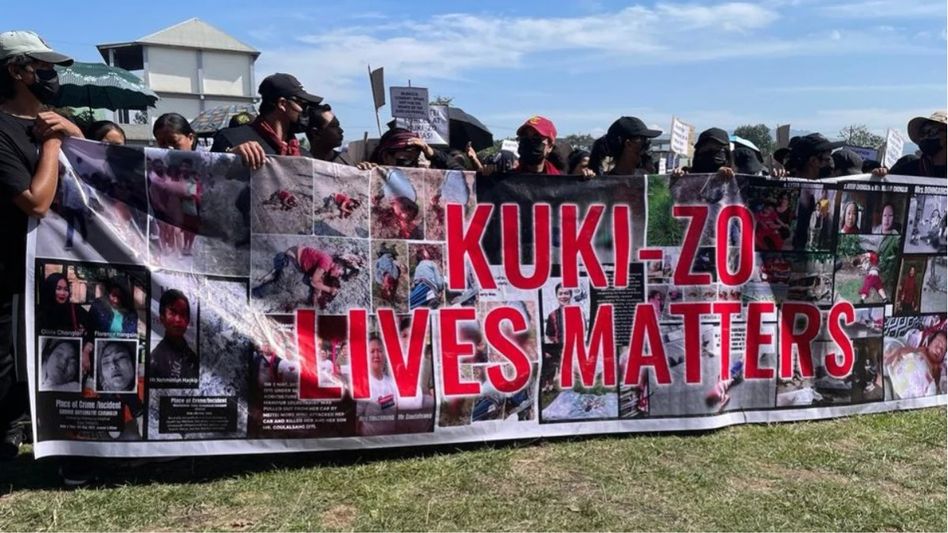
Prof Prasenjit Biswas of North-Eastern Hill University (NEHU) alleged that the Kuki-Zo community had faced repeated attacks, displacement and human rights violations since ethnic violence broke out in Manipur in May 2023.
He claimed that civilians had been subjected to sexual assault, physical torture and other forms of violence, and alleged that the narrative surrounding the conflict had been reversed, with victims being portrayed as perpetrators.
Biswas also alleged that the community had been politically and economically marginalised, pointing to its representation in the Manipur Assembly and inadequate infrastructure in the hill areas, including roads, healthcare and educational facilities.
Making a case for a constitutional arrangement, he proposed the use of Articles 239A and 244A of the Constitution, along with the Sixth Schedule, to address demands for autonomy in the hill areas without breaking up Manipur.
He suggested that a separate administrative arrangement could be considered for Kuki-Zo-inhabited areas while safeguarding the interests of other communities. He also called for constitutionally protected rights over natural resources, including forests, rivers and minerals.
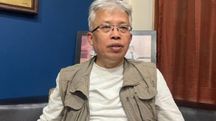
Robert Lunkhopao Haokip, a Harvard research fellow, spoke about the historical contributions of the Kuki-Zo people, including their association with the Indian National Army (INA), and called for recognition of their role in the country's freedom struggle.
Advocate Vishwajeet highlighted the humanitarian consequences of the conflict, particularly its impact on women and children. He stressed the need for civilian protection, accountability for violations and dignity for displaced people.
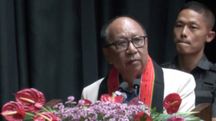
Seilen Haokip, chairman of the Kuki National Army (KNA) and spokesperson of the Kuki National Organisation (KNO), said the demand for a separate administration was aimed at securing the community's socio-political and economic rights within the Constitution and did not imply separation from India.
He said political discussions with the Centre on the demand were continuing, with issues concerning land, forests and natural resources being taken up, but no conclusion had been reached.
Raising the question of the community's indigenous identity, Haokip asked, "How can we be non-indigenous?" He argued that the Kuki-Zo people had a longstanding presence in the region and pointed to their historical contributions, including participation in India's freedom struggle.
On the Suspension of Operations (SoO) agreement with Kuki insurgent groups, Haokip told PTI that it had not been formally extended since September 4, but the arrangement continued on the ground.
"Maybe it is not the right time for the Centre to talk about the extension of the SoO pact and that is why it is keeping it in abeyance," he said, referring to the Manipur Assembly elections due next year.
The SoO pact is a tripartite arrangement involving the Centre, the Manipur government and Kuki militant groups operating under two umbrella organisations — the KNO and the United People's Front (UPF). First signed in 2008, it provides for suspension of hostilities, with armed cadres required to stay in designated camps and follow agreed ground rules.
Explaining the arrangement, Haokip said it required security forces and armed groups not to fire at each other, allowing political dialogue to continue.
"Whether the SoO is formally extended or not, the reality continues on the ground," he said.