
How Manipur can contribute to achieving the target of ‘Viksit Bharat’ through the sports sector
As the nation gears up to become a “Viksit Bharat” by 2047, with increased focus on the entrepreneurial sector, Manipur, a state considered a powerhouse of sports, can make a significant contribution towards achieving the goal of a developed economy through sports. For this, there is a need to strengthen and improve sports infrastructure in the state.
Advertisement

Phurailatpam Keny Devi
- Feb 04, 2026,
- Updated Feb 04, 2026, 8:03 PM IST
Story highlights
- Manipur excels in sports despite infrastructure challenges.
- Leishangthem Ibomcha Singh has coached over 1,700 boxers.
- Sports indirectly boost Manipur's economy significantly.
As the nation gears up to become a “Viksit Bharat” by 2047, with increased focus on the entrepreneurial sector, Manipur, a state considered a powerhouse of sports, can make a significant contribution towards achieving the goal of a developed economy through sports. For this, there is a need to strengthen and improve sports infrastructure in the state.
Manipur, an Indian state with a small population, reels under the issue of a high unemployment rate. Seeking a government job is often the only option due to the absence of well-established private companies and industries. Nevertheless, many youths have taken initiatives in promoting micro, small and medium enterprises, taking responsibility to make Manipur a self-reliant state to some extent. Yet, sports can also emerge as a thrust area in upscaling the state’s economy.
The sports infrastructure available in the state appears obsolete and lacks many basic amenities. The absence of an adequate grassroots support system has resulted in many potential players being unable to showcase their talents. Despite all these challenges, Manipur’s contribution to Indian sports has been exceptional, clearly reflected in the number of awards and Olympic medals won by sportspersons from the state.
According to information gathered from the Directorate of Youth Affairs and Sports, Government of Manipur, the state has produced three Olympic medallists out of 19 athletes who have participated so far. Among the awards, Manipur has one Dronacharya Awardee, 23 Arjuna Awardees, two Tenzing Norgay National Adventure Awardees, one Major Dhyan Chand Khel Ratna Awardee, three Khel Ratna Awardees, five Padma Shri Awardees, one Padma Bhushan Awardee and one Padma Vibhushan Awardee.
“The performance shown by Manipur in the sports arena while the state is struggling with poor infrastructure and services is remarkable. Manipur is really playing a pivotal role in glorifying India at the international level through sports, even though it is a very small state,” said the only Dronacharya Awardee of Manipur, Leishangthem Ibomcha Singh.
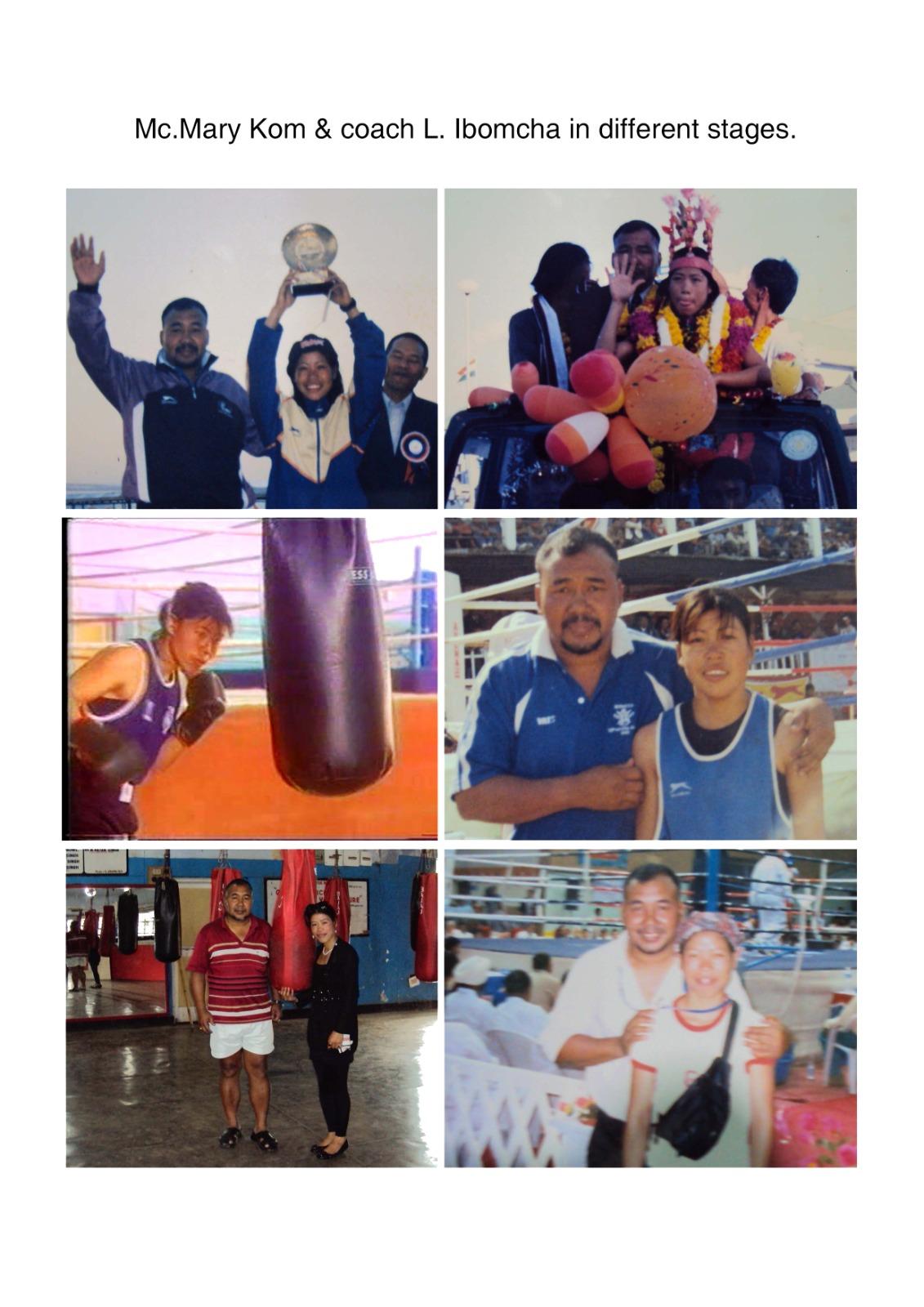
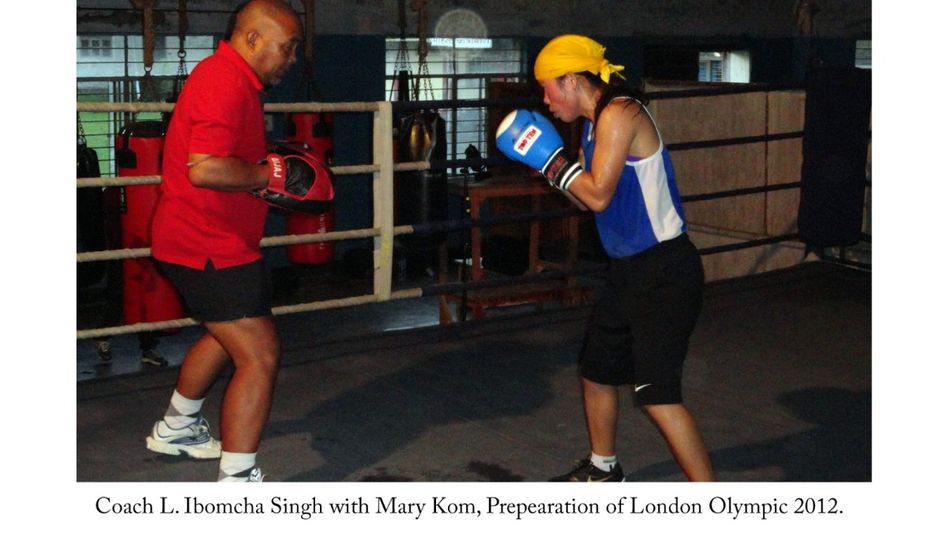
Leishangthem Ibomcha Singh, originally from Sugnu in Thoubal district and now settled at Thongju Ningombam Leirak in Imphal West, is one such sports personality from Manipur who exemplifies the state’s immense sporting potential.
Ibomcha started playing boxing at the age of 12 in 1972 as a hobby, using old gloves borrowed from local seniors who worked in the Indian Army. He later joined the Indian Army in 1978 but quit the service in 1980 with a strong determination to become an international player. His short stint in the Army provided him with basic boxing training. Without any professional coach, he developed expertise in boxing through self-learning.
Through perseverance, dedication and commitment, he later became a renowned national boxing coach and trained more than 1,700 boxers, of whom 58 became international boxers, including MC Mary Kom, Laishram Sarita Devi, Ngangom Dingko Singh, S Suresh Singh, M Suranjoy Singh and others.
Ibomcha shared that the people of Manipur, both hill and valley, have inherited a fighting spirit and sporting skills. Channelling and harnessing this spirit from an early age through proper support and guidance would not only help in producing players but also in building a better society.
“I started providing free coaching in 1980 in collaboration with the Manipur Amateur Boxing Association. At that time, there were no players and no adequate infrastructure. However, through continuous mobilisation and free training by travelling from place to place, the scenario improved within a year, and the first state-level boxing championship was held from October 25 to October 29, 1981,” he recalled, highlighting how the sports movement in Manipur began from scratch and went on to make the nation proud.
He further said that before 2000, there was no proper sports infrastructure in Manipur. Despite this, many youths continued to aspire to become players. Infrastructure development began when Manipur hosted the National Games in 1999, but since then, the facilities have not been upgraded significantly.
“Manipur has contributed immensely in bringing name and fame to the country through sports despite outdated infrastructure and inadequate facilities. Many developed states have invested huge amounts in sports development through both government and private initiatives. If emphasis is given to developing sports infrastructure and providing grassroots support systems, the state can bring more prosperity,” he said.
Ibomcha noted that earlier, people hesitated to opt for sports as a career, considering it to have limited scope. However, this perception has changed over time with the rising momentum of the sports movement. The government has started providing jobs based on medals won, many players have become coaches in different states, and others run their own academies. Above all, even if a player does not win medals or awards, they at least become disciplined individuals with good health, forming the backbone of a developed society.
Manipur is currently facing the brunt of drug abuse. The presence of a strong sporting culture can help save many youths from this menace, observed Ibomcha, who is now 65 years old. Though he has entered senior citizenship, his spirit of shaping and guiding the youth remains high, and he continues to train children in his locality.
Director of Youth Affairs and Sports (YAS), Dr Mayengbam Veto Singh, said that the contribution of sports to Manipur’s economy is not directly quantifiable, but it indirectly boosts it significantly.
Explaining how sports contribute to the state economy, he said that at present, as many as 45 players from Manipur are playing in the Indian Super League for different clubs. Many players from various disciplines are hired as national and international coaches at academies across the country. The remittances they earn contribute to the state economy. Promoting sports also helps in building a healthy society, thereby reducing healthcare expenditure. Above all, sports help develop a disciplined society.
Veto said that considering the infrastructure and facilities available in Manipur, players are performing exceptionally well. India has a total of 41 Olympic medallists, of whom four are from the Northeast, and three are from Manipur. Additionally, Manipur has produced 19 Olympic participants so far, which clearly shows the state’s sporting potential.
“Considering its small population, Manipur winning three Olympic medals is a remarkable achievement,” he stated.
Veto said that the Manipur government has been taking initiatives for the welfare of players to promote sports in the state. However, observing the changing trends and advancements in sports infrastructure in developed states, there is much more to be done in Manipur.
The state currently has Regular Coaching Centres (RCCs) for 24 disciplines at Khuman Lampak Stadium, along with a National Sports Academy run by YAS that provides both formal education and sports training in six disciplines.
Veto said the government is planning to strengthen RCCs by upgrading them to a residential model. To provide grassroots support, the department plans to identify genuine and potential players. Talent scouting programmes will be conducted at school, local and district levels to select and guide children from an early age. The Khelo India programme is also gradually expanding and strengthening in the state.
The department also aims to develop a model where education and sports go hand in hand. As more people opt for sports as a career, bridging the gap between sports and education has become crucial. To achieve this, the department plans to link colleges and the higher education department with the National Sports Academy. He added that a lack of funds has constrained the department’s ability to upgrade sports infrastructure to modern standards. Nevertheless, efforts will be made to improve facilities.
A large portion of Manipur’s population comprises youth. Attracting a greater number of youths and tapping their sporting potential through various mechanisms and support systems would be another significant step towards making the state prosperous.
(The story has been produced under the Award in Scientific Journalism Programme of CAU, Imphal)
POST A COMMENT