
Manipur civic body urges PM Modi to save historic Koirengei Airfield, demands halt to ongoing development works
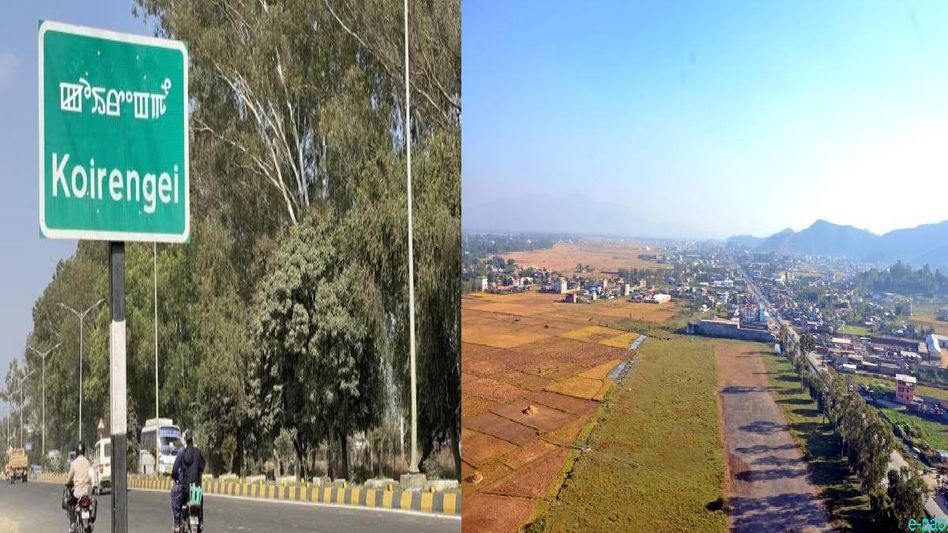
A citizens’ group from Manipur has written to Prime Minister Narendra Modi seeking immediate intervention to halt ongoing and proposed development works at Koirengei Airfield, a historic World War II site they describe as a “palimpsest of Southeast Asia where world history was written on Manipur’s soil.” The appeal warns that continued construction could permanently erase one of the most layered and historically significant landscapes in India’s eastern frontier.

- Mar 02, 2026,
- Updated Mar 02, 2026, 9:35 PM IST

A citizens’ group from Manipur has written to Prime Minister Narendra Modi seeking immediate intervention to halt ongoing and proposed development works at Koirengei Airfield, a historic World War II site they describe as a “palimpsest of Southeast Asia where world history was written on Manipur’s soil.” The appeal warns that continued construction could permanently erase one of the most layered and historically significant landscapes in India’s eastern frontier.
The representation, dated February 2, 2026, has been submitted by the Citizens for the Protection and Preservation of Koirengei Airfield (CPPKAF), a non-political civic body formed after consultations among historians, research scholars, local residents, and concerned citizens. The group asserts that Koirengei is not merely an abandoned airstrip but a rare historical manuscript bearing overlapping chapters of humanitarian crisis, global warfare, and political transition.
According to the memorandum, Koirengei Airfield played a crucial humanitarian role during the 1942 mass civilian exodus from Burma (now Myanmar), when thousands fled advancing war zones. The airfield served as a transit and evacuation ground, offering temporary refuge during one of South Asia’s most significant wartime civilian movements.
In 1944, during the decisive Battle of Imphal, the site reportedly transformed into a critical operational and command airfield. The defence of India’s eastern frontier and the strategic reversal of the Burma Campaign were deeply linked to such military installations across Manipur. Decisions and operations coordinated from this terrain, the letter states, influenced the outcome of a major theatre of the Second World War.
Post-independence, the airfield became symbolically associated with the political transition from colonial rule to sovereign nationhood, reflecting Manipur’s complex historical journey within the broader Indian narrative.
“Few sites in Southeast Asia contain within a single landscape such convergence of humanitarian experience, military strategy, and political transformation,” the memorandum states.
The group argues that while development projects can be relocated, historically authentic terrain—once disturbed—cannot be restored. Permanent construction, they warn, would destroy the physical integrity of a documented World War II landscape, erase tangible evidence of military and humanitarian history, and compromise its educational and commemorative value.
In their appeal to the Prime Minister, the citizens have sought:
Immediate suspension of all development and construction works at Koirengei Airfield
A formal moratorium until a comprehensive heritage and historical assessment is conducted
Consideration of declaring the site a protected heritage zone under national legislation
Constitution of an expert committee comprising historians, military scholars, conservation specialists, and national institutional representatives
The memorandum underscores that the urgency “cannot be overstated,” warning that delay risks permanent historical loss.
Describing Koirengei as “not unused land but a manuscript of memory,” the collective has framed preservation as a national obligation. The site, they argue, embodies stories of civilian suffering, military sacrifice, geopolitical struggle, and political transformation—etched physically into Manipur’s soil.
MORE NEWS











Copyright©2026 Living Media India Limited. For reprint rights: Syndications Today
