Manipur: KIM accuses United Naga Council of selective outrage over Liangmai killings, reiterates demand for separate administration
The Kuki Inpi Manipur (KIM) has accused the United Naga Council (UNC) of selectively highlighting the killing of six Liangmai civilians while overlooking attacks on Kuki civilians, alleging that UNC president Ng. Lorho used the November 16 burial ceremony of the victims to make sweeping accusations against the Kuki community.

- Nov 19, 2026,
- Updated Nov 19, 2026, 12:37 PM IST

The Kuki Inpi Manipur (KIM) has accused the United Naga Council (UNC) of selectively highlighting the killing of six Liangmai civilians while overlooking attacks on Kuki civilians, alleging that UNC president Ng. Lorho used the November 16 burial ceremony of the victims to make sweeping accusations against the Kuki community.
In a strongly worded statement, KIM rejected the allegations made by the UNC president, maintaining that the killing of the six civilians should not be used to vilify an entire community or prejudge the ongoing criminal investigation. While expressing condolences to the bereaved families, the Kuki apex body said those found responsible must be prosecuted based on evidence rather than unsubstantiated public allegations.
KIM questioned the UNC's allegation that the Centre was protecting Kuki Suspension of Operations (SoO) groups, citing the October 23 security operation at Sinai, a designated SoO camp, as evidence to the contrary.
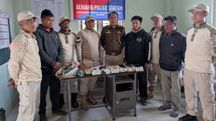
The operation, conducted by Manipur Police, the CRPF, CoBRA and Assam Rifles, resulted in the arrest of 17 people and the seizure of 24 firearms, along with ammunition, explosives and other combat equipment. KIM said investigations into the camp functionaries and possible violations of the SoO ground rules were continuing.
It also referred to records published by the Ministry of Home Affairs, which stated that the revised SoO agreement was valid until September 3, 2026, questioning the basis of allegations that Kuki armed groups enjoyed blanket protection from the Centre.
Turning its criticism towards the NSCN(IM), KIM accused the UNC of maintaining selective silence over the presence and activities of the Naga armed organisation in Manipur.
Recalling the June 2001 protests against the extension of the NSCN(IM) ceasefire without territorial limits, KIM questioned why the organisation's camps in Manipur continued to operate. It cited a 2015 policy brief by the Manohar Parrikar Institute for Defence Studies and Analyses, which documented three such camps and approximately 500 cadres in the state.
KIM also referred to a 2019 report by Scroll, which quoted an Assam Rifles officer as saying that although the ceasefire was restricted to Nagaland, the NSCN(IM) camps in Manipur were known to security agencies and had been allowed to remain.
The organisation questioned the legal status of these camps and asked why the activities and territorial ambitions of NSCN(IM) were not receiving the same scrutiny being demanded by the UNC.
On the killing of the six Liangmai civilians, KIM said four people had been arrested and the National Investigation Agency's (NIA) investigation was underway. It also recalled that Manipur Home Minister had informed the state Assembly on September 3 that the NIA had not shared any findings confirming the alleged involvement of KNF-P leadership.
Questioning the UNC president's public assertions, KIM said allegations against KNF-P and residents of Leilon Vaiphei village could not be presented as established facts while the investigation remained inconclusive.
"Let the investigation proceed without interference, and let every individual found responsible be prosecuted," the organisation said, opposing what it described as collective condemnation of an entire community or village over allegations that had not been established.
In its criticism of what it termed selective outrage, KIM claimed that its records had documented more than 40 Kuki civilian deaths since the renewed Naga-Kuki violence began earlier this year. The victims, it said, included women, children, an unborn child and Christian pastors.
The organisation questioned the UNC president's response to the alleged killings, abductions and displacement of Kuki civilians, arguing that their deaths deserved equal attention and demands for justice.
KIM also cited a March 20, 2026, directive issued by the Ministry of Home Affairs ordering an NIA investigation into the Thawai Kuki Hill Range incident. According to the organisation, the government order recorded the alleged involvement of Tangkhul volunteers, the destruction of huts and the discovery of two bodies following an armed incident.
It further said the MHA document referred to suspected NSCN(IM) cadres, described as a terrorist gang in the order, and the alleged use of firearms to create terror and panic. KIM questioned why the UNC had not expressed similar concern over the incident.
Revisiting the Naga-Kuki conflict of the 1990s, KIM cited a statement made by then Minister of State for Home Affairs Rajesh Pilot in the Rajya Sabha on August 12, 1993. According to KIM, Pilot had stated that the violence, which appeared to be an ethnic conflict between Nagas and Kukis, was being driven by the banned NSCN(I).
The organisation said Pilot had referred to the outfit's alleged objective of eliminating Kuki concentrations along the Moreh corridor and eventually driving Kukis out of Manipur's hill districts.
It also cited a US Committee for Refugees report that estimated the 1993-1997 conflict had claimed more than 1,000 lives and temporarily displaced up to 1.3 lakh people.
Questioning whether the victims and displaced families had received justice, KIM accused the UNC of selectively invoking historical events while overlooking the suffering of Kuki families.
The Kuki apex body also rejected allegations of demographic aggression and territorial expansion into Kacha Naga ancestral lands, describing them as baseless. It maintained that Kuki communities had inhabited their ancestral settlements and customary lands for generations.
KIM argued that the present geographical distribution of communities could not be examined without accounting for forced displacement during the 1990s conflict and the subsequent displacement caused by the ethnic violence that erupted on May 3, 2023.
It further maintained that census figures and district-level population growth could not establish allegations of a post-2023 demographic conspiracy or prove ethnic expansion by any particular community.
Rejecting any attempt to portray Kuki ancestral settlements as encroachments, the organisation said no group had the authority to unilaterally redraw historical boundaries or question the land, identity and rights of the Kuki people.
"We will neither surrender our ancestral land nor accept any territorial arrangement imposed upon us," KIM said, adding that it would defend its rights through democratic and constitutional means.
On the political front, KIM reiterated its demand for a Separate Administration, describing it as the only viable solution to recurring violence, historical grievances and the failure of the existing political arrangement to ensure the security of Kuki communities.
Drawing a parallel with the UNC's position on the alleged existential threat faced by the Naga community, KIM said the Kuki people were also facing an existential threat due to repeated attacks, forced displacement and alleged attempts to undermine their ancestral land and political identity.
The organisation urged the Centre to recognise the political aspirations of the Kuki people and initiate a meaningful political settlement through a Separate Administration backed by constitutional, legislative and administrative safeguards.
It maintained that the demand was rooted in the need for security, dignity and self-governance rather than territorial expansion or an attempt to occupy another community's land.
KIM also called for impartial and time-bound investigations into all civilian killings, irrespective of the community or armed organisation involved. It demanded action against NSCN(IM), ZUF-K and other armed groups found responsible for attacks on civilians, besides a review of NSCN(IM) camps operating in Manipur.
Other demands included protection of Kuki ancestral lands, the safe return and rehabilitation of displaced families, and meaningful political dialogue towards a Separate Administration.
"Justice cannot be selective, history cannot be rewritten to suit political convenience, and the suffering of one community cannot be used to erase that of another," the organisation said.