
No village burnt, only illegal poppy farmhouses razed: Naga committee counters Kuki CSO claims
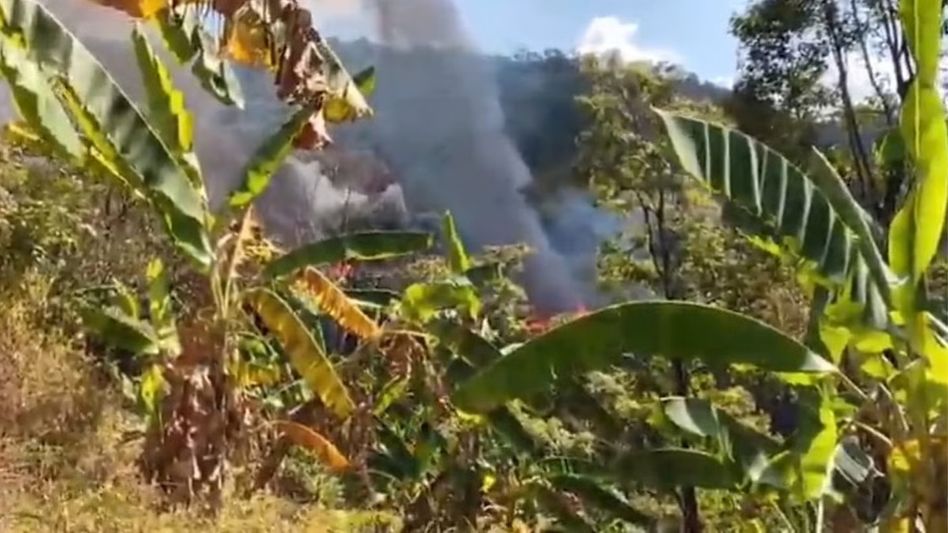
The Foothills Naga Co-ordination Committee (FNCC) on January 27 strongly refuted claims made by certain Kuki civil society organisations regarding the alleged burning of a village named “K. Songlung,” terming the allegations false and misleading.

- Jan 27, 2026,
- Updated Jan 27, 2026, 3:12 PM IST

The Foothills Naga Co-ordination Committee (FNCC) on January 27 strongly refuted claims made by certain Kuki civil society organisations regarding the alleged burning of a village named “K. Songlung,” terming the allegations false and misleading.
In a press statement, the FNCC clarified that no recognised village was targeted and asserted that the structures dismantled were illegal farmhouses linked to illicit poppy cultivation in the Waphong Inthan area of Manipur.
According to the FNCC, the action followed efforts by the Zeliangrong United Front to curb large-scale poppy cultivation and associated activities. The committee stated that at least three farmhouses used by individuals engaged in poppy cultivation were dismantled. It categorically denied assertions by organisations such as the Kuki Organisation for Human Rights Trust (KOHUR), the Sadar Hills Chiefs’ Association and the Committee on Tribal Unity that a village had been set ablaze, maintaining that no settlement known as “K. Songlung” exists in official records.
The FNCC cited the Manipur (Hill Areas Village Authority) Act, 1956, which stipulates that a village must comprise a minimum of 20 households to be legally recognised. It further noted that there is no village named K. Songlung or K. Songlung (II) listed in the Manipur Gazette. What existed at the site, the committee said, were temporary structures erected for poppy cultivation on what it described as Naga ancestral land.
Providing historical context, the FNCC stated that the land originally belonged to an Inpui village called Tamphoimon. During the Kuki rebellion of 1918, the Inpui inhabitants vacated the area, which has since remained under the jurisdiction of Waphong Inthan Inpui village. The committee alleged that the occupants of the farmhouses arrived only in 2017, constructed temporary shelters and began poppy cultivation on surrounding hill slopes, causing deforestation and making illegal land claims.
The FNCC maintained that repeated warnings and appeals by the state government and other organisations to halt poppy cultivation were ignored. It asserted that the recent action was directed solely against illegal farmhouses associated with poppy plantations and not against any recognised village or civilian settlement. While expressing regret over the loss of property, the committee reiterated its opposition to illicit poppy cultivation, which it said poses serious social, moral and security threats to the region.
The statement also disputed claims by Kuki organisations that no poppy cultivation existed in the area, pointing out that joint state and central security forces had destroyed poppy plantations there on November 2, 8 and 20, 2025. The FNCC urged the government to address what it described as illegal territorial expansion and continued poppy cultivation, warning that allowing such activities reflects a failure of governance.
The committee further appealed to all groups to refrain from spreading misinformation and called for respect for ancestral boundaries to maintain peace. It cautioned that a 24-hour ultimatum reportedly issued by SAHILCA could provoke conflict and undermine social harmony. Reaffirming its commitment to safeguarding land, law and order in Naga areas, the FNCC called for dialogue and restraint to ensure peaceful coexistence among communities in Manipur.
MORE NEWS












Copyright©2026 Living Media India Limited. For reprint rights: Syndications Today
