Climate change, pollution threat: Arunachal scientists begin detailed study of Ganga Lake
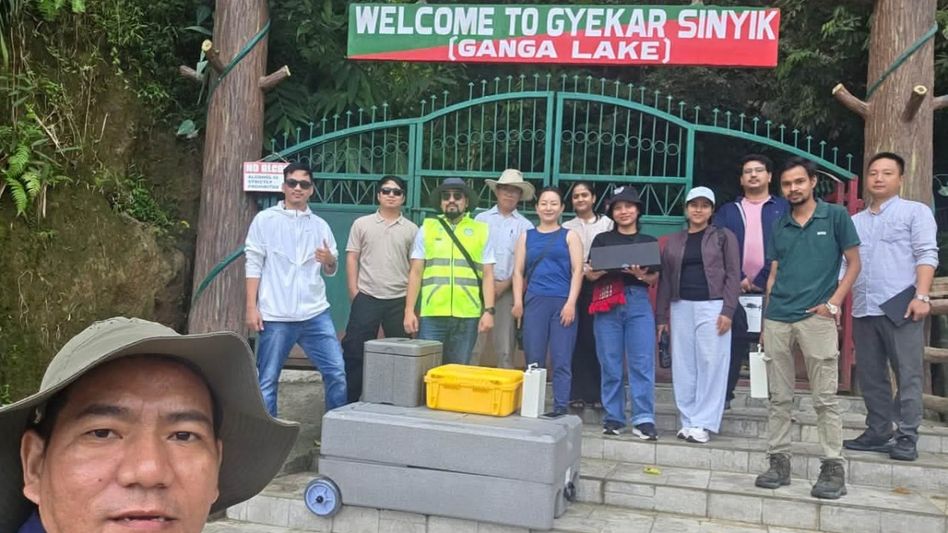
Scientists and engineers from the Centre for Earth Sciences and Himalayan Studies (CESHS) have launched a comprehensive scientific study of Ganga Lake, locally known as Gekar Sinying, in Arunachal Pradesh’s Papum Pare district.

- Sep 16, 2026,
- Updated Sep 16, 2026, 7:56 PM IST

Scientists and engineers from the Centre for Earth Sciences and Himalayan Studies (CESHS) have launched a comprehensive scientific study of Ganga Lake, locally known as Gekar Sinying, in Arunachal Pradesh’s Papum Pare district.
The study, being carried out under the guidance of experts and academicians from IITs, will examine the lake’s hydrology, geomorphology, morphometry and catchment dynamics amid growing concerns over ecological degradation, sedimentation, hydrological changes and the impact of climate change.
Ganga Lake is an important freshwater body in the capital region and is considered a potential indicator of changes in local environmental and climatic conditions. Scientists said increasing human activity, disturbance in the catchment area, sedimentation and possible pollution are placing growing pressure on the lake’s ecological health, water quality and biodiversity.
The lake also supports regional biodiversity, including aquatic organisms, phytoplankton and documented butterfly species, some of which are of conservation significance.
As part of the study, researchers will assess changes in water levels, lake volume, shoreline configuration, sedimentation patterns and watershed processes.
Advanced unmanned aerial vehicle (UAV)-based photogrammetry and remote sensing techniques will be combined with field measurements, hydrochemical investigations and stable-isotope analysis to develop a detailed understanding of the relationship between the lake and its surrounding catchment.
The researchers will integrate morphometric, hydrological, hydrochemical, isotopic, ecological and climatic data to identify the major environmental stressors affecting Ganga Lake and understand how they interact.
The study is also expected to establish baseline environmental conditions and assess how the lake is responding to both natural processes and human-induced changes.
According to CESHS, the findings could help provide scientific inputs for local governance, climate-risk assessment, freshwater-resource management and biodiversity conservation.
The study is expected to contribute towards developing long-term management and conservation strategies for Ganga Lake, while also providing predictive tools to assess future changes in the lake ecosystem.