Former Meghalaya DGP L R Bishnoi steps down from SC-appointed panel probing Jantar Mantar violence
The Supreme Court relieved L R Bishnoi from the panel probing the Jantar Mantar violence. The committee will proceed with existing evidence despite receiving few complaints.
 LR Bishnoi

- Nov 06, 2026,
- Updated Nov 06, 2026, 10:40 AM IST

- Panel received few complaints despite notices published in 149 newspapers nationwide
- Only one complainant appeared and filed an affidavit on October 29
- Court allowed videos, petitions and affidavits already filed to be examined
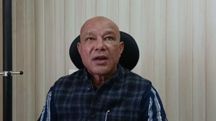
Former Meghalaya Director General of Police (DGP) L R Bishnoi has been relieved from the Supreme Court-appointed High-Powered Enquiry Committee (HPEC) probing alleged police excesses and violence during the Cockroach Janta Party (CJP)-led protests at Jantar Mantar in Delhi.
The Supreme Court on November 5 accepted Bishnoi's request to step down from the committee on personal grounds while directing the panel to continue its investigation using the material already available to it.
A bench comprising Chief Justice Surya Kant and Justice Joymalya Bagchi also expressed concern over the limited response from victims, despite the committee's efforts to invite complaints through an online portal, a dedicated email address and physical submissions.
The committee, headed by former Supreme Court judge Justice R Subhash Reddy, informed the court that it had received very few complaints despite issuing public notices in 149 newspapers across the country on October 17. A reminder was subsequently issued on October 21, but the response remained poor.
According to the action taken report submitted on October 31, only one complainant appeared before the committee during its sitting on October 29 and submitted an affidavit. Some police personnel also appeared before the panel.
Taking note of the lack of responses, the Supreme Court asked the committee not to wait indefinitely for fresh complaints and to proceed with its fact-finding exercise based on the evidence and submissions already available.
The bench also permitted the committee to examine video recordings and other materials submitted by petitioners before the court on behalf of those allegedly affected by the violence.
"We have impressed upon the counsel for the parties, since there is no requirement of disclosure of names of complainants/victims, let the entire materials within their possession be forwarded to the given address of HPEC or the portal," the bench said.
The court further directed that petitions and affidavits already filed before it be forwarded to the committee for examination.
Senior advocate Gopal Sankaranarayanan, appearing for some petitioners, disputed the committee's report, stating that representations had been submitted both before and after the launch of its online portal. He said the petitioners had been informed that their submissions would be examined in due course.
Senior advocate Vrinda Grover also argued that evidence already placed before the Supreme Court, including videos allegedly documenting police excesses, should be examined by the committee rather than requiring every affected individual to approach it separately.
However, Solicitor General Tushar Mehta, appearing for the Centre and Delhi Police, argued that the petitioners might not have direct knowledge of the incidents and maintained that the victims themselves should come forward.
Grover alleged that no FIR had been registered in connection with the reported incidents of violence and police excesses. Sankaranarayanan also pointed out that no departmental action appeared to have been initiated against police personnel despite the Supreme Court's earlier clarification that the formation of the committee would not prevent authorities from taking action against officers found guilty of misconduct.
Clarifying its earlier position, Justice Bagchi said the committee's constitution should not stop police authorities or their superiors from initiating action if they found that personnel deployed at the protest site had violated rules.
The Chief Justice urged the petitioners to encourage victims to submit their accounts and evidence, pointing to a possible gap between the material claimed to have been submitted before the court and what had actually reached the committee.
The court also reiterated that complainants could submit their accounts anonymously without disclosing their names, phone numbers or other personal details.
The HPEC, apart from Justice R Subhash Reddy, comprises former Punjab and Haryana High Court Chief Justice Ravi Shankar Jha, former Delhi High Court judge Justice Shalinder Kaur and former CBI director Rishi Kumar Shukla.
The Supreme Court had ordered the formation of the committee in August while hearing a batch of petitions alleging police excesses against student protesters during the CJP-led agitation. The protests also saw allegations of violence against police personnel.
The agitation began at Jantar Mantar on June 20, with protesters demanding the resignation of Union Education Minister Dharmendra Pradhan. Clashes broke out during a march towards Parliament on July 20, prompting security personnel to use lathis and tear gas to disperse protesters attempting to move towards the Parliament complex.
The agitation subsequently spread to several cities before being called off on July 25, following Pradhan's resignation and the government's acceptance of other demands raised by the CJP.