India submits Meghalaya cultural landscape for UNESCO World Heritage consideration
India nominates Meghalaya's cultural landscape for UNESCO World Heritage status to protect its unique cultural and natural heritage. The move aims to boost conservation and sustainable tourism in the region.

- Jan 29, 2026,
- Updated Jan 29, 2026, 10:36 AM IST

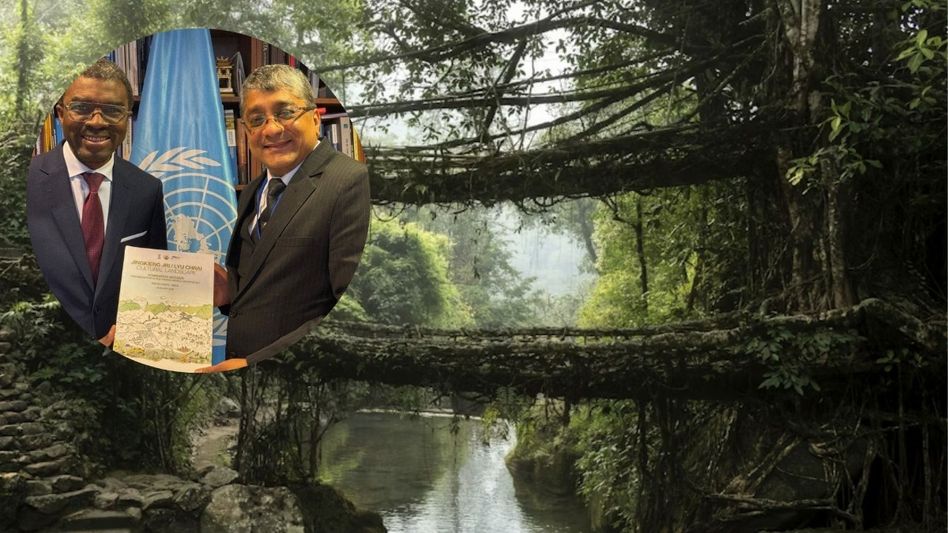
India has formally submitted the nomination dossier for Jingkieng Jri / Lyu Chrai cultural landscape, Meghalaya, to UNESCO, marking a significant step in recognising Indigenous heritage from the Northeast on the global stage.
The dossier was handed over by Vishal V Sharma, Ambassador and Permanent Representative of India to UNESCO, to Lazare Assomo Eloundou, Director of UNESCO’s World Heritage Centre. The site will be examined for possible inscription on the UNESCO World Heritage List during the 2026–27 evaluation cycle.
Welcoming the submission, Meghalaya Chief Minister Conrad K Sangma said in a post on X that the state’s Living Root Bridges (Jingkieng Jri) dossier had been “formally submitted to UNESCO in Paris by India’s Ambassador and Permanent Representative to UNESCO for consideration for inclusion in the World Heritage List 2026–27.” He noted that the submission closely followed the conferment of a Padma Award on Bah Halley War, recognising his lifelong efforts to practise, promote and conserve this remarkable tradition of sustainable natural heritage.
The nominated cultural landscape spans parts of the Khasi and Jaiñtia Hills in Meghalaya and is shaped by centuries of stewardship by Khasi and Jaintia communities.
It is recognised as a living landscape where traditional governance, land-use practices and ecological management continue to function as part of everyday life. At its core is an Indigenous worldview rooted in respect and responsibility towards Mei Ramew, or Mother Earth.
While submitting the nomination, Ambassador Sharma acknowledged the contributions of Prime Minister Narendra Modi, Union Culture Minister Gajendra Singh Shekhawat, Meghalaya Chief Minister Conrad Sangma, Principal Secretary Frederick Kharkongor, officials of the Archaeological Survey of India and the Ministry of External Affairs, along with experts and local communities who have protected the site.
The submission is seen as an important move towards highlighting living cultural landscapes from India’s Indigenous regions, rather than monument-centric heritage alone. It also reflects India’s broader effort to foreground community-led conservation and traditional knowledge systems within international heritage frameworks.
If inscribed, Jingkieng Jri / Lyu Chrai would become one of the few cultural landscapes from India recognised by UNESCO, bringing global attention to Meghalaya’s Indigenous practices of sustainable coexistence between people, nature and belief systems.
Expressing optimism, the Chief Minister said the state is hopeful that the Living Root Bridges will be inscribed, ensuring that the Indigenous communities — the true guardians of this living heritage — receive the global recognition they so richly deserve.