Khasi bodies urge Meghalaya CM to block KHADC land amendment over consultations
Khasi traditional bodies met Chief Minister Conrad K Sangma and Deputy Chief Minister Prestone Tynsong to oppose the KHADC land amendment. They said dropping mandatory consultations threatens customary land governance and indigenous rights under the Sixth Schedule.

- Aug 08, 2026,
- Updated Aug 08, 2026, 9:00 AM IST

- Delegation submitted a memorandum after meeting the Governor over the dispute
- Section 16 currently mandates consultations before ceilings on raid land are fixed
- Leaders questioned a June 11 order issued without prescribed consultations
Traditional institutions from Khasi Hills have urged the Meghalaya government to intervene against the Khasi Hills Autonomous District Council’s (KHADC) proposed amendment to its land administration law, arguing that the move weakens the customary institutions responsible for community land governance.
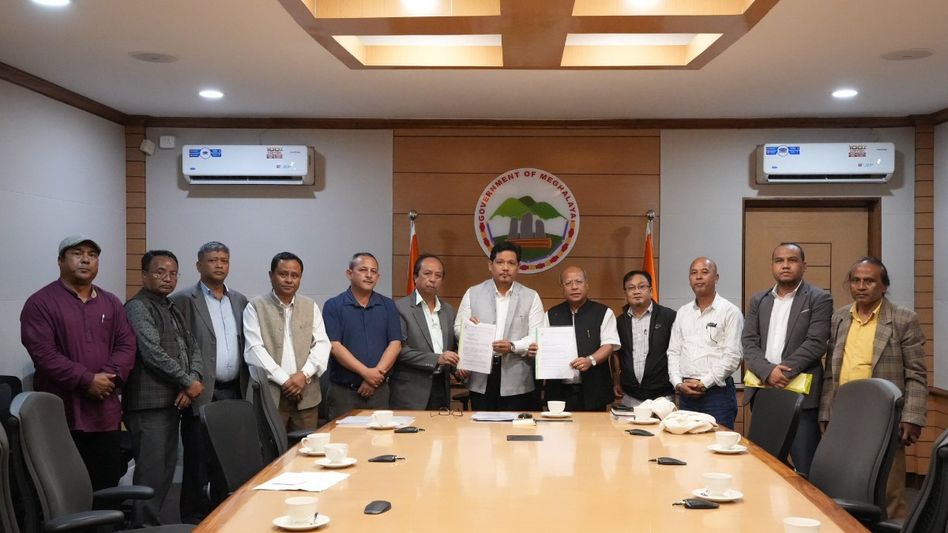
A delegation of the Synjuk Ki Nongsynshar Shnong Ka Bri U Hynniewtrep (SNSBH) and Synjuk Ki Rangbah Kur Ka Bri U Hynniewtrep (SRKBH) met Chief Minister Conrad K Sangma and Deputy Chief Minister Prestone Tynsong, who also holds the District Council Affairs portfolio, on August 7 and submitted a memorandum outlining their objections.
The meeting followed discussions between representatives of traditional institutions and the Governor. The delegation said it was acting on the Governor’s advice to take up its concerns with the state government.
At the centre of the dispute is the Khasi Hills Autonomous District (Regulation and Administration of Land) Amendment Bill, 2026, passed by the KHADC during its June session.
The traditional bodies have objected particularly to the deletion of a provision under Section 16 of the Principal Act, 2021. The provision requires the KHADC Executive Committee to consult the Dorbar Shnong, Dorbar Raid and Dorbar Hima before fixing a ceiling on the settlement, allotment or setting apart of raid land.
The delegation argued that removing the consultation requirement would reduce the role of traditional institutions in decisions concerning customary land, despite their longstanding position in the administration of indigenous communities.
It also questioned KHADC Order No. DCRBF/13/465/2026/14/161, issued on June 11, 2026, which fixed a ceiling on raid land. According to the delegation, the order was issued without following the consultation process prescribed under Section 16 and could create confusion over the management of raid land at the grassroots level.
The traditional bodies said the amendment was inconsistent with the spirit of the original legislation and Khasi customary land tenure practices. They also alleged that it was introduced without adequate consultation with the traditional authorities concerned.
The issue had earlier been discussed at a joint meeting of traditional institutions in Shillong on July 7, where participants resolved to oppose the amendment.
Speaking on behalf of the delegation, SNSBH secretary and SRKBH spokesperson R. L. Blah read out the memorandum before the Chief Minister and Deputy Chief Minister. He urged the state government to request the Governor not to assent to the amendment and instead return it to the KHADC for reconsideration.
The delegation also raised broader concerns over the constitutional position of traditional institutions, protection of indigenous land rights and preservation of customary governance within the framework of the Sixth Schedule of the Constitution.
Deputy Chief Minister Prestone Tynsong said the original land legislation had been framed after extensive deliberations and consultations with stakeholders.
Following the meeting, Sangma said the delegation had discussed its concerns over both the amendment Bill and the notification fixing the land ceiling in raid land.
“We had a constructive interaction and assured the delegations that their views and concerns would be given due consideration,” Sangma said in a post on X.
He said the government remained committed to safeguarding Meghalaya’s traditional institutions, customary governance and indigenous land rights, while protecting the state’s matrilineal heritage and the interests of its people.
The delegation has maintained that the protection of traditional institutions and customary governance is closely linked to the protection of indigenous land rights and the constitutional framework governing Khasi society under the Sixth Schedule.