Khasi Mandarin spotlight sharpens Meghalaya’s push for stronger organic exports
Meghalaya is enhancing organic exports with Khasi Mandarin, improving farmers' income and sustainable farming. The government and locals work together to meet global organic standards and expand markets

- Dec 01, 2025,
- Updated Dec 01, 2025, 8:52 PM IST

A renewed drive to expand Meghalaya’s organic export capacity dominated the closing day of the 1st Northeast India Organic Week and the 4th IFOAM World Organic Youth Summit on December 1, with the state’s prized Khasi Mandarin emerging as the key focus for policymakers and exporters.
Chief Minister Conrad K Sangma stressed that strengthening the organic mission will demand “unwavering and coordinated efforts from all stakeholders,” underscoring that farmers remain central to every policy decision. He reminded participants that the event should be viewed “as the beginning of a longer journey,” adding that government programmes will stay “target-based and time-bound.”
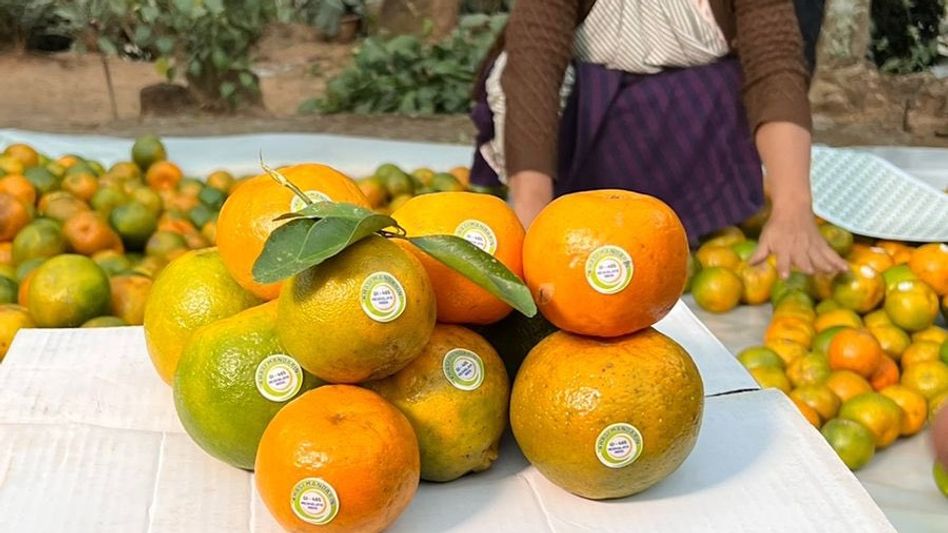
The Khasi Mandarin—a bright, sweet, aromatic and easy-to-peel orange native to Meghalaya—was highlighted as a flagship product capable of driving the state’s global market presence.
Sangma emphasised that organic farming is rooted in Meghalaya’s identity, noting that “the word ‘organic’ is more than just a buzzword… it is connected to our farmers, our forefathers, and the way our people have farmed for centuries.” While acknowledging rising global reliance on modern technologies, he said the region’s traditional practices have endured and now offer valuable knowledge “that can be shared with the world.”
The chief minister announced a new target to expand organic cultivation across agricultural land, calling the initiative “ambitious but achievable.” He pointed to logistics as a persistent challenge but maintained that improving these systems remains a priority so farmers can access both national and international markets.
APEDA general manager Vinita Sudhanshu said the Northeast is becoming a significant contributor to India’s organic sector. Calling the event the first of its kind in the region, she welcomed strong participation from farmers and FPOs and described Meghalaya as “an inspiring example of community-driven development.” She noted APEDA’s ongoing work on citrus protocols, cold-chain systems and market linkages, and confirmed that two FPOs from the Northeast will receive support for exposure visits during the upcoming Gulfood event.
IFOAM Asia executive director Jennifer Chang praised Meghalaya’s potential as a global example of holistic organic development. She commended farmers for working “in harmony with nature, where crops grow without artificial interference,” and encouraged the state to champion the UN’s International Year of the Woman Farmer, saying, “If you teach a woman, you are raising a nation.”
Agriculture Secretary Isawanda Laloo said Meghalaya remains “naturally organic by heritage, geography and practice,” and reported that more than 50 metric tonnes of premium produce—including Khasi Mandarin, pineapples and ginger—have already been exported to Gulf countries through the state’s partnership with APEDA.
During a session on field experiences, Ibalahun Thangkhiew, CEO of Jirang Organic Agro Farmers Producers Company Ltd, shared that her FPO, formed in 2017 and comprising 433 farmers across 15 villages, shipped its first consignment of Khasi Mandarin to Dubai in 2022 with support from APEDA and the Horticulture Department.