
Meghalaya expert panel recommends creamy layer principle in tribal reservation policy
An expert committee reviewing Meghalaya’s reservation framework has recommended examining the introduction of the creamy layer principle within reserved categories to ensure that benefits reach the most disadvantaged sections of tribal communities in the state.


- Feb 18, 2026,
- Updated Feb 18, 2026, 8:42 PM IST

An expert committee reviewing Meghalaya’s reservation framework has recommended examining the introduction of the creamy layer principle within reserved categories to ensure that benefits reach the most disadvantaged sections of tribal communities in the state.
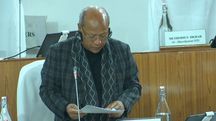
Chief Minister Conrad K Sangma formally tabled the committee’s report, which also strongly emphasised strict and transparent implementation of the reservation roster system while recommending retention of the existing 1972 reservation policy.
According to a gist of the report, the panel advised the state government to consider introducing the creamy layer principle, wherever constitutionally applicable, to prevent relatively advanced sections within reserved categories from cornering benefits. The committee underscored that such a measure would help improve equity and target historically marginalised groups more effectively.
At the same time, the panel recognised the 1972 Resolution as a valid and operative policy and recommended that it be retained in its present form. It recorded that a majority of stakeholders favoured continuation of the existing framework and that there were no compelling grounds for a fundamental alteration of the policy at this stage.
The report marks the culmination of a comprehensive review process initiated through a notification issued by the Governor on September 12, 2023. The committee had been tasked with examining the current reservation structure, consulting stakeholders across the state and suggesting modifications, if necessary.
The panel held extensive consultations with representatives of tribes and communities, civil society organisations, employee associations, student bodies and academic experts, and also examined written submissions from various quarters.
Reaffirming constitutional principles governing affirmative action, the committee observed that reservation cannot be determined solely on the basis of population proportions of any tribe or caste. It stated that social and educational backwardness, historical disadvantage and adequacy of representation in public services must remain the core criteria. It further clarified that reservation cannot be based on religion, noting that the Constitution provides for affirmative action grounded in socio-economic backwardness and under-representation rather than religious identity.
While the extension of reservation to educational institutions was outside its formal mandate, the committee said the state government may independently examine the matter in line with constitutional provisions if deemed necessary.
Highlighting regional disparities, the panel recommended targeted interventions to improve educational standards, particularly in the Garo districts, to enhance long-term socio-economic development and competitiveness in public employment.
The committee did not favour extending Economically Weaker Sections (EWS) benefits to SC, ST and OBC categories, observing that EWS is a separate constitutional classification distinct from existing reserved groups.
It also supported continuation of the “carry forward” provision under the 1972 resolution and proposed extending the carry forward period from one year to three years, noting that such an extension has judicial backing and could help address backlog vacancies more effectively.
Referring to recent judicial developments, the committee said sub-classification within reserved categories, often termed “quota within quota”, may be legally permissible subject to the collection of detailed and quantifiable data. It advised the government to take a considered decision after undertaking a comprehensive, data-driven exercise.
The panel noted that statutory safeguards for persons with disabilities are already provided under the Rights of Persons with Disabilities Act, 2016, and therefore did not recommend additional measures. It also observed that granting preference to residents of local districts for district-level Class C and D posts may not be administratively feasible in view of migration trends and demographic mobility across the state.
MORE NEWS











Copyright©2026 Living Media India Limited. For reprint rights: Syndications Today
