Meghalaya farmers turn to high-value crops as horticulture diversifies in South West Garo Hills
Farmers in South West Garo Hills are diversifying into watermelon, dragon fruit, flowers and black pepper. The projects are expanding income options but exposing gaps in execution and market access.

- Nov 15, 2026,
- Updated Nov 15, 2026, 11:01 AM IST

- Nerdaya Koch earned an estimated Rs 7-8 lakh from seasonal vegetables
- His watermelon crop generated Rs 3-4 lakh profit across 0.4 hectares
- Robelson Marak harvested 80-100 kg of organically grown dragon fruit
Farmers in Meghalaya’s South West Garo Hills are increasingly turning to high-value crops such as watermelon, dragon fruit and commercial flowers, with some reporting earnings of several lakh rupees through diversified horticulture.
The shift towards varied cultivation practices is helping farmers explore additional sources of income beyond traditional vegetable farming, although the performance of some government-backed projects points to challenges in implementation and market access.
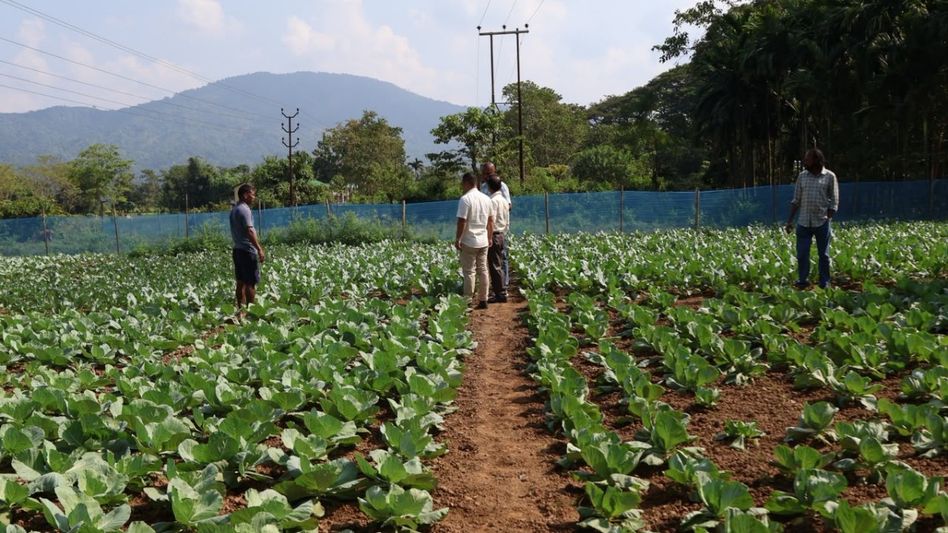
At Harigaon village under Rerapara Block, farmer Nerdaya Koch has been practising organic vegetable cultivation since 2013-14. He currently grows summer and winter vegetables across 1.5 hectares, earning an estimated Rs 7-8 lakh in 2025-26.
His farm has received support under the state government's Vegetables Development Scheme, including subsidised seeds, fencing materials, seedling trays and irrigation equipment. He has also been provided a naturally ventilated polyhouse and permanent trellises for creeper vegetables.
Koch has expanded beyond vegetable cultivation by setting up a nursery where he raises seedlings in trays inside a 100-square-metre polyhouse. The seedlings are supplied to other farmers at Rs 2.50 per plant, creating an additional source of income.
He also cultivated watermelon across 0.4 hectares following the winter vegetable harvest in 2025-26. The crop generated an estimated profit of Rs 3-4 lakh. The initiative received support through subsidised seeds and drip irrigation under the Per Drop More Crop component of the Pradhan Mantri Krishi Sinchayee Yojana (PMKSY).
Another example of crop diversification can be seen at Ampati Songma, where farmer Robelson M Marak began organic dragon fruit cultivation in 2023.
His farm produced around 80-100 kg of dragon fruit during the 2025 harvest, earning him an estimated Rs 35,000-50,000. The horticulture department supported the project with planting materials, concrete pillars and drip irrigation under the Mission for Integrated Development of Horticulture (MIDH), followed by further assistance under the Fruit Development Scheme in 2025-26.
Beyond individual farms, the district has also ventured into commercial floriculture.
At Zikzak Horti Hub, three polyhouses, each spread across 500 square metres, have been developed for cultivating Anthurium, Gerbera and Dendrobium. The Rs 70-lakh project was funded through the Rural Infrastructure Development Fund (RIDF) and completed on April 1, 2025.
The facility currently generates around Rs 2 lakh annually through cut-flower sales. However, delays in payments from institutional buyers have affected its income potential, highlighting the difficulties of sustaining commercial horticulture projects despite infrastructure development.
The district has also experimented with vertical cultivation of black pepper to maximise land use and increase the availability of quality planting materials.
Implemented under the Rashtriya Krishi Vikas Yojana (RKVY) during 2023-24, the project was sanctioned at Rs 36.62 lakh. It was designed to cover 1,000 square metres with 300 columns and 3,000 plants of the Panniyur-2 variety.
However, implementation fell short of the approved targets. The project covered a smaller area, with 198 columns erected and 1,920 plants supplied and planted. The facility currently produces two rounds of cuttings annually for raising seedlings in its nursery.
These projects were visited by a team of journalists from Shillong during a press tour organised by the Directorate of Information and Public Relations (DIPR).
The initiatives highlight the potential of horticulture to create additional income streams for farmers in South West Garo Hills. However, the experience of the flower cultivation project and the shortfall in the black pepper initiative also underline the need for better market linkages and effective execution to ensure that investments translate into sustainable returns.