Meghalaya village gets common facility centre to convert banana pseudostem into value-added products
The North East Centre for Technology Application and Reach (NECTAR), an autonomous institute under the Department of Science and Technology, Government of India, has inaugurated a Common Facility Centre (CFC) at Umsiang village in Meghalaya’s Ri-Bhoi district, aimed at converting discarded banana pseudostem into value-added products and creating opportunities for rural entrepreneurship.

- Sep 06, 2026,
- Updated Sep 06, 2026, 5:09 PM IST

The North East Centre for Technology Application and Reach (NECTAR), an autonomous institute under the Department of Science and Technology, Government of India, has inaugurated a Common Facility Centre (CFC) at Umsiang village in Meghalaya’s Ri-Bhoi district, aimed at converting discarded banana pseudostem into value-added products and creating opportunities for rural entrepreneurship.
The CFC has been established by NECTAR with funding support from the Ministry of Development of North Eastern Region (DoNER) under the PM-DevINE scheme. The facility will process banana pseudostem, an agricultural by-product generally discarded after harvesting, into products including natural fibre, biodegradable sheets and handmade paper.
The initiative is intended to promote the sustainable utilisation of agricultural resources while supporting skill development, entrepreneurship and rural livelihoods. It is also expected to provide farmers, local entrepreneurs and self-help groups with access to technology and opportunities to develop income-generating activities based on locally available resources.
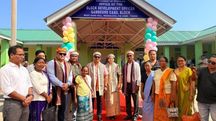
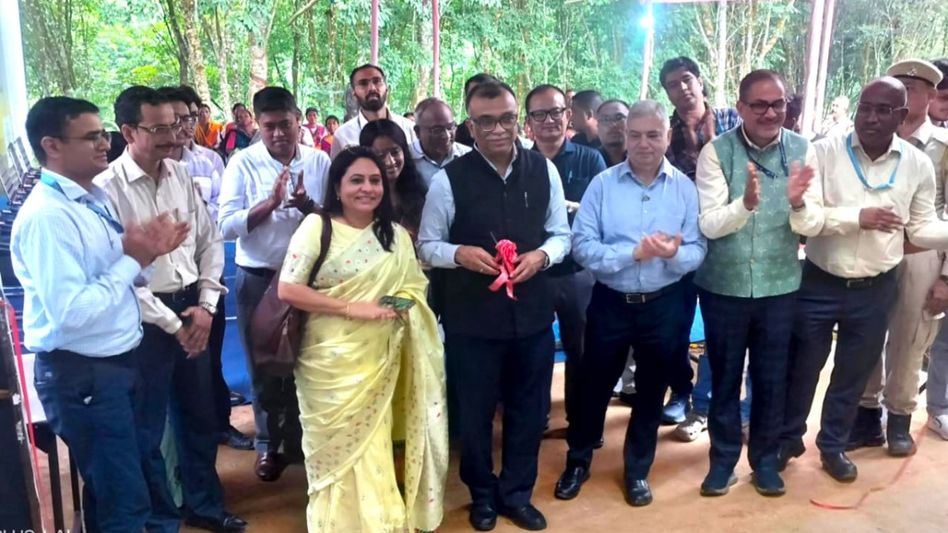
The inauguration ceremony was attended by Prof. Umesh Waghmare, Secretary, Department of Science and Technology, Government of India; Satinder Kumar Bhalla, ITS, Secretary, North Eastern Council; and Dr. Jaideep Baruah, Director, Assam Science Technology and Environment Council, besides senior officials and representatives of Central and state government organisations.
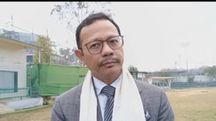
Addressing the gathering, Dr. Arun Kumar Sarma, Director General, NECTAR, highlighted the potential of banana pseudostem as a resource for sustainable production and rural enterprise. He said the model could be replicated across the Northeast to promote environmental sustainability, income generation and regional economic development.
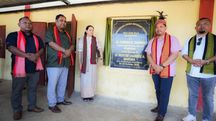
Following the unveiling of the CFC plaque, the dignitaries visited the facility and witnessed demonstrations of the technology deployed there. They also interacted with local entrepreneurs, farmers and members of self-help groups.
The NECTAR team demonstrated banana fibre extraction machinery during the visit, showcasing the operational capabilities of the newly established facility.
The CFC is expected to provide a platform for converting agricultural waste into commercially useful products while strengthening local skills and entrepreneurship. The initiative also aligns with efforts to promote sustainable production practices and generate alternative livelihood opportunities in rural areas of the Northeast.