
Meghalaya: VPP chief demands 7 per cent increase in Khasi reservation
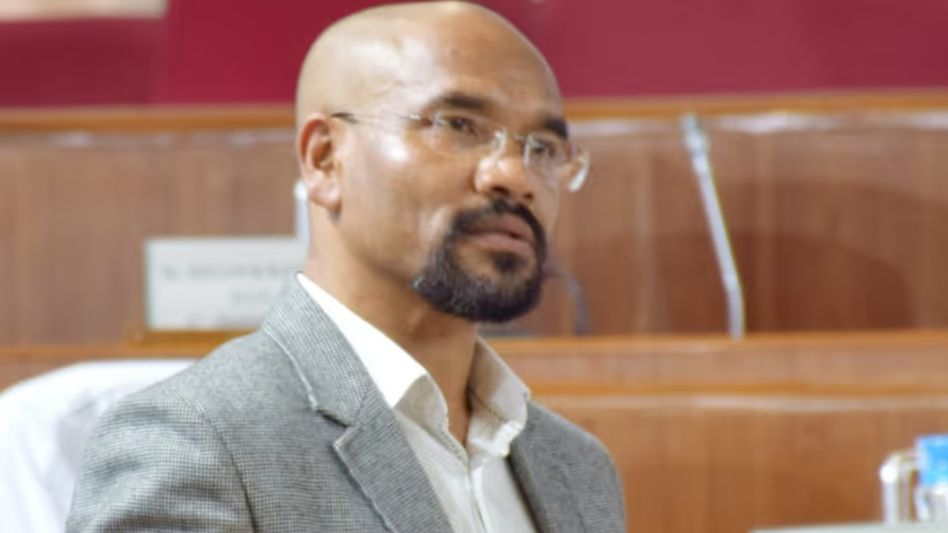
Meghalaya Opposition Voice of the People’s Party (VPP) president, Ardent Basiiawamit, on Wednesday called for a 7 percent increase in the reservation quota for the Khasi community while keeping the Garos’ share at 40 percent, prompting Chief Minister Conrad K Sangma to caution against proposals that could invite judicial scrutiny.

- Feb 26, 2026,
- Updated Feb 26, 2026, 2:46 PM IST

Meghalaya Opposition Voice of the People’s Party (VPP) president, Ardent Basiiawamit, on Wednesday called for a 7 percent increase in the reservation quota for the Khasi community while keeping the Garos’ share at 40 percent, prompting Chief Minister Conrad K Sangma to caution against proposals that could invite judicial scrutiny.
Speaking during a short-duration discussion on the reservation policy in the assembly, Basiiawamit said he was surprised by the expert committee’s recommendation to retain the 1972 policy without substantial revision, and highlighted that the high court had questioned only the absence of a roster system rather than the policy itself.
Referring to Clause 4 of Article 16 of the Constitution, Basiiawamit said the original framework aimed at addressing inadequate representation of Khasi and Garo communities while maintaining administrative efficiency. He noted that earlier leaders had avoided rigid mechanisms to retain flexibility, but court observations had made the introduction of a roster system necessary.
He argued that demographic realities showed the Khasi population had nearly doubled that of the Garos, and that raising the Khasi quota to 47 percent would still keep the Garo community within the 50 percent cap defined in the reservation framework. The VPP leader added that his proposal would not dilute the 40 percent allocation for the Garos.
Basiiawamit, who staged a 10-day hunger strike in 2023 demanding a review of the policy, also warned of potential legal challenges to past recruitments if implementation issues were not addressed.
The expert committee, formed by the Meghalaya assembly, had recommended retaining the current structure while introducing a roster system, stronger monitoring mechanisms, and periodic review of socio-economic indicators. It also noted that population alone should not be the sole basis for determining reservation percentages.
Responding to questions, Chief Minister Sangma acknowledged that reservation issues are broad and complex, particularly given the state’s socio-political landscape, and said consultations indicated that many organizations did not favor structural changes but supported better implementation of the current system.
The government, he added, had examined every aspect of the policy and emphasized that efforts should focus on addressing socio-economic backwardness through effective execution. Sangma also highlighted unemployment as a major concern and stressed the need to look beyond government jobs to promote entrepreneurship and private sector growth.
He noted that over 3.8 lakh jobs had been created in the economy over the past eight years, underscoring the administration’s commitment to employment generation.
MORE NEWS








Copyright©2026 Living Media India Limited. For reprint rights: Syndications Today
