
Meghalaya’s Living Root Bridges nominated for UNESCO World Heritage status
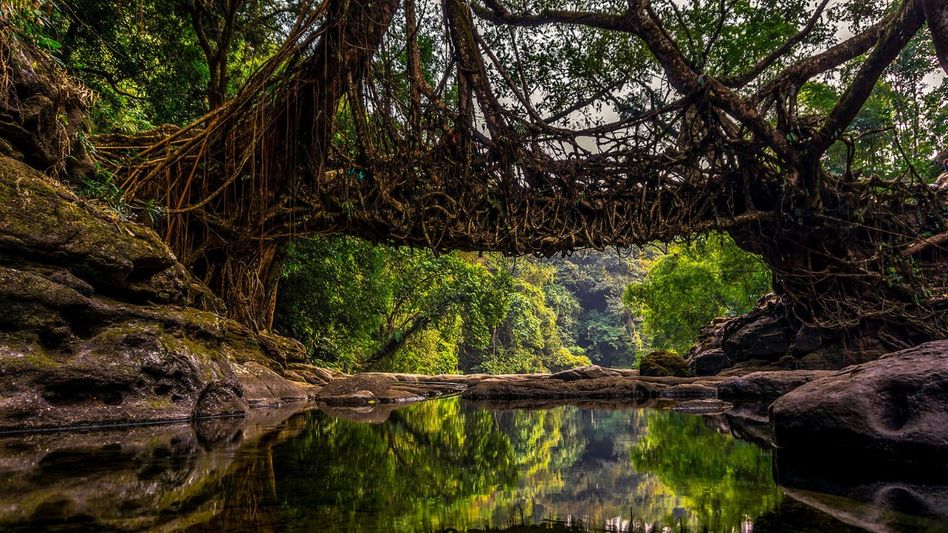
India has nominated the iconic Living Root Bridges of Meghalaya—known as Jingkieng Jri/Lyu Charai Cultural Landscape—for inclusion in the UNESCO World Heritage List for the 2026–27 cycle, the Centre informed Parliament on March 23.

- Mar 23, 2026,
- Updated Mar 23, 2026, 7:44 PM IST

India has nominated the iconic Living Root Bridges of Meghalaya—known as Jingkieng Jri/Lyu Charai Cultural Landscape—for inclusion in the UNESCO World Heritage List for the 2026–27 cycle, the Centre informed Parliament on March 23.
In a written reply in the Lok Sabha, Union Culture Minister Gajendra Singh Shekhawat said the proposal has been submitted to the UNESCO World Heritage Centre, highlighting the ecological and cultural significance of the unique structures developed by indigenous communities.
Locally known as “Jingkieng Jri,” these living root bridges are grown from the roots of rubber fig trees by Khasi tribal communities in Meghalaya. They serve as sustainable, natural infrastructure in remote, forested regions and are renowned for their durability and resilience in extreme climatic conditions.
The bridges, which connect more than 75 remote villages in one of the wettest regions on Earth, exemplify a deep-rooted harmony between humans and nature. Developed over generations, the traditional knowledge and techniques used to create these structures continue to be practised, making them a living cultural heritage.
Alongside this, the government has also submitted a proposal for the Ancient Buddhist Site of Sarnath in Uttar Pradesh for the 2025–26 cycle.
India currently has 44 UNESCO World Heritage Sites, including cultural, natural, and mixed categories. The Archaeological Survey of India (ASI) maintains over 3,600 protected monuments across the country, including 27 World Heritage properties, ensuring their conservation and upkeep.
If approved, the inclusion of Meghalaya’s Living Root Bridges would mark a significant global recognition of indigenous engineering and sustainable practices rooted in traditional knowledge systems.
MORE NEWS







Copyright©2026 Living Media India Limited. For reprint rights: Syndications Today
