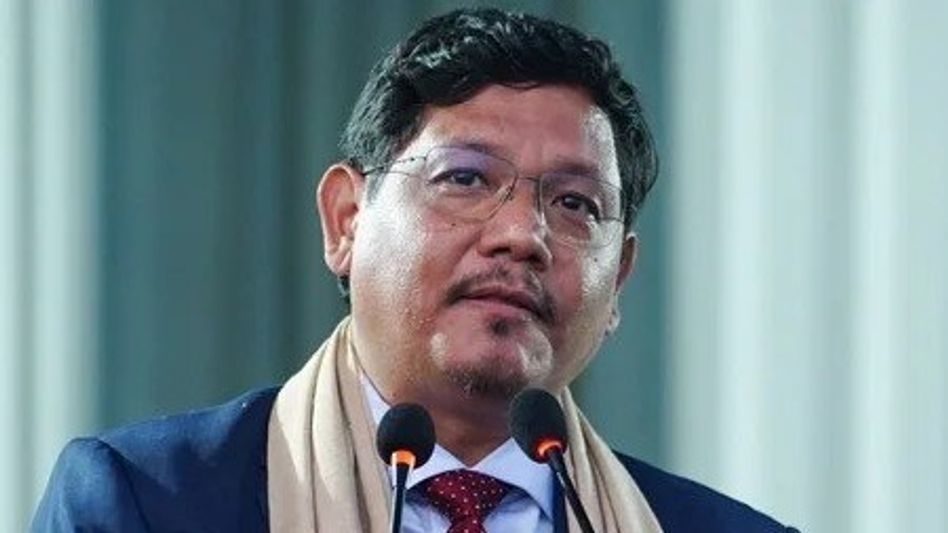
'We will have to work with Bangladesh': Meghalaya CM Conrad K Sangma seeks revival of trade, border haats
Conrad Sangma said India and Bangladesh have started local-level dialogue and urged revival of border haats and trade links. He said deeper cooperation could aid the northeast economy even as security and immigration safeguards remain necessary.

- May 17, 2026,
- Updated May 17, 2026, 8:11 AM IST

- Sangma said grassroots discussions were under way despite recent bilateral strain
- He called the present phase temporary and stressed long-term mutual benefit
- Bangladesh's political transition had slowed high-level contact between New Delhi and Dhaka
Meghalaya Chief Minister Conrad Sangma on May 16 said India and Bangladesh have begun engaging in “local level” dialogue to improve ties, while stressing the need to revive trade, border haats and cultural exchanges between the two neighbours.
Speaking to journalists on the sidelines of the North East India Infrastructure Summit and Exhibition curtain raiser event in Shillong, Sangma said discussions were already underway despite recent strains in bilateral relations.
“It is already happening. The process has started. Dialogues are taking place at the local level, people are talking and discussing,” he said while responding to a question on India-Bangladesh engagement.
Sangma said the current tensions between the two countries were temporary and maintained that stronger cooperation would ultimately benefit both sides. “I firmly believe the current phase with Bangladesh is temporary, but in the long run, we will have to work with Bangladesh. This is good for us and Bangladesh as well, and I believe there is huge potential and opportunities,” he added.
Relations between New Delhi and Dhaka had slowed after the removal of former Bangladesh prime minister Sheikh Hasina and the political transition that followed in Bangladesh, leading to limited high-level engagement for several months.
Efforts to rebuild communication have since gathered pace. Bangladesh Foreign Minister Khalilur Rahman visited New Delhi in April along with Foreign Affairs Adviser Humayun Kabir during his first official India visit after taking office.
Sangma also pushed for the reopening of border haats that were shut following the 2024 political unrest in Bangladesh. He said restarting traditional trade routes and economic exchanges could significantly boost the northeast economy.
“I think the normal economic activities that used to take place, whether it is just the basic border haats, or the movement of basic trade that used to take place earlier, should be reactivated,” he said.
The Meghalaya chief minister highlighted the economic importance of regional connectivity projects, particularly a proposed corridor linking Hili in West Bengal to Mahendraganj in Meghalaya through Bangladesh. He said improved access to Chittagong port could reduce transport costs and transform logistics for the northeast.
At the same time, Sangma said concerns over infiltration and illegal immigration must be addressed through strict safeguards and monitoring systems.
Commenting on the push for border fencing in West Bengal, he said national security and people-to-people relations should be viewed separately. “Border is for our protection, for our safety and national interests,” he said, adding that cultural and social ties could continue despite physical barriers.
Sangma also spoke about the ongoing ethnic unrest in Manipur, describing the situation as increasingly “more complicated” following recent tensions involving Kuki and Naga groups. However, he expressed hope that “better overall sense will prevail”.
Rejecting criticism that the Centre had not engaged enough politically on the Manipur crisis, Sangma said the Union government had remained in regular touch with stakeholders and political parties, including his National People's Party.
“We only see it from the point of visits, but visits are not the only way to show concern,” he said, adding that he and his party had been “extensively consulted” on developments in the state, including discussions surrounding President’s Rule.