Mizoram CM urges banks to boost lending, targets 67% credit-deposit ratio by 2028-29
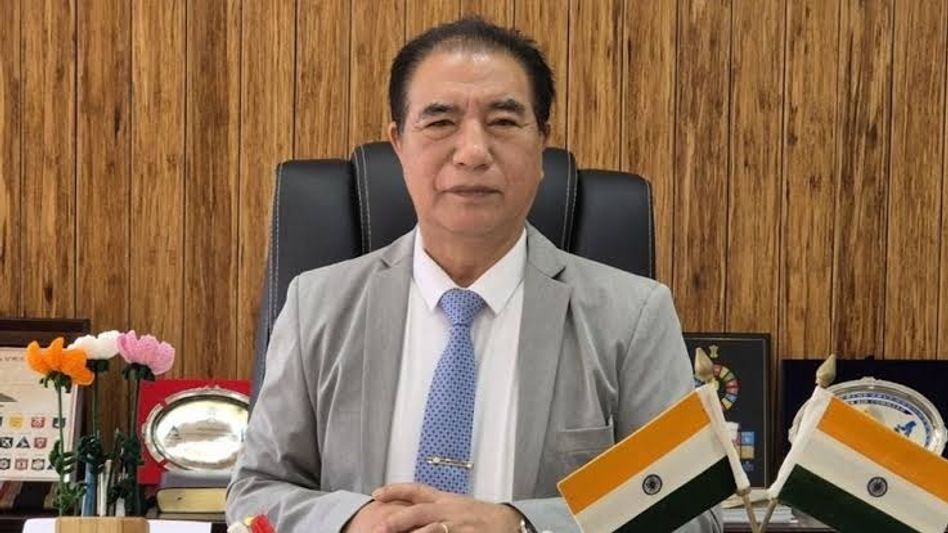
Mizoram Chief Minister Lalduhoma urged banks to step up lending and raise the state’s credit-deposit ratio to 67 per cent by 2028-29. He said wider formal credit, district-level targets and closer coordination were needed to support jobs and livelihoods.

- Oct 13, 2026,
- Updated Oct 13, 2026, 3:33 PM IST

- Mizoram’s credit-deposit ratio stood at 55.83 per cent in 2025-26
- Seven banks in the state had CD ratios below 40 per cent
- Agriculture, MSMEs and private sectors posted weak annual credit plan outcomes
Mizoram Chief Minister Lalduhoma on October 13 urged banks and financial institutions to increase lending across the state, setting a target of raising Mizoram’s credit-deposit (CD) ratio to at least 67 per cent by 2028-29 to improve access to institutional credit and support economic growth.
Addressing the third edition of the North East Bankers’ Conclave at Mizoram University (MZU) in Aizawl, Lalduhoma said Mizoram recorded a CD ratio of 55.83 per cent during 2025-26, indicating significant scope for expanding institutional lending.
He noted that seven banks operating in the state had a CD ratio below 40 per cent as of June 2026. In comparison, Assam recorded a CD ratio of 73.52 per cent, Nagaland 61.1 per cent and Tripura 61 per cent.
“Our government has set a target of raising Mizoram’s CD ratio to at least 67 per cent by 2028-29. Achieving this will require the commitment of every bank and financial institution operating in the state,” the chief minister said.
Lalduhoma called on banks to establish clear, district-wise and time-bound lending targets and expand their outreach beyond Aizawl. He stressed that greater access to formal credit was essential to help entrepreneurs and businesses translate the state’s economic potential into productive activities.
Highlighting the performance of the annual credit plan during 2025-26, the chief minister expressed concern over low target achievement in key sectors. He said achievement stood at 8.56 per cent in agriculture, 49.53 per cent in micro, small and medium enterprises (MSMEs), and 13.52 per cent in the other private sector.
While agriculture and the other private sector recorded slight year-on-year improvements, MSME performance declined, he said.
Lalduhoma underlined the importance of agriculture, MSMEs and private enterprise in promoting broad-based economic development. He said the effectiveness of credit plans should not be assessed solely on the amount of money disbursed, but also on the productive activities, employment opportunities and improved livelihoods generated through lending.
He urged financial institutions to move beyond conventional lending practices and work closely with entrepreneurs to develop viable, bankable projects suited to Mizoram’s economic needs.
“The potential is here. The entrepreneur is pretty serious here. Our task is to bridge the gap between that potential and the financial resources needed to realise it,” he said.
The chief minister also assured banks that the state government was willing to work with them to resolve practical difficulties and policy-related obstacles affecting lending.
Lalduhoma highlighted initiatives undertaken by the state government to strengthen coordination with financial institutions, including the flagship Bana Kaih, or handholding, scheme.
The scheme is being implemented in partnership with five banks: State Bank of India, Mizoram Rural Bank, Mizoram Cooperative Apex Bank, Union Bank of India and IDBI Bank.
He also said the government signed agreements with eight banks on September 7 under the One Department, One Bank (ODOB) initiative. The initiative aims to improve coordination between government departments and their partner banks and make financial management more efficient.
On digital financial management, Lalduhoma said Mizoram had onboarded all centrally sponsored schemes notified for implementation through the SNS-SPARS platform. The state’s integrated Financial Management Information System (ifMIS) has also been integrated with the Reserve Bank of India’s E-Kuber system and the Public Financial Management System (PFMS).
The government is also working towards phasing out the cheque system, with the chief minister expressing hope that the transition could be completed within a year.
The chief minister also called for greater corporate social responsibility (CSR) investment in the Northeast, noting that annual CSR spending in India exceeds ₹34,000 crore but has historically been concentrated in industrialised states.
He said the Northeast’s strategic location, international borders, rich biodiversity and young population offered considerable scope for socio-economic development and required greater corporate engagement.
Lalduhoma identified tourism and hospitality, healthcare and education, vocational and skill training, agro-horticultural processing, handloom and handicrafts, bamboo-based industries, manufacturing and services, trade and commerce, and warehousing and logistics as key sectors with potential for credit growth.
He urged banks to work with local entrepreneurs to identify viable projects and provide the financial support needed to develop businesses across these sectors.
The chief minister’s appeal at the conclave centred on increasing the flow of institutional credit to businesses and productive sectors, improving district-level lending and strengthening cooperation between the state government and banks. The proposed target of a 67 per cent CD ratio by 2028-29 is intended to expand access to formal finance and support employment and livelihood opportunities across Mizoram.