Nagaland CM leads delegation to Delhi, presses Centre on Naga peace talks, border regimes
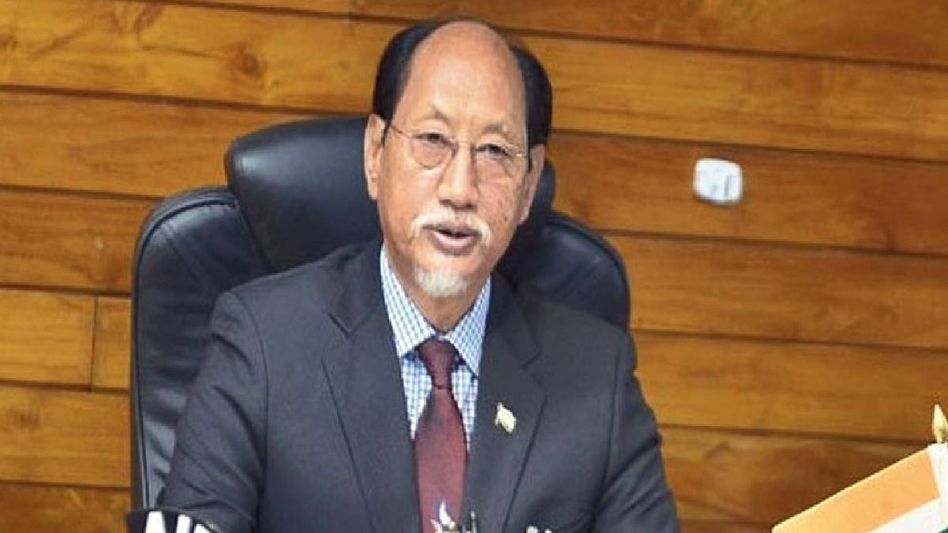
Nagaland Chief Minister Neiphiu Rio on Thursday, February 5 led a high-level official delegation to New Delhi, forcefully placing a set of long-pending and politically sensitive issues before the Government of India, including the Indo-Naga peace process, restoration of a special financial pattern for the state, and relaxation of the Protected Area Permit (PAP) and Free Movement Regime (FMR).

- Feb 05, 2026,
- Updated Feb 05, 2026, 9:22 PM IST

Nagaland Chief Minister Neiphiu Rio on Thursday, February 5 led a high-level official delegation to New Delhi, forcefully placing a set of long-pending and politically sensitive issues before the Government of India, including the Indo-Naga peace process, restoration of a special financial pattern for the state, and relaxation of the Protected Area Permit (PAP) and Free Movement Regime (FMR).
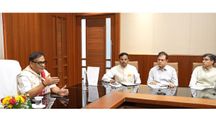
The delegation comprised Deputy Chief Minister Y. Patton, members of the State Cabinet, and members of the Sub-Committee of the Political Affairs Committee (PAC). The team held a series of meetings with senior Union leaders, including Union Home Minister Amit Shah, Union Finance Minister Nirmala Sitharaman, and Union Defence Minister Rajnath Singh.
Members of Parliament S. Supongmeren Jamir (Lok Sabha) and Phangnon Konyak (Rajya Sabha) also joined the meeting with the Union Home Minister as part of the PAC Sub-Committee.
Raising the Indo-Naga peace process as a priority issue, the Chief Minister reiterated the four-point resolutions adopted during the Consultative Meeting on the Naga Political Issue held on September 12, 2024. He stressed that the peace talks were originally declared as negotiations at the highest political level and urged the Centre to restore the same by appointing an interlocutor of political or ministerial rank to expedite discussions and work towards an early and honourable settlement.
Responding positively, the Union Home Minister indicated that a Minister of State for Home Affairs along with senior Home Ministry officials would be designated to take the Naga talks forward.
Highlighting Nagaland’s fragile fiscal position, Dr. Rio underscored that the state was created as a special political entity following the 16-Point Agreement, which assured that funds required for administration and development would be met from the Consolidated Fund of India.
In his formal representation, the Chief Minister recalled that when Nagaland became the 16th state of the Indian Union in 1963, it was recognised as a special case owing to its unique political history, geographical challenges, security concerns and limited economic base. As per Point 11 of the Agreement, the Centre had undertaken to bear the state’s expenditure to allow institutional and administrative stabilisation.
He termed this assurance a nation-building commitment, not a concession, and pointed out that the withdrawal of this arrangement in 1989, without consultation with the state, had left Nagaland structurally vulnerable, forcing it to depend on revenue deficit grants and other gap funding mechanisms.
Appealing for restoration of the original financial pattern, Dr. Rio said the political nature of Nagaland warranted special consideration. The Union Home Minister assured that the request for funding support from the Consolidated Fund of India would be examined positively. Union Finance Minister Nirmala Sitharaman also assured the Centre’s support and urgent consideration of the matter.
The delegation strongly pressed for the complete relaxation of the Protected Area Permit (PAP) regime in Nagaland. The Chief Minister pointed out that the State Cabinet had repeatedly deliberated on the issue—on January 6 and March 27, 2025, and again on December 16, 2025, and February 3, 2026—and had consistently urged the Ministry of Home Affairs to reverse the re-imposition of PAP.
Dr. Rio noted that multiple representations had already been submitted to the Centre between July and November 2025, seeking a review of the decision. The Union Home Minister assured that the Home Ministry would examine the matter with a positive approach.
On the Free Movement Regime, the Chief Minister highlighted Nagaland’s 215-km international border with Myanmar, across which Naga communities have historically maintained close social, cultural and economic ties. He said recent changes to the FMR guidelines had caused hardship to border communities who depend on cross-border movement for agriculture, traditional practices and familial obligations.
Reiterating the State Cabinet’s decisions taken on January 6, 2025, and February 3, 2026, Dr. Rio urged the Centre to restore the earlier, more flexible FMR framework. The Union Home Minister assured a patient hearing and a sympathetic examination of the concerns, balancing security considerations with the region’s unique cultural realities.