
Nagaland CM Neiphiu Rio unveils ‘Developed Nagaland @ 2047’ vision in state budget
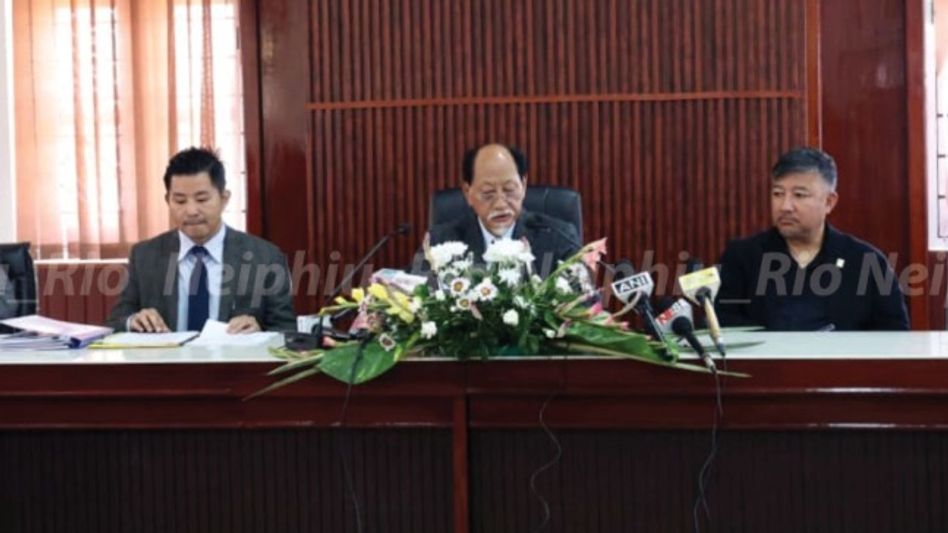
Nagaland Chief Minister Neiphiu Rio on March 26 presented the State Budget for 2026–27 during the second phase of the Assembly session, outlining it as a strategic roadmap to achieve the vision of “Developed Nagaland @ 2047”.

- Mar 26, 2026,
- Updated Mar 26, 2026, 7:09 PM IST

Nagaland Chief Minister Neiphiu Rio on March 26 presented the State Budget for 2026–27 during the second phase of the Assembly session, outlining it as a strategic roadmap to achieve the vision of “Developed Nagaland @ 2047”.
Rio began by congratulating the people of eastern districts on the signing of the Frontier Nagaland Territorial Authority (FNTA) agreement, describing it as a historic step towards participatory governance. He informed the House that the FNTA Bill is being tabled in the ongoing session and efforts are underway to constitute an interim body.
Reiterating the government’s commitment to resolving the Naga political issue, the Chief Minister highlighted the formation of a Political Affairs Committee comprising ministers, tribal representatives, political parties, and MPs. He said a sub-committee under his chairmanship is intensifying efforts, and noted that following a meeting with the Union Home Minister on February 5, the Centre has initiated steps to form a committee to monitor and advance the peace talks.
On the fiscal front, Rio expressed concern over the Sixteenth Finance Commission’s revised devolution formula, which reduces Nagaland’s share in central taxes by around 15 per cent—from 0.569 per cent to 0.481 per cent. Consequently, the State is projected to receive Rs 7,341 crore in 2026–27, compared to Rs 8,684 crore under the earlier formula.
He also flagged the impact of the discontinuation of Post-Devolution Revenue Deficit Grants and said the State has sought continued support from the Centre to address potential fiscal gaps and protect its constitutional position.
Emphasising fiscal discipline, the Chief Minister said the government would focus on improving revenue generation, controlling expenditure, and managing deficits while sustaining development.
Announcing a range of new initiatives, Rio said the budget introduces, for the first time, an SDG-linked framework, a Gender Budget Statement, and outcome-based budgeting to strengthen accountability.
Among key measures, Rs 2 crore has been earmarked for an Innovation Seed Fund to support women entrepreneurs, while 50 “Pink Scooty Taxis” will be introduced to enhance women’s participation in the transport sector. The government also plans to set up crèches in major offices.
To address water security, Rs 24 crore has been allocated for the Nagaland Strategic Water Resilience Initiative, focusing on rainwater harvesting and groundwater recharge. In the energy sector, Rs 11 crore has been set aside for a community solar initiative to install rooftop systems in village council buildings.
The budget also prioritises skill development, with Rs 5 crore allocated to expand the Nagaland Skill and Entrepreneurship Development Mission, and Rs 50 lakh for a new apprenticeship and placement platform.
In education, Rs 1 crore has been earmarked for the Nagaland Academic Excellence Corpus to upskill faculty in emerging sectors, alongside initiatives to promote STEM education and support out-of-school youth.
Social sector schemes include a Community Wellbeing Initiative and incentives for cleanliness and sanitation, while Rs 3 crore has been allocated to promote sports development.
The government also announced measures to boost revenue mobilisation through digital reforms and new institutional mechanisms, along with initiatives to support agriculture, entrepreneurship, and traditional artisans.
Rio said the budget reflects the government’s commitment to inclusive and sustainable growth aligned with the long-term vision for the State.
MORE NEWS








Copyright©2026 Living Media India Limited. For reprint rights: Syndications Today
