
Nagaland DCs’ Conference 2026 begins in Kohima, focus on governance, census and development reforms
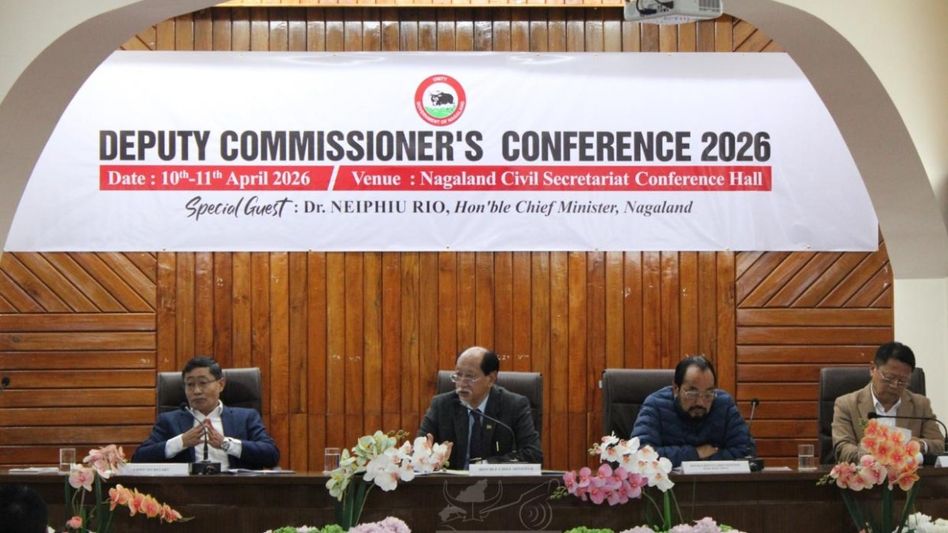
The Deputy Commissioners’ Conference 2026 commenced at the Civil Secretariat Conference Hall in Kohima on April 10, bringing together district administrators and senior officials for a two-day deliberation on key governance and development issues in Nagaland.

- Apr 10, 2026,
- Updated Apr 10, 2026, 3:21 PM IST

- Nagaland DCs’ Conference 2026 started in Kohima with key governance discussions
- Chief Minister emphasised expanded DC roles including welfare delivery
- Skilling and employment initiatives linked to job fairs and Japan Connect
The Deputy Commissioners’ Conference 2026 commenced at the Civil Secretariat Conference Hall in Kohima on April 10, bringing together district administrators and senior officials for a two-day deliberation on key governance and development issues in Nagaland.
Addressing the inaugural session, Chief Minister Neiphiu Rio said the conference comes at a crucial time to reflect on both the traditional and evolving responsibilities of Deputy Commissioners (DCs). He emphasised that core functions such as maintaining law and order, revenue administration, conduct of elections, census operations and supervision of local governance systems remain fundamental and non-negotiable.
However, he noted that the role of DCs has expanded significantly over time to include effective implementation of Centrally Sponsored Schemes, disaster management, grievance redressal and coordination among multiple departments. He said the position has evolved from being primarily regulatory to becoming facilitative and development-oriented, with a strong focus on ensuring last-mile delivery of welfare programmes.
Highlighting the changing nature of governance, Rio said administration is now more citizen-centric, technology-driven and outcome-oriented, placing DCs at the forefront of service delivery. He stressed the need to balance law and order with development administration, stating that both are equally important for effective governance.
He further said that DCs play a critical role at the district level by leading coordination platforms, ensuring convergence across departments, and acting as a vital link between the government and the people, making governance more responsive and inclusive.
Underscoring the State Government’s commitment to transparency and meritocracy, Rio cited the establishment of the Nagaland Staff Selection Board to ensure fair recruitment. He also highlighted initiatives such as the Chief Minister’s Micro Finance Initiative aimed at improving livelihoods and promoting inclusive growth.
On skilling and employment, the Chief Minister said the Nagaland Skill and Entrepreneurship Development Mission has evolved into a demand-driven system aligned with key sectors including construction, hospitality, transport and IT-enabled services. He added that skilling programmes are increasingly linked to employment through job fairs and partnerships, with over 73,000 applicants currently registered.
He also highlighted global employment opportunities under the Nagaland Japan Connect 2026, noting that more than 450 youth have registered, with 65 candidates already receiving recruitment intent across sectors such as agriculture, manufacturing and shipping.
On the health sector, Rio said that 83 medical officers and junior specialists appointed during the COVID-19 period are currently serving. However, he expressed concern over low participation in recruitment drives, noting that only 193 out of 1,553 registered doctors under the Nagaland Medical Council had applied, highlighting a gap between available manpower and public service participation.
Raising concerns over the State’s fiscal position, he pointed to challenges following the recommendations of the 16th Finance Commission, including a decline in Nagaland’s share of central taxes and the absence of Revenue Deficit Grants for the 2026–31 period. He warned of rising deficits and stressed the need for revenue augmentation and austerity measures to ensure long-term fiscal stability.
On governance and traditional institutions, Rio highlighted the role of Tribal and Village Councils, particularly in the implementation of the Register of Indigenous Inhabitants of Nagaland. He said fresh notifications issued in September 2024 have laid down clear criteria for issuing Indigenous Inhabitant Certificates (IIC), with Village Verification Committees tasked with verifying applicants’ ancestry.
He called on DCs to ensure strict scrutiny before issuing certificates, emphasising accountability and the protection of indigenous rights.
Highlighting the importance of data integrity, the Chief Minister said the Census of India 2027 will be India’s first fully digital census, to be conducted in two phases beginning with houselisting in July 2026. He stressed that accurate data is essential for governance, planning and representation, warning that discrepancies could adversely affect policy decisions.
In his concluding remarks, Rio urged DCs to view their roles not merely as administrators but as drivers of transformation, focusing on outcomes, accountability and tangible impact on people’s lives.
Earlier, Chief Secretary Sentiyanger Imchen said the extended conference was convened in view of the upcoming Census and the expanding role of DCs beyond traditional functions. He added that the platform would help incorporate field-level insights into policymaking and strengthen coordination between departments.
The conference was attended by Deputy Chief Minister Yanthungo Patton, senior officials, DCs and Additional Deputy Commissioners.
The sessions covered a range of issues including solid waste management under the Swachh Bharat Mission, land acquisition under the RFCTLARR Act, skilling initiatives and administrative reforms. The second day will focus on RIIN, Inner Line Permit (ILP), border affairs, and preparations for the Census, along with discussions on long-term development under the “Viksit Nagaland for Viksit Bharat 2047” vision.
MORE NEWS












Copyright©2026 Living Media India Limited. For reprint rights: Syndications Today
