Nagaland forum backs Siang valley residents; urges Centre, Arunachal government to respect opposition to mega dam
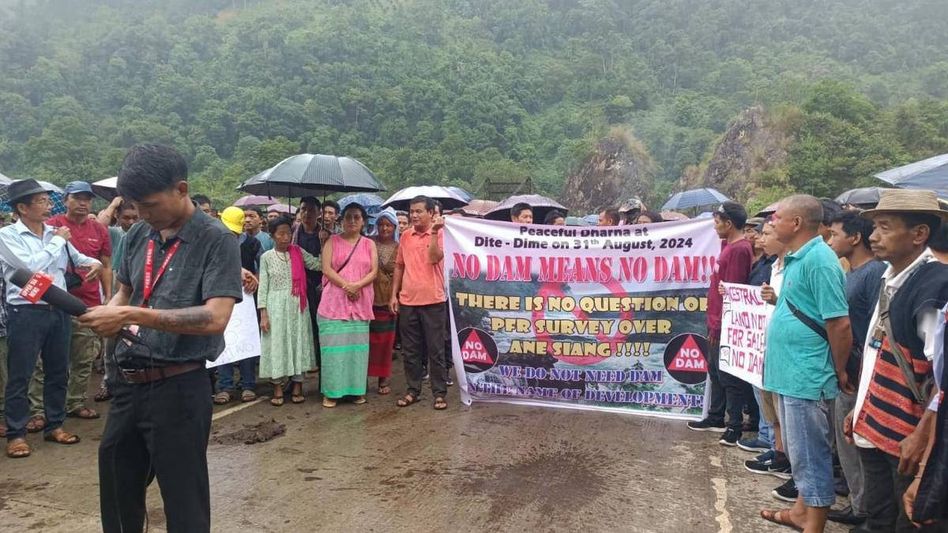
An organisation representing community-conserved areas in Nagaland has expressed solidarity with residents of Arunachal Pradesh’s Siang Valley over their opposition to the proposed Siang Upper Multipurpose Project (SUMP), urging the state and Central governments to respect the decisions taken by local communities through their traditional village councils.

- Nov 09, 2026,
- Updated Nov 09, 2026, 5:43 PM IST

An organisation representing community-conserved areas in Nagaland has expressed solidarity with residents of Arunachal Pradesh’s Siang Valley over their opposition to the proposed Siang Upper Multipurpose Project (SUMP), urging the state and Central governments to respect the decisions taken by local communities through their traditional village councils.
In an open letter addressed to the people of Siang Valley, the Nagaland Community Conserved Areas’ Forum (NCCAF) said it stood with the residents in their efforts to protect their ancestral land and the Siang river, while calling for their concerns and collective decisions to be heard.
The letter, signed by NCCAF chairman Heirang Lungalang and secretary Seve R. Vadeo, drew parallels between the experiences of communities in Nagaland and those in Siang Valley, particularly their concerns over land rights, access to natural resources and the presence of security personnel in areas where residents depend on agriculture and forests for their livelihoods.
Referring to the ongoing situation in the valley, the forum expressed concern over reports of women keeping vigil along riverbanks, elders facing action for supporting their villages and young people being detained. It also referred to restrictions on farmers during the harvest season, alleging that residents had faced difficulties accessing their agricultural fields and carrying traditional tools.
The organisation said the concerns raised by the people of Siang Valley were rooted in their right to participate in decisions concerning their ancestral land and natural resources.
Highlighting the role of traditional community institutions, the forum said the Adi community's customary decision-making system, particularly the kebang, or traditional village council, was central to determining the future of its land and resources.
It cited two resolutions to underline its position. In August 2025, the General Bogum Bokang Kebang at Geku declared the Siang river as Aane Siang, or a goddess river, and adopted a resolution opposing the proposed dam and its pre-feasibility survey.
Similarly, in March 2026, the kebang of Ramku village reportedly resolved that no individual or group could represent the village without the authorisation of its Village Council.
The forum argued that decisions taken through traditional village institutions should not be replaced by signatures collected from individual households or by a small number of residents claiming to represent entire villages. It said such practices could create divisions within communities.
The letter also referred to conservation initiatives undertaken by Adi communities, including restrictions on hunting and fishing using explosives, poison and electric current. It cited Gobuk village as an example of a community that had shifted from hunting towards conservation, while noting that villages in Upper Siang had also been setting aside forests for community protection.
The organisation maintained that opposition to the proposed mega dam should not be interpreted as resistance to development. It pointed out that the same traditional council that opposed the large project had expressed willingness to consider smaller dams on the Siang's tributaries.
Calling on the authorities to engage with residents through their traditional institutions, the forum said decisions taken collectively by communities must be respected.
"A 'no' given by a people through its own council is an answer to be respected, not an obstacle to be worked around," the letter stated.
The forum also expressed solidarity with families awaiting the return of detained members and said the people of Siang Valley were not alone in their concerns over the proposed project.
The proposed 11,200-MW Siang Upper Multipurpose Project has faced opposition from sections of the Adi community over concerns relating to displacement, submergence of ancestral land, environmental impact and the possible disruption of traditional livelihoods.
The project has also been discussed in the context of China's proposed hydropower development on the Yarlung Tsangpo river, which enters India as the Siang. However, concerns over the impact of the proposed project on local communities have remained central to the opposition in the valley.