Nagaland to amalgamate low-enrolment schools, create composite institutions
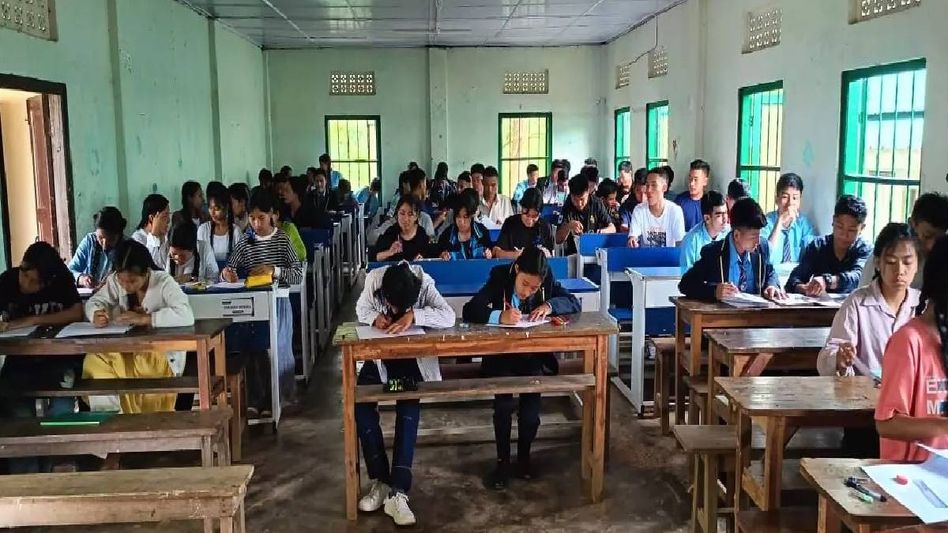
The Nagaland government is planning a major restructuring of its government school system, including the amalgamation and closure of low-enrolment schools, creation of composite schools and rationalisation of teacher deployment, Advisor for School Education Dr Kekhrielhoulie Yhome said on Saturday, August 22.

- Aug 22, 2026,
- Updated Aug 22, 2026, 5:17 PM IST

The Nagaland government is planning a major restructuring of its government school system, including the amalgamation and closure of low-enrolment schools, creation of composite schools and rationalisation of teacher deployment, Advisor for School Education Dr Kekhrielhoulie Yhome said on Saturday, August 22.
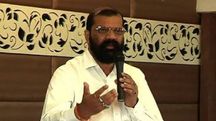
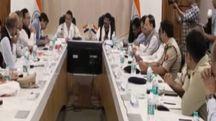
Addressing the General Conference of the Nagaland Government Higher Secondary School Employees Association (NGHSSEA) on the theme “Catalyzing Educational Transformation”, Yhome said the School Education Department had compiled the required data and would consult teachers, communities and other stakeholders before implementing the proposed reforms.
The restructuring is aimed at improving student enrolment, infrastructure, governance and the overall quality of government education, he said.
Yhome said composite schools, particularly where institutions are located on the same or nearby premises, could provide students with continuity from the elementary level through higher secondary education and help improve enrolment.
The department is also examining the uneven distribution of teachers, with shortages reported in key subjects such as mathematics, science and postgraduate teaching, while surplus teachers are available in some other categories. Yhome said available human resources would be rationalised and redeployed to address critical shortages.
Speaking to reporters on the sidelines of the conference, he said the government would undertake emergency recruitment of graduate teachers in mathematics and science. The shortage is particularly acute in technical subjects, including mathematics, physics and chemistry, he said.
The issue has been recognised by the state Cabinet, and the modalities for the recruitment will be worked out by the government, Yhome said. He added that the government may consider recruiting candidates from outside Nagaland if suitable teachers are not available within the state.
Yhome said around 780 postgraduate teachers currently constitute the NGHSSEA, while another 70 PGTs are expected to join after completion of recruitment formalities. A further 30 posts are also in the pipeline, he said.
The department is also working on measures to strengthen curriculum, digital education, arts, music, socio-emotional learning and mother-tongue education. It is collaborating with external organisations on project-based learning and art and music initiatives, while also exploring the use of artificial intelligence in education, Yhome said.
On teacher attendance, he said the department was strengthening monitoring mechanisms to ensure regular attendance and classroom teaching. A teacher attendance monitoring system is already in place, while an integrated system and mobile application are being developed in coordination with the Information Technology Department to track attendance and leave records.
The proposed system would link teachers’ leave records with their Annual Performance Appraisal Reports (APARs), he said.
Yhome acknowledged connectivity constraints in some parts of the state and said teachers without internet access would be able to upload attendance after reaching a serviceable location, with the data synchronised automatically.
On Sanskrit teaching, Yhome said schools under the Nagaland Board of School Education (NBSE) would continue to follow the state’s language policy, which makes mother-tongue education compulsory. Schools affiliated with the Central Board of Secondary Education (CBSE) and the Council for the Indian School Certificate Examinations (CISCE), however, would follow the respective mandates of their boards.
The government would not be required to provide additional support for Sanskrit teachers in schools operating outside the NBSE system, he said.
On service-related matters, Yhome said the department was examining issues concerning promotions and career progression of postgraduate and secondary teachers in consultation with other government departments. He assured teachers that major reforms would not be implemented without consultation with stakeholders.
Earlier, NGHSSEA president Yekavi Swu called for an early review of the higher secondary cadre and the Nagaland School Education Service Rules, 2017, which he said were nearly a decade old.
Swu also highlighted shortages of postgraduate teachers in several higher secondary schools and urged the department to work closely with the association to address concerns affecting the higher secondary cadre.
He also stressed the need to maintain a balance between academic and co-curricular activities amid changes in the education system following the implementation of the National Education Policy (NEP) 2020.