Nagaland tops party-switching cases as 111 MPs, MLAs change sides since 2022: ADR
Nagaland recorded the highest number of cases of elected MPs and MLAs changing political parties after winning elections between 2022 and 2026, with 32 such cases, according to an analysis by the Association for Democratic Reforms (ADR) and National Election Watch.

- Sep 25, 2026,
- Updated Sep 25, 2026, 9:24 PM IST

Nagaland recorded the highest number of cases of elected MPs and MLAs changing political parties after winning elections between 2022 and 2026, with 32 such cases, according to an analysis by the Association for Democratic Reforms (ADR) and National Election Watch.
The analysis found that 111 MPs and MLAs changed parties after being elected to Parliament or state assemblies during the period, including 26 Lok Sabha members, seven Rajya Sabha members and 78 MLAs.
Nagaland accounted for all 32 cases involving MLAs, with the bulk linked to a political realignment involving the ruling Nationalist Democratic Progressive Party (NDPP) and the Naga People's Front (NPF).
According to the ADR analysis, 25 legislators originally elected from the NDPP were among those who changed parties, while the NPF emerged as the largest recipient of lawmakers, with 32 legislators joining the party.
West Bengal followed Nagaland with 20 cases, all involving Lok Sabha members. The analysis said all 20 had originally been elected on All India Trinamool Congress (AITC) tickets and subsequently moved to the Nationalist Citizens Party of India (NCPI). The MPs have claimed a merger with the NCPI, and the matter is pending before Lok Sabha Speaker Om Birla.
Telangana recorded nine cases, all involving MLAs originally elected from the Bharat Rashtra Samithi (BRS), with the Congress emerging as the principal recipient.
Goa and Punjab recorded eight cases each. In Goa, Congress MLAs moved to the BJP, while Punjab's cases included six Rajya Sabha members and two MLAs.
Among other northeastern states, Meghalaya recorded six MLA cases, Manipur five and Arunachal Pradesh four.
Maharashtra recorded six cases, all involving Lok Sabha members elected from Shiv Sena (Uddhav Balasaheb Thackeray) who subsequently moved to the Shiv Sena led by Eknath Shinde. Himachal Pradesh and Rajasthan recorded two cases each, while Karnataka, Madhya Pradesh, Sikkim and Uttar Pradesh had one case each. Delhi recorded one Rajya Sabha member changing party.
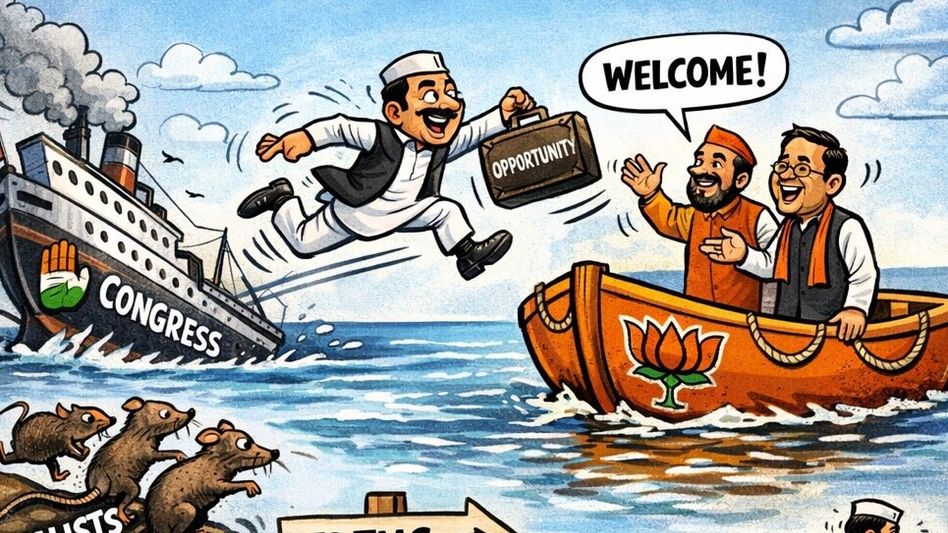
At the party level, the NDPP recorded the highest number of exits with 25, followed by the AITC with 20 and the Congress with 19. The BRS accounted for nine cases, while the AAP and NCP recorded seven each.
The NPF received the highest number of lawmakers who changed parties, with 32, followed by the BJP with 29 and NCPI with 20. The Congress received nine, Shiv Sena eight, NPP six and People's Party of Arunachal four.
ADR said the analysis covered individual defections, party mergers, resignations followed by bypoll victories and disqualifications followed by victories in bypolls.
The watchdog also cautioned that its exercise may not be exhaustive as there is no systematically maintained and readily accessible official database of legislators changing political parties.
ADR has recommended changes to the anti-defection framework, including transferring the power to decide disqualification petitions from presiding officers to the President in the case of MPs and governors in the case of MLAs, based on the Election Commission's advice.
It has also recommended a time limit for deciding disqualification petitions and restrictions on defectors holding public office until they are re-elected.