
Nagaland village launches festival to revive climate-resilient taro crop
A small village in Nagaland's Longleng district has organised what organisers say could become a model for community-driven agricultural revival, launching a two-day festival dedicated entirely to taro, a crop that once saved the region from famine but has since been largely overlooked.

- Dec 11, 2025,
- Updated Dec 11, 2025, 11:17 PM IST

A small village in Nagaland's Longleng district has organised what organisers say could become a model for community-driven agricultural revival, launching a two-day festival dedicated entirely to taro, a crop that once saved the region from famine but has since been largely overlooked.
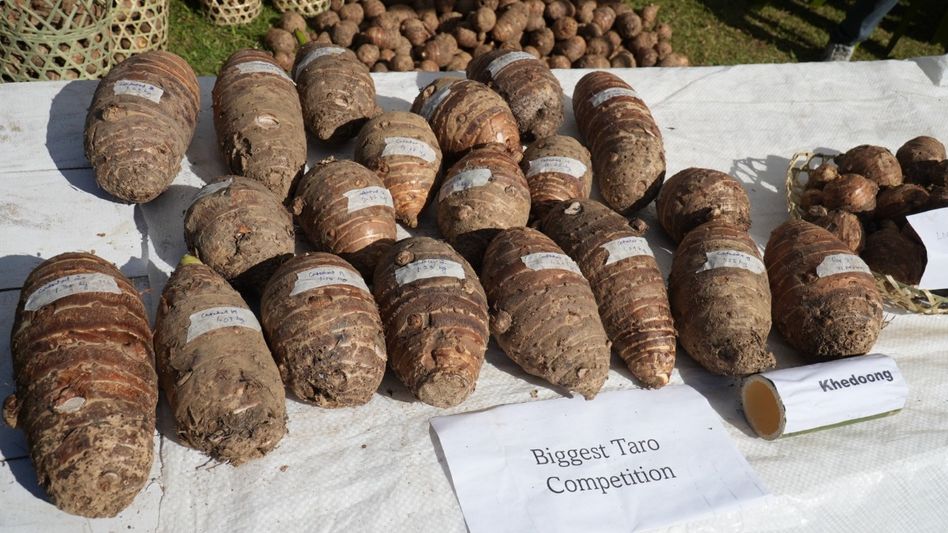
The inaugural Taro Festival, held on December 5–6 in Pongo Village as part of the 26th Hornbill Festival, drew farmers, youth groups, and self-help groups to showcase more than 10 varieties of the root vegetable, including Khedoong, a prized local variety known for its texture, flavour and long shelf life.
Village head P Khangyong reminded attendees of taro's historical significance during the opening ceremony. "Our forefathers survived famine because of taro, and this story has now become an important folklore of our village," he said, recalling his own childhood when the crop was the only available food during difficult times.
The festival, organised largely by village youth in collaboration with the Department of Horticulture, prioritised farmer participation over commercial interests. Festival convenor Along H Phom said a major share of earnings went directly to farmers. "We prioritised farmers' knowledge at the forefront," Phom said. "Our aim is to help farmers see taro as a cash crop with economic potential."
Agricultural stalls featured products from self-help groups and local entrepreneurs, with participants demonstrating the crop's versatility. One farmer explained that no part of the plant goes to waste, with leaves and corms used for food and animal feed. Local artisans also revealed that taro components are incorporated into the village's traditional black clay pottery.
A. Pongshi Phom, the local MLA who attended as chief guest, encouraged youth to explore farming and agro-tourism opportunities.
The second day included technical sessions led by scientists from ICAR regional centres, focusing on taro enhancement, value addition and varietal production. District agriculture officer Maongsangla highlighted the crop's nutritional value and relevance to climate adaptation.
Festival secretary Aye Keikung acknowledged the modest beginnings. "The first edition was successful even though we started with a small budget and a lot of courage," he said, adding that organisers plan to expand future editions with partnerships from research institutions and agricultural departments.
The organisers aim to secure modern market linkages and scientific support whilst documenting indigenous knowledge about taro cultivation. Future festivals are expected to involve more research institutions, agri-based companies and government departments.
MORE NEWS












Copyright©2026 Living Media India Limited. For reprint rights: Syndications Today
