Nagaland’s learning outcomes under lens as PARAKH National Survey Report 2024 flags gaps
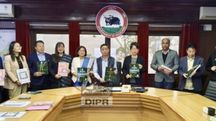
The State Council of Educational Research and Training (SCERT), Nagaland, has released the PARAKH Rashtriya Sarvekshan (PRS) Report 2024, offering a detailed and data-driven assessment of student learning outcomes and school education practices across the state. The report evaluates competencies of students in Grades 3, 6, and 9, presenting a comprehensive snapshot of academic performance, teaching practices, and systemic challenges within Nagaland’s school education system.

- Jan 29, 2026,
- Updated Jan 29, 2026, 8:56 AM IST

The State Council of Educational Research and Training (SCERT), Nagaland, has released the PARAKH Rashtriya Sarvekshan (PRS) Report 2024, offering a detailed and data-driven assessment of student learning outcomes and school education practices across the state. The report evaluates competencies of students in Grades 3, 6, and 9, presenting a comprehensive snapshot of academic performance, teaching practices, and systemic challenges within Nagaland’s school education system.
Formerly known as the National Achievement Survey, the PRS was conducted by PARAKH, NCERT, under the Ministry of Education, on December 4, 2024. The large-scale assessment covered 22,220 students and more than 3,335 teachers from 724 schools across Nagaland. Student performance was analysed across key parameters including gender, geographic location, school management type, and social groups, ensuring a nuanced understanding of learning disparities.
At the Foundational Stage (Grade 3), Nagaland’s overall performance remained below the national average, with Mathematics emerging as a major area of concern. Districts such as Phek and Mokokchung recorded the strongest outcomes in the state, while Kiphire and Tuensang ranked among the lowest performers. Notably, Kiphire was also listed among the 50 lowest-performing districts nationwide at this stage.
The situation appeared more concerning at the Preparatory Stage (Grade 6), where Nagaland once again scored below the national average, particularly in Mathematics, placing the state among the bottom ten performing states in the country. While Mokokchung and Phek continued to lead within the state, districts including Noklak, Mon, Shamator, Tuensang, and Kiphire remained at the lower end. Among them, Noklak, Shamator, and Kiphire featured prominently among the 50 lowest-performing districts nationally.
At the Middle Stage (Grade 9), students in Nagaland performed above the national average in Language, indicating relative strength in literacy skills. However, performance continued to lag in Mathematics, Science, and Social Science. Kohima, Mokokchung, and Dimapur emerged as top-performing districts at this level, while Shamator, Kiphire, Noklak, and Mon remained among the weakest. Once again, Shamator and Kiphire were listed among the country’s 50 lowest-performing districts.
Significantly, the report notes that no district from Nagaland featured among the top-performing districts at the national level in any of the assessed grades, highlighting persistent structural and academic challenges.
Despite the concerning trends, education officials view the PRS Report 2024 as a crucial evidence base for reform. The findings are expected to guide district- and state-level planning, enabling targeted, data-driven interventions aimed at improving quality, equity, and relevance in school education across Nagaland.