President Murmu assents to FNTA Bill, Neiphiu Rio hails Eastern Nagaland autonomy step
President Droupadi Murmu has granted assent to the FNTA Bill, 2026. The legislation advances a negotiated framework for greater autonomy in eastern Nagaland.

- Oct 26, 2026,
- Updated Oct 26, 2026, 11:50 AM IST

- Authority will cover six districts and administer 46 transferred subjects
- Proposed 62-member body includes 40 elected representatives and 20 non-voting MLAs
- Women will receive reservation in one-third of the authority's elected seats
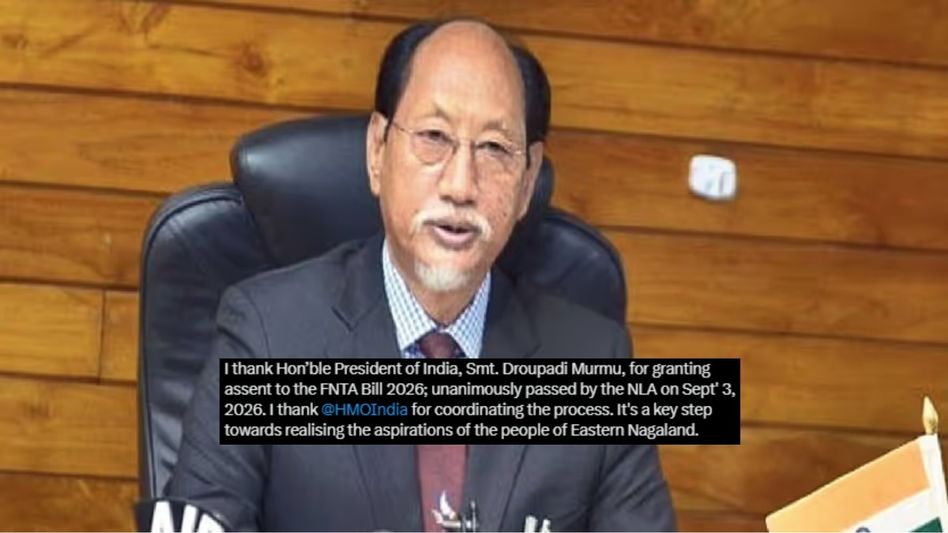
Nagaland Chief Minister Neiphiu Rio has welcomed President Droupadi Murmu’s assent to the Frontier Nagaland Territorial Authority (FNTA) Bill, saying the move would help fulfil the long-standing aspirations of people in six eastern districts of the state.
In a post on X on Sunday, Rio thanked the President for approving the legislation and the Union Ministry of Home Affairs for coordinating the process. He described the development as a significant step towards addressing the demands of eastern Nagaland.
The FNTA will cover Tuensang, Mon, Longleng, Kiphire, Noklak and Shamator districts. The proposed authority aims to strengthen local governance, accelerate development and reduce regional disparities by transferring powers over 46 subjects to the territorial body.
Deputy Chief Minister and BJP Legislature Party Leader Yanthungo Patton also welcomed the President’s assent, describing it as a historic milestone for the region. He thanked Murmu and the Centre for facilitating the process.
The development follows a tripartite memorandum of agreement signed on February 5 by the Centre, the Nagaland government and the Eastern Nagaland People’s Organisation (ENPO), which represents eight recognised Naga tribes in the region.
The ENPO has been demanding a separate state since 2010, citing alleged neglect and persistent developmental disparities in eastern Nagaland. The FNTA framework seeks to address these concerns through greater autonomy and decentralised administration while keeping the region within Nagaland.
The Nagaland Legislative Assembly unanimously passed the bill on September 3 after months of deliberations. An earlier version, introduced in March, had been deferred after the Centre, the ENPO and the Eastern Nagaland Legislators’ Union sought clarity on several provisions, including the proposed authority’s powers.
The President’s assent marks a key constitutional step towards establishing the FNTA. The Nagaland government must now initiate the implementation process, with the authority’s operational framework to be governed by the legislation and the necessary formal notifications, officials said.