Centre introduces Bill to tighten anti-paper leak law, proposes up to 10 years in jail
The Centre on Monday, July 27 introduced the Public Examinations (Prevention of Unfair Means) Amendment Bill, 2026 in the Lok Sabha, proposing stricter penalties, faster investigations and time-bound trials to curb paper leaks and other forms of malpractice in government recruitment and entrance examinations.

- Jul 27, 2026,
- Updated Jul 27, 2026, 3:45 PM IST

The Centre on Monday, July 27 introduced the Public Examinations (Prevention of Unfair Means) Amendment Bill, 2026 in the Lok Sabha, proposing stricter penalties, faster investigations and time-bound trials to curb paper leaks and other forms of malpractice in government recruitment and entrance examinations.
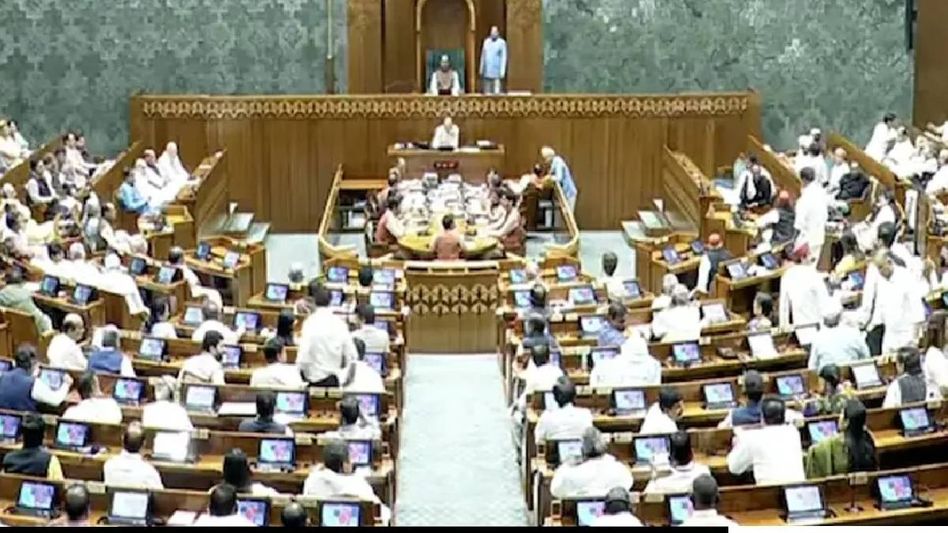
The Bill was tabled by Union Minister Jitendra Singh amid protests by opposition members, who demanded a discussion on the NEET paper leak controversy and police action during a recent student protest march. Soon after its introduction, proceedings in the Lok Sabha were disrupted as opposition MPs staged protests over the issue.
The proposed legislation seeks to strengthen the Public Examinations (Prevention of Unfair Means) Act, 2024 by enhancing punishments for those involved in examination fraud and introducing measures to expedite investigations and judicial proceedings.
Under the amendment, individuals found guilty of unfair practices, including question paper leaks and examination fraud, could face imprisonment ranging from five to ten years and a fine of up to Rs 50 lakh.
The Bill also prescribes tougher action against service providers and agencies found complicit in examination-related malpractice. Such entities could face fines of up to Rs 5 crore, recovery of costs incurred in conducting the affected examinations and disqualification from handling public examinations for up to eight years.
To ensure speedy adjudication of examination fraud cases, the government has proposed the establishment of fast-track courts. The Bill mandates that investigations be completed within two months of a reference made by the Central government, while trials are proposed to be concluded within a specified timeframe after the filing of the chargesheet.
The amendment significantly enhances the penalties provided under the existing 2024 law. At present, offences involving unfair means attract imprisonment of three to five years and a fine of up to Rs 10 lakh. The proposed legislation raises the maximum prison term to ten years and increases the maximum fine to Rs 50 lakh.
Similarly, penalties for service providers have been strengthened. While the current law provides for fines of up to Rs 1 crore and restrictions of up to four years, the amendment proposes increasing the fine to Rs 5 crore and extending the prohibition period to as long as eight years.
The government said the amendments were necessitated by repeated incidents of question paper leaks and examination-related malpractices that have undermined the transparency and credibility of public examinations. The proposed changes come amid sustained concerns over alleged irregularities in competitive examinations, including the NEET-UG controversy, and growing demands from students and opposition parties for stronger legal safeguards against examination fraud.