Centre rejects reports claiming Bhutan declined India's E20 fuel proposal
The Ministry of Petroleum and Natural Gas has categorically dismissed media reports claiming that Bhutan rejected a proposal to import E20 petrol from India, stating that no such proposal has been made and describing the reports as "incorrect."

- Jul 05, 2026,
- Updated Jul 05, 2026, 5:03 PM IST

The Ministry of Petroleum and Natural Gas has categorically dismissed media reports claiming that Bhutan rejected a proposal to import E20 petrol from India, stating that no such proposal has been made and describing the reports as "incorrect."
In an official clarification, the ministry said that no Indian oil marketing company has offered to export E20 petrol to Bhutan and that no formal proposal on the matter currently exists. It also urged the public and media to rely only on verified information issued by the ministry and authorised oil companies.
The clarification follows reports suggesting that Bhutan had requested India to continue supplying conventional petrol instead of ethanol-blended fuel due to concerns over the country's fuel infrastructure and operational requirements.
According to the reports, Bhutan had informally conveyed its preference to continue using regular petrol, citing practical challenges rather than policy differences. Among the concerns highlighted were the country's ageing fuel storage infrastructure, particularly underground storage tanks that may not be suitable for handling ethanol-blended fuel.
Ethanol-blended petrol is known to absorb moisture more readily than conventional fuel. In older storage systems, especially where water ingress is possible, this could affect fuel quality and potentially lead to engine-related issues if contamination occurs. Reports also indicated that Bhutan had sought improved storage infrastructure, including leak-proof tanks, before considering any future transition to higher ethanol blends.
The country's mountainous terrain was also cited as a factor influencing its approach. With transport networks traversing steep and challenging roads, officials were reported to have emphasised the need for consistent vehicle performance and fuel reliability under demanding operating conditions.
Bhutan currently relies entirely on fuel imports from India, including higher-grade petrol and diesel supplied specifically for export. Any change in the fuel supplied would therefore have implications for the country's vehicle fleet, storage infrastructure and transport operations.
Reports further suggested that Bhutan had requested advance notice should India move towards supplying fuels with higher ethanol content in the future, allowing sufficient time to upgrade infrastructure and prepare for any transition.
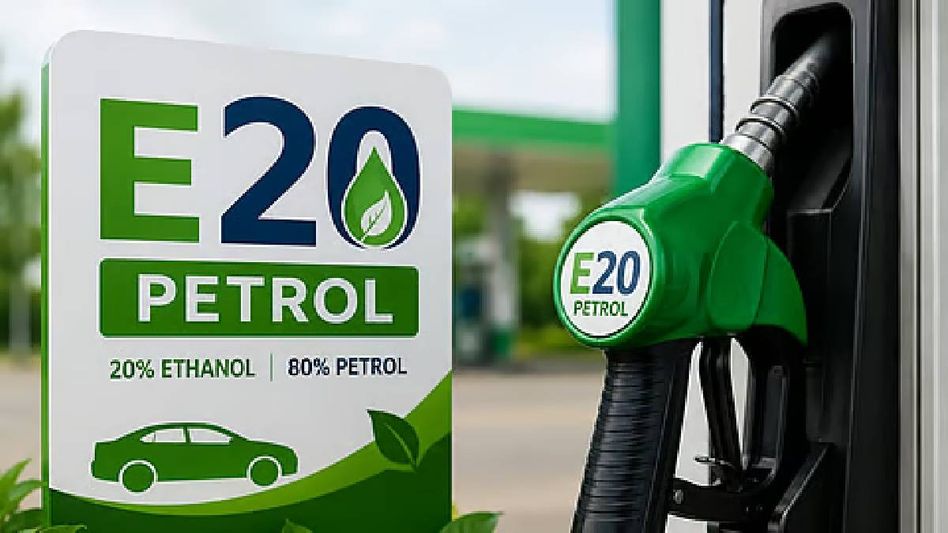
The issue has also drawn attention to India's ongoing ethanol-blending programme. E20 petrol, comprising 20 per cent ethanol and 80 per cent petrol, forms a key component of the Centre's strategy to reduce dependence on fossil fuels, lower emissions and promote cleaner energy.
However, the nationwide rollout has generated discussion among vehicle owners, particularly those using older vehicles. Concerns have been raised over fuel efficiency, maintenance costs and engine compatibility. The government has maintained that while E20 fuel may result in a marginal reduction in mileage, it is expected to deliver improved engine performance and contribute to the country's long-term environmental objectives.
India is also reported to be evaluating higher ethanol blends, including E25, as part of its broader clean energy roadmap. The developments have highlighted the importance of accounting for varying geographical, climatic and infrastructural conditions when implementing fuel transition policies across different regions.