
Congress marks first death anniversary of Dr Manmohan Singh, remembers reform legacy
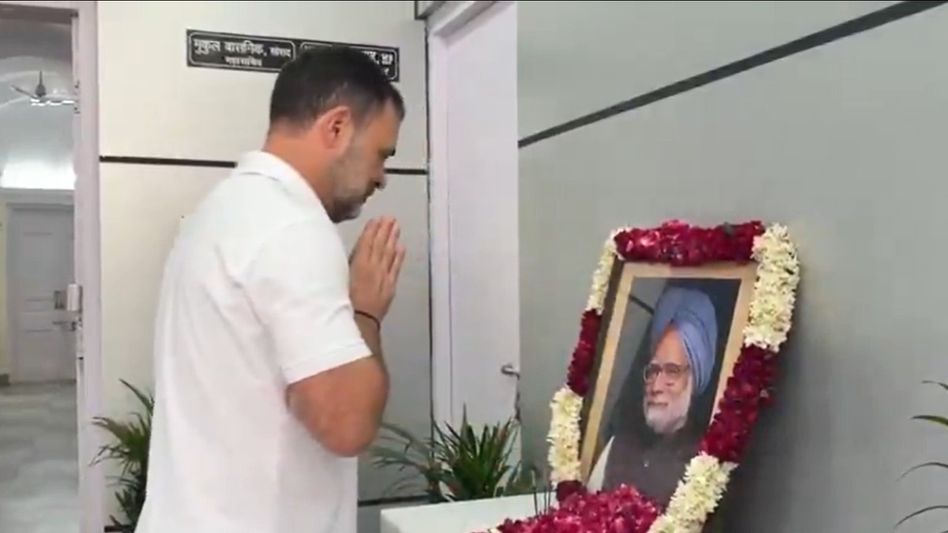
Congress on December 26 paid tributes to former Prime Minister Manmohan Singh on his first death anniversary, remembering him as a leader whose tenure reshaped India’s economy and strengthened democratic institutions.

- Dec 26, 2025,
- Updated Dec 26, 2025, 12:33 PM IST

Congress on December 26 paid tributes to former Prime Minister Manmohan Singh on his first death anniversary, remembering him as a leader whose tenure reshaped India’s economy and strengthened democratic institutions.
Singh, who died in Delhi on December 26, 2024, at the age of 92 following age-related medical complications, was cremated with full state honours at Nigambodh Ghat on December 28. Senior political leaders, family members and government dignitaries were present at the ceremony.
In a post on X, Congress said Singh’s leadership left a lasting imprint on the country. The party described him as a statesman of integrity and vision who served the nation with determination and humility, and credited him with reinforcing India’s economic foundations and democratic values.
Tributes also came from leaders across parties. Karnataka Deputy Chief Minister DK Shivakumar highlighted Singh’s role in pushing landmark legislations such as the Right to Information Act in 2005 and the Mahatma Gandhi National Rural Employment Guarantee Act, calling them measures that promoted transparency and dignity of labour. He said Singh’s leadership balanced economic reform with social responsibility.
Nationalist Congress Party (Sharadchandra Pawar) MP Supriya Sule referred to Singh as the architect of India’s economic reforms and a globally respected economist, while Maharashtra Deputy Chief Minister Ajit Pawar said the former Prime Minister’s life was defined by intellect, integrity and public service.
Born on September 26, 1932, Singh was a distinguished economist who served as Governor of the Reserve Bank of India from 1982 to 1985. As Finance Minister between 1991 and 1996, he led wide-ranging economic reforms that opened up the Indian economy and brought him international recognition.
Singh went on to serve as India’s 13th Prime Minister from 2004 to 2014. His tenure saw the rollout of major welfare and governance initiatives, including the National Rural Employment Guarantee Act, later renamed MGNREGA, and the Right to Information Act, both enacted in 2005.
After completing his second term, Singh stepped away from active public life. He was succeeded as Prime Minister by Narendra Modi following the 2014 general elections. For many, Singh remains closely associated with a decade marked by economic expansion, policy reform and a stronger global profile for India.
MORE NEWS










Copyright©2025 Living Media India Limited. For reprint rights: Syndications Today
