
Dense fog paralyzes Northern India, Delhi bears the brunt with mass flight cancellations
A thick blanket of fog continued to engulf large parts of northern India early Saturday, bringing air, rail and road transport to a near standstill across several states. The national capital emerged as the worst affected, with Delhi witnessing widespread disruption to daily life as visibility plunged to dangerously low levels.

- Dec 20, 2025,
- Updated Dec 20, 2025, 1:46 PM IST

- Fog halts northern India, Delhi worst hit with travel chaos.
- 129 flights canceled at Delhi airport due to low visibility.
- IMD issues orange alert for dense fog in Delhi.
A thick blanket of fog continued to engulf large parts of northern India early Saturday, bringing air, rail and road transport to a near standstill across several states. The national capital emerged as the worst affected, with Delhi witnessing widespread disruption to daily life as visibility plunged to dangerously low levels.
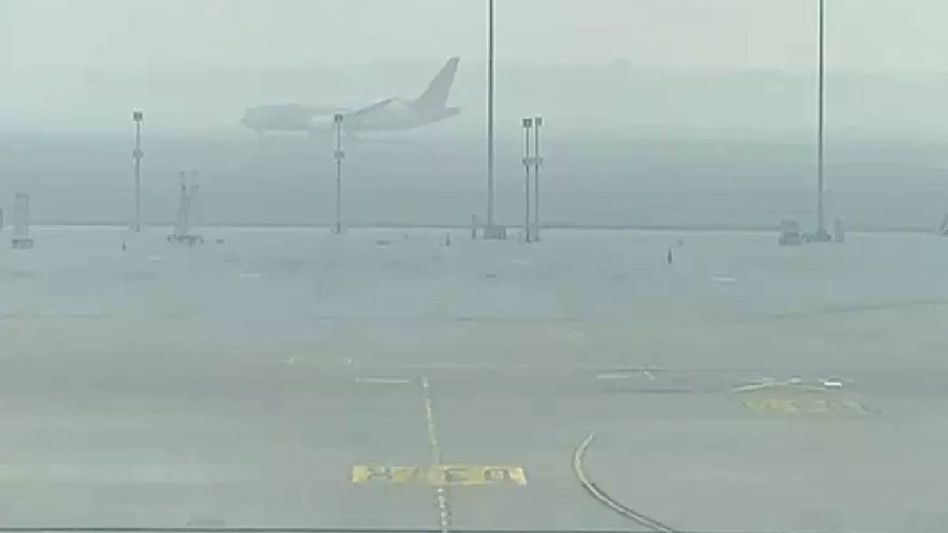
At the Indira Gandhi International (IGI) Airport, persistent low visibility forced the cancellation of as many as 129 flights during the early hours of the day. Airport sources confirmed that 66 arriving and 63 departing flights were cancelled, while several others were delayed or rescheduled as airlines struggled to cope with rapidly deteriorating weather conditions.
Operations at IGI Airport were conducted under CAT III low-visibility procedures, which allow limited aircraft movements during extreme fog. Despite these measures, flight tracking data showed significant delays across major carriers, including IndiGo, Air India, SpiceJet and Akasa. The lowest visibility recorded till 8.30 am stood at just 200 metres at Safdarjung and 350 metres at Palam, severely constraining flight operations.
On the ground, dense fog reduced visibility across major arterial roads and residential areas of Delhi, slowing vehicular movement and affecting commuters. The India Meteorological Department (IMD) issued an orange alert for the capital, warning of dense to very dense fog conditions persisting through the day. According to the weather office, fog is likely to intensify during early morning and late evening hours, raising the possibility of further disruptions to air, rail and road transport.
Delhi International Airport Ltd (DIAL) said Low Visibility Procedures had been in force since early morning and advised passengers to stay in touch with airlines for real-time updates. Travellers were cautioned against arriving at the airport without confirming flight status, as delays and cancellations were expected to continue.
Against the backdrop of widespread fog across northern India, the Ministry of Civil Aviation had earlier, on December 19, directed airlines to strictly adhere to passenger facilitation norms during low-visibility operations. The Directorate General of Civil Aviation (DGCA) has been tasked with ensuring compliance, particularly with regard to timely communication on delays, cancellations and diversions.
Under existing guidelines, airlines are required to provide meals, alternative travel arrangements or hotel accommodation in case of extended delays. Passengers affected by short-notice cancellations are entitled to either full refunds or alternate flights at no additional cost.
The impact of the fog was felt far beyond Delhi. At Dehradun Airport, flight operations were disrupted, while rail services across several northern states ran behind schedule due to near-zero visibility. Similar conditions were reported from Jammu, where thick fog disrupted both air and surface transport. The Meteorological Department has forecast rainfall in the plains and snowfall in the higher reaches of Jammu and Kashmir from Saturday evening, potentially worsening travel conditions.
In Bihar, fog led to delays and cancellations at Patna airport, while Punjab continued to reel under dense fog and biting cold. Hoshiarpur recorded the lowest temperature in the region at 4.8 degrees Celsius. Chandigarh also remained shrouded in fog, with visibility dropping sharply in several areas.
Uttar Pradesh witnessed similar conditions, with fog affecting normal life in multiple districts. The iconic Taj Mahal in Agra was partially obscured, while poor visibility was reported from Kanpur and Mathura amid prevailing cold wave conditions.
Adding to Delhi’s woes, air quality remained alarmingly poor. According to data from the Central Pollution Control Board (CPCB) recorded at 7 am, the city’s overall Air Quality Index (AQI) stood at 376, categorised as “very poor.” Several hotspots, including ITO, Vivek Vihar, Anand Vihar, Jahangirpuri, Nehru Nagar and Wazirpur, reported AQI levels exceeding 400, placing them in the “severe” pollution category and raising fresh public health concerns.
MORE NEWS











Copyright©2025 Living Media India Limited. For reprint rights: Syndications Today
