
Gaurav Gogoi questions the rationale behind linking of delimitation with women’s quota rollout
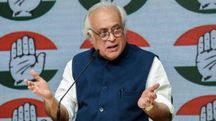
Congress MP Gaurav Gogoi on April 16 questioned the rationale behind tying delimitation to the rollout of the women’s quota, alleging a shift in the government’s earlier position.


- Apr 16, 2026,
- Updated Apr 16, 2026, 1:16 PM IST

Congress MP Gaurav Gogoi on April 16 questioned the rationale behind tying delimitation to the rollout of the women’s quota, alleging a shift in the government’s earlier position. He said the Centre had previously indicated that both the census and delimitation would be undertaken after 2024, but was now linking them directly to the implementation of the reservation policy. He reiterated that the Congress has consistently supported women’s reservation, while criticising the delay in conducting the national census.
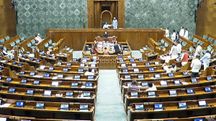
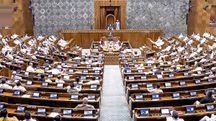
A political confrontation unfolded in the Lok Sabha as the Centre’s decision to link the implementation of the Women’s Reservation framework with the census and delimitation exercise drew sharp criticism from the Opposition, even as the government defended the sequencing as part of a constitutional process.
Responding to the concerns, Union Law Minister Arjun Ram Meghwal said the Women’s Reservation framework, passed in 2023, would be implemented only after the completion of the census and the subsequent delimitation exercise.
He outlined that the proposal includes an increase in the strength of the Lok Sabha to 815 seats, of which 272 seats — one-third — would be reserved for women. Meghwal asserted that the delimitation process would not reduce representation for any state and that existing seat strengths would be safeguarded.
The ongoing three-day sitting of Parliament from April 16 to 18 has seen the government table a set of key legislations, including the Women’s Reservation Bill, the Constitution (131st Amendment) Bill, the Union Territories Laws (Amendment) Bill, and the Delimitation Bill. Meghwal initiated the debate in the Lok Sabha, setting the stage for a high-stakes legislative contest.
With the National Democratic Alliance holding 292 seats in the Lok Sabha against the Opposition’s 233, the requirement of a two-thirds majority has placed the focus firmly on numbers. The arithmetic has intensified political negotiations, even as both sides maintain firm positions on the provisions.
Prime Minister Narendra Modi described the move as a “historic step” towards women’s empowerment. However, Opposition parties, while backing the principle of reservation for women, have opposed the inclusion of delimitation as a precondition, alleging that it could have political implications.
The disagreement has extended beyond Parliament, with protests reported in several parts of the country. Tamil Nadu Chief Minister M. K. Stalin has led demonstrations against the delimitation provisions, while members of the INDIA bloc continued their protests inside Parliament during the proceedings.
MORE NEWS





Copyright©2026 Living Media India Limited. For reprint rights: Syndications Today
