
SC warns of heavy compensation, fixes responsibility on authorities and dog feeders for stray dog attacks
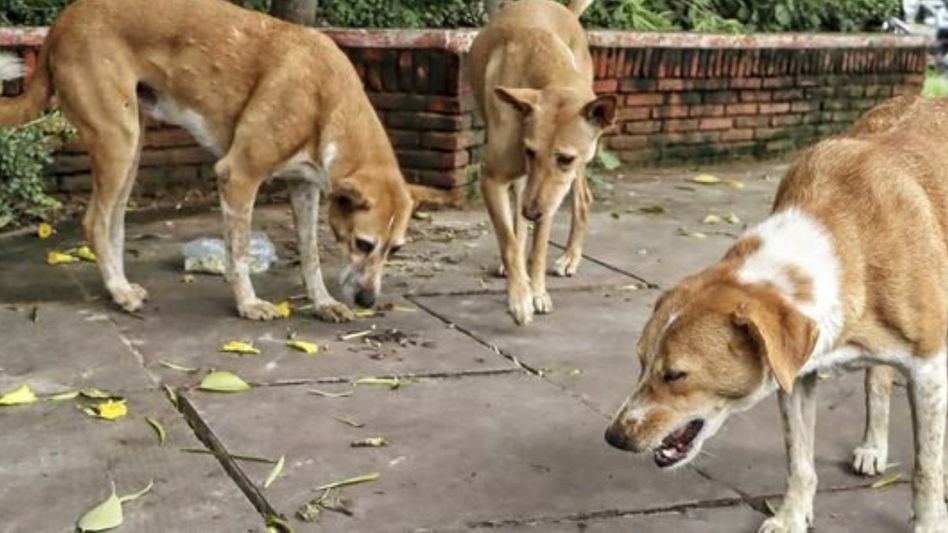
The Supreme Court on January 13 indicated that it may hold both civic authorities and dog feeders accountable for injuries or deaths caused by stray dog attacks, observing that public safety cannot be compromised in the name of animal welfare.

- Jan 13, 2026,
- Updated Jan 13, 2026, 2:12 PM IST

The Supreme Court on January 13 indicated that it may hold both civic authorities and dog feeders accountable for injuries or deaths caused by stray dog attacks, observing that public safety cannot be compromised in the name of animal welfare.
Hearing a suo motu case on the issue of stray dogs, a bench comprising Justices Vikram Nath, Sandeep Mehta and N.V. Anjaria said that those who claim concern for stray dogs should take responsibility for them rather than allowing the animals to roam public spaces and endanger citizens.
The bench cautioned that heavy compensation could be imposed on the state for failing to act, while liability could also be fixed on individuals or groups feeding stray dogs.
“For every dog bite, death or injury, particularly involving children or the elderly, we are likely to fix heavy compensation on the state for inaction. At the same time, those who say they are feeding dogs must take responsibility. Take them to your homes. Why should dogs be allowed to loiter around, bite and scare people?” Justice Nath observed. Justice Mehta questioned who should be held accountable when a child is attacked, adding that the Court could not turn a blind eye to the problem.
The bench was monitoring compliance with its November order directing local authorities to remove stray dogs from institutional and high-footfall areas such as bus stands, railway stations, hospitals, schools and campuses. It had also directed that such dogs be vaccinated and sterilised under the Animal Birth Control (ABC) Rules and not released at the same locations.
Animal rights organisations subsequently sought modification of the order, objecting to the embargo on re-releasing dogs at the same spots. Senior Advocate Arvind Datar, appearing for one such organisation, defended the November order, arguing that it was consistent with statutory provisions and that no new expert committee was required as sufficient material was already on record. He contended that stray dogs have no legal right to occupy institutional premises or public spaces meant for human use and that relocating them back would amount to animal trespass. Datar also referred to concerns over feral dogs in wildlife areas such as Ladakh, stating that large populations posed a serious threat to endangered species.
The Court noted that the issue had extended even to court premises, with Justice Mehta referring to a recent dog bite incident at the Gujarat High Court and observing that municipal staff attempting to capture a dog were allegedly attacked by “so-called dog lovers”.
On the other hand, animal welfare advocates urged the Court to adopt a balanced approach. Senior Advocate Vikas Singh argued that the issue should be viewed from an ecological perspective, while Senior Advocate Pinky Anand cautioned against solutions that could amount to culling, pointing to inadequate infrastructure and limited ABC centres as underlying problems. Senior Advocate Menaka Guruswamy described the matter as emotionally charged, prompting the bench to remark that emotions appeared to be directed only towards dogs, while public safety concerns were being overlooked.
Justice Nath urged all stakeholders to allow the Court to hold authorities accountable and initiate corrective measures, noting that prolonged inaction had aggravated the problem. Justice Mehta remarked that the proceedings were beginning to resemble a public forum rather than a courtroom.
The bench also heard submissions suggesting the need for a proper census of stray dogs, though it observed that population claims without verified data were unrealistic. A dog-bite survivor, Kamna Pandey, shared her experience of being attacked years ago and later adopting the same dog, underscoring the role of fear-induced aggression and advocating a more holistic approach to management.
The hearing has been posted for further consideration on January 20.
MORE NEWS











Copyright©2026 Living Media India Limited. For reprint rights: Syndications Today
