Tear gas, lathi-charge as CJP's 'Chalo Sansad' march turns violent; founder Abhijeet Dipke detained
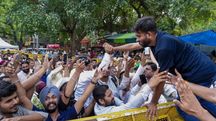
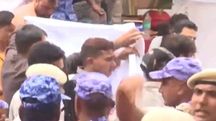
The Cockroach Janta Party's (CJP) "Chalo Sansad" march turned violent in central Delhi on Monday, July 20, after thousands of protesters attempted to march towards Parliament, prompting police to use tear gas and lathi-charge to disperse the crowd. CJP founder Abhijeet Dipke was also detained by the Delhi Police.
 Photo: PTI
- Jul 20, 2026,
- Updated Jul 20, 2026, 3:06 PM IST

The Cockroach Janta Party's (CJP) "Chalo Sansad" march turned violent in central Delhi on Monday, July 20, after thousands of protesters attempted to march towards Parliament, prompting police to use tear gas and lathi-charge to disperse the crowd. CJP founder Abhijeet Dipke was also detained by the Delhi Police.
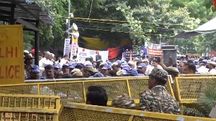
Large parts of central Delhi witnessed chaos as protesters broke through multiple barricades and tried to enter high-security zones near Parliament. Clashes erupted at several locations, including Parliament Street, Constitution Club, Patel Chowk, Shastri Bhawan and the RBI building, leaving some protesters and police personnel with minor injuries.
According to the CJP, Dipke was taken into custody during the protest. Party spokesperson Saurav Das alleged that police used force against peaceful demonstrators and appealed to Members of Parliament to support the protesting students.
Thousands of protesters, including students, marched through central Delhi, navigating inner lanes and regrouping after being stopped by security personnel. Many carried the national flag and raised slogans such as "Bharat Mata Ki Jai", "Vande Mataram" and "Dharmendra Pradhan Istifa Do", demanding accountability over the alleged NEET-UG 2026 paper leak and the resignation of Union Education Minister Dharmendra Pradhan.
Security was significantly tightened across the New Delhi district, with additional police personnel and paramilitary forces deployed to prevent protesters from reaching Parliament. Several metro station gates in the area were also closed, leaving commuters stranded, while internet services were suspended in parts of central Delhi as a precautionary measure.
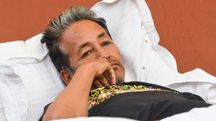
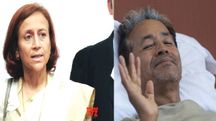
Meanwhile, activist Sonam Wangchuk, who is undergoing treatment at Safdarjung Hospital, sought permission from the hospital authorities to temporarily leave the facility to participate in the march, stating that he was feeling well. However, hospital authorities said his blood parameters continued to require close medical observation despite his vital signs remaining stable.
The protests also echoed inside Parliament, where both the Lok Sabha and the Rajya Sabha witnessed repeated disruptions as Opposition members demanded a discussion on the alleged examination irregularities and the ongoing agitation.
Speaking during the protest, Dipke reiterated the CJP's demands, calling for the resignation of the Union Education Minister, compensation of ₹1 crore to the families of students who allegedly died by suicide over examination-related issues, and the immediate release of Wangchuk.
The CJP later claimed that the government had reached out for talks and that two of its spokespersons would meet Union Minister J. P. Nadda to present the organisation's demands. There was no official confirmation from the government on the proposed meeting.
Opposition leaders, including Congress MP Shashi Tharoor and Aam Aadmi Party chief Arvind Kejriwal, criticised the government's handling of the protests, with Kejriwal urging the Centre to engage with the students instead of resorting to force.
The CJP has been leading protests over the alleged NEET-UG 2026 paper leak, demanding accountability, reforms in the examination system and action against those responsible.