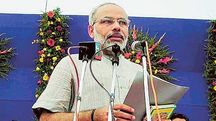
Tribute: Sanjit ‘Bunker’ Roy, the visionary who made rural India believe in its own capabilities
India's rural development movement has lost one of its most influential institution builders with the passing of Sanjit ‘Bunker’ Roy on November 10, 2026, at the age of 81. Remembering his remarkable contribution, social work educator and development practitioner Professor Venkat Rao Pulla reflects on how Roy transformed the understanding of rural knowledge, technology and community-led development.
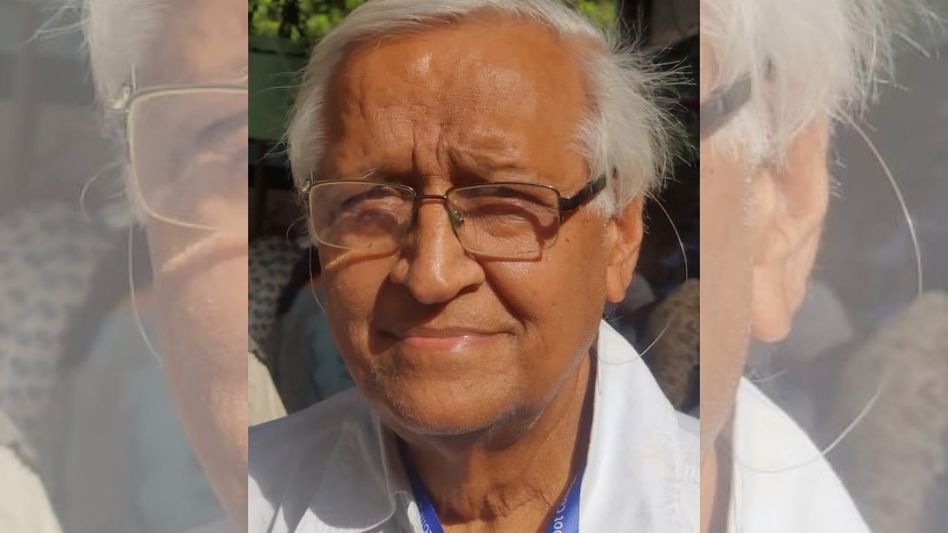

- Nov 14, 2026,
- Updated Nov 14, 2026, 2:18 PM IST

India's rural development movement has lost one of its most influential institution builders with the passing of Sanjit ‘Bunker’ Roy on November 10, 2026, at the age of 81. Remembering his remarkable contribution, social work educator and development practitioner Professor Venkat Rao Pulla reflects on how Roy transformed the understanding of rural knowledge, technology and community-led development.
In 1972, Roy established the Social Work and Research Centre (SWRC) at Tilonia in Rajasthan, which later became internationally known as Barefoot College. What began as a rural development experiment grew into a pioneering model that brought together traditional knowledge, appropriate technology and community participation.
One of Roy's most significant contributions was his belief that formal education and professional qualifications should not be the sole measures of knowledge or competence. He recognised that rural communities possessed generations of practical wisdom and technical skills that could be harnessed to address their own challenges.
Barefoot College put this philosophy into practice by training local people as solar engineers, health workers, teachers, water technicians and community development practitioners. Its internationally recognised Solar Mamas initiative trained rural women, including grandmothers with little or no formal education, to become solar engineers. They returned to their villages to install and maintain solar systems, bringing electricity and new opportunities to remote communities across the world.
Roy's approach also demonstrated how independent community-based organisations could work constructively with government agencies, philanthropic organisations and international development partners while retaining their grassroots identity.
Tilonia gradually evolved into a centre of rural innovation, bringing together initiatives in education, water conservation, renewable energy, healthcare, livelihoods, crafts and community communication. Its distinctive craft traditions, including colourful parrot artefacts and traditional metal bells, reflected the creativity of rural artisans and the importance of linking local skills with sustainable livelihoods.
Another notable initiative was Tilonia Radio, which operated at 90.4 MHz. It provided rural communities with information on government schemes, education, healthcare, water, employment and local affairs, while offering a platform for folk traditions and community voices.
From a modest village in Rajasthan, Roy's model attracted women from Asia, Africa and Latin America, who travelled to Tilonia to learn practical skills and returned to their communities as trainers and leaders. His contributions received several national and international recognitions, including the Padma Shri in 1986, the Skoll Award for Social Entrepreneurship in 2005 and a place on TIME magazine's list of the 100 most influential people in 2010.
Roy's life and work were also closely associated with his wife, Aruna Roy, whose contributions to public service, transparency and social justice have been significant in India's civil society movement. Professor Pulla also acknowledged the contributions of the colleagues, rural workers, artisans, trainers and community leaders who helped build the Tilonia experiment.
Reflecting on Roy's legacy, Professor Pulla said his work held particular significance for the social work profession, demonstrating that people should be recognised as active participants and holders of knowledge rather than passive recipients of welfare and development programmes.
He noted that the Barefoot College experience continued to offer important lessons in rural development, women's empowerment, sustainable livelihoods, appropriate technology and participatory institution building, particularly at a time when India was focusing on skill development, renewable energy, self-reliance and inclusive growth.
Professor Pulla also shared a personal connection with Roy, recalling that early in his professional journey, the late Professor M S Gore, then Director of the Tata Institute of Social Sciences (TISS), had recommended that he work with Roy. However, an academic opportunity in his hometown of Hyderabad took his career in a different direction.
He said he had often reflected on the opportunity that remained unfulfilled and felt a deep sense of loss following Roy's passing.
Years later, Professor Pulla was honoured when Aruna Roy presented him with a Lifetime Achievement Award, a moment he described as particularly cherished in his professional life and one that gave the tribute a deeper personal significance.
“Bunker Roy did not merely establish a college. He helped establish a different understanding of who can teach, who can lead, who can innovate and who can shape the future of development,” Professor Pulla said.
He added that Roy's enduring faith in the capabilities of ordinary people would continue to inspire generations of social workers, educators, development practitioners and community leaders.