
A Gateway to Europe: How the India-EU Trade Pact Opens New Horizons for Assam
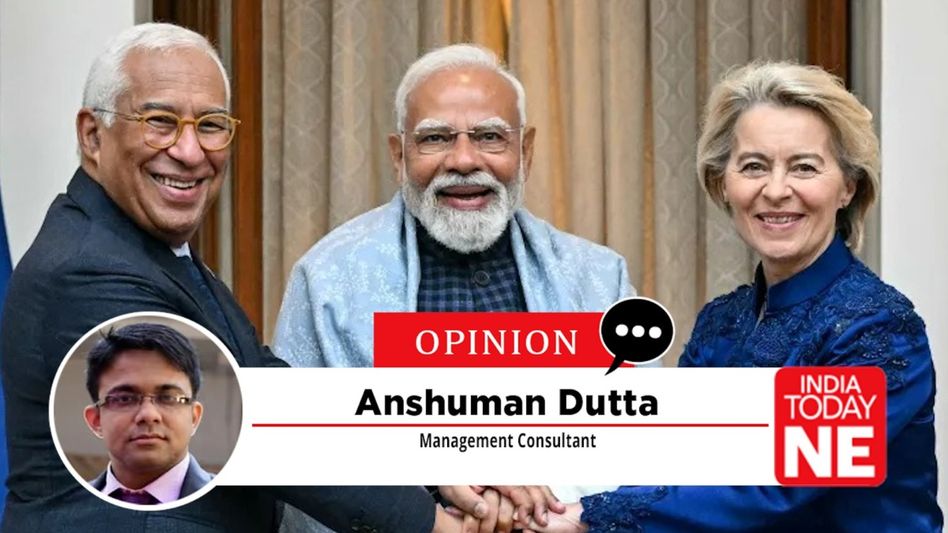
On January 27, 2026, India and the European Union concluded what EU Commission President Ursula von der Leyen aptly called “the mother of all deals.” After nearly two decades of painstaking negotiations, this historic free trade agreement creates the world’s largest trading bloc by population, encompassing 1.9 billion people and representing a quarter of global GDP.

- Jan 29, 2026,
- Updated Jan 29, 2026, 11:06 AM IST

On January 27, 2026, India and the European Union concluded what EU Commission President Ursula von der Leyen aptly called “the mother of all deals.” After nearly two decades of painstaking negotiations, this historic free trade agreement creates the world’s largest trading bloc by population, encompassing 1.9 billion people and representing a quarter of global GDP. While the national implications are profound, the agreement holds particular promise for India’s northeastern states, especially Assam, which stands at the threshold of an unprecedented economic opportunity.
The numbers tell a compelling story. Bilateral trade, currently at $136.5 billion, is targeted to reach $200 billion by 2030. The EU will eliminate tariffs on over 90% of Indian exports, while India reciprocates by reducing or eliminating tariffs on 96.6% of EU goods. More critically, the deal will cut up to €4 billion ($4.7 billion) in annual tariffs for exporters, making Indian products significantly more competitive in European markets. For a state like Assam, whose export potential has long been constrained by geographical remoteness and infrastructure gaps, this represents a transformative moment.
Assam’s Natural Advantages
Assam possesses several unique competitive advantages that align perfectly with European market preferences. First and foremost is tea. As the world’s largest tea producer, Assam accounts for more than half of India’s tea exports. The elimination of EU tariffs will make Assamese tea even more competitive against rivals from Kenya, Sri Lanka, and China. European consumers, who increasingly prioritize single-origin, premium teas, represent an expanding market for Assam’s orthodox and specialty teas. The zero-duty access under the FTA could potentially add hundreds of millions of dollars to the state’s tea export revenues.
Beyond tea, Assam holds a near-monopoly in the production of Muga silk, accounting for approximately 95% of global output. This golden silk, unique to Assam, has no synthetic substitute and represents the kind of authentic, luxury product that European markets increasingly seek. The FTA’s provision for zero duties on textiles creates an unprecedented opportunity for Assam’s silk weavers and the broader handloom sector. The state’s Eri and Mulberry silk varieties, along with traditional weaving techniques, can find premium positioning in European fashion and home textile markets.
The agreement’s timing is particularly fortuitous given global consumer trends. European buyers are prioritizing sustainable, ethically produced goods. Assam’s organic spices - ginger, turmeric, and the renowned Bhut Jolokia ghost pepper, along with its bamboo handicrafts, align perfectly with these preferences. The state’s bamboo sector, which currently supports thousands of rural livelihoods, could see significant expansion as European demand for eco-friendly products grows.
The Employment Dividend
The social implications of expanded trade access extend far beyond export statistics. The Indian government estimates that the textile sector alone could generate six to seven million jobs nationally under the FTA. For Assam, where underemployment remains a persistent challenge, particularly in rural areas, the multiplication of opportunities in tea gardens, silk weaving, handicraft production, and food processing could be transformative.
Consider the ripple effects. A tea garden that secures better European prices can employ more pluckers during peak season. A silk weaver cooperative that gains direct access to European boutiques can afford to train more apprentices. A spice processing unit that exports to the EU can invest in better machinery, creating jobs in packaging, logistics, and quality control. These are not abstract projections but concrete pathways to inclusive growth.
Critically, many of these opportunities are concentrated in labor-intensive sectors that have historically provided livelihoods to Assam’s women. The handloom and handicraft sectors, in particular, have been important sources of economic independence for women in rural Assam. Enhanced market access could strengthen these traditional economic roles while creating new opportunities in value addition, design, and marketing.
Navigating the Challenges
However, translating potential into reality will require deliberate policy interventions. Assam’s export infrastructure remains underdeveloped. The state’s distance from major ports, Kolkata is over 1,000 kilometers away, adds significant time and cost to exports. While Assam has land customs stations with Bangladesh and Bhutan, these have not been optimized for commercial trade. Developing the Jogighopa and Dhubri multimodal logistics parks, improving rail and road connectivity to Kolkata and Haldia ports, and establishing proper cold chain facilities for perishable exports should be immediate priorities.
Quality certification poses another challenge. European markets have stringent standards for pesticide residues, organic certification, and geographical indication protection. Assam’s tea and silk already have GI tags, but many small producers lack the resources to obtain necessary certifications. The state government, in partnership with the Tea Board of India and the Central Silk Board, must establish accessible testing and certification facilities. Cluster-based approaches, where small producers are grouped for collective certification, could make compliance more manageable.
Financial access remains a persistent bottleneck. Small tea growers, silk weavers, and spice farmers often lack the working capital to fulfill large orders or the collateral to secure export financing. Public sector banks must develop specialized products for exporters, potentially with partial guarantees from the state government. The government’s Trade Receivables Discounting System (TReDS) platform should be actively promoted to help small exporters manage cash flow.
Perhaps most fundamentally, Assam’s exporters need market intelligence. Understanding European consumer preferences, regulatory requirements, distribution channels, and competitive dynamics requires sophistication that many small producers lack. The state’s industries department should establish a dedicated EU market development cell, potentially in partnership with the India Trade Promotion Organisation, to provide this crucial information and facilitate buyer-seller connections.
Beyond Traditional Exports
While Assam’s traditional products offer immediate opportunities, the FTA also creates space for more ambitious ventures. The agreement includes provisions for easier mobility of skilled workers and students, opening possibilities for Assamese professionals in sectors where the EU faces labor shortages. Assam’s burgeoning startup ecosystem, particularly in agritech and food processing, could attract European investment and technology partnerships.
The state’s position as India’s gateway to Southeast Asia takes on new significance in this context. As trade between Europe and ASEAN countries continues to grow, Assam could position itself as a logistics and processing hub, adding value to goods moving between these major economic blocs. The state’s three land customs stations with Bangladesh and Bhutan could be upgraded to facilitate triangular trade arrangements.
Petroleum and natural gas, where Assam is India’s third-largest producer, represent another avenue. While energy products face complex regulatory environments in Europe, there are opportunities in specialized petrochemicals and value-added derivatives that could benefit from reduced tariff barriers.
The Moment to Act
The India-EU Free Trade Agreement represents more than an economic opportunity; it is a chance to fundamentally reorient Assam’s economic geography. For too long, the state’s location on India’s eastern periphery has been viewed as a disadvantage. This agreement offers an opportunity to transform that narrative, positioning Assam as a bridge between South Asia, Southeast Asia, and Europe.
However, opportunities unaccompanied by action remain merely potential. The state government must move quickly to establish the infrastructure, financial mechanisms, and institutional support that exporters need. This is not a moment for incremental adjustment but for ambitious, coordinated action across multiple ministries and departments.
The private sector, too, must rise to the occasion. Trade associations representing tea, textiles, handicrafts, and food processing should immediately begin engaging with European trade bodies and buyers. Individual enterprises should invest in understanding European standards, obtaining certifications, and developing products tailored to European tastes.
The scale of this agreement creating a free trade zone encompassing 1.9 billion people means that competition for European market share will be intense. Other Indian states with stronger infrastructure and more developed export ecosystems will move aggressively to capture opportunities. Assam cannot afford to be a passive observer in this competitive landscape.
Yet Assam has genuine comparative advantages products that no other region can replicate, a strategic location at the crossroads of multiple growing markets, and a rich cultural heritage that resonates with European consumers’ growing preference for authentic, sustainable products. The question is not whether Assam can benefit from the India-EU FTA, but whether the state’s political leadership, business community, and civil society can mobilize with sufficient speed and coordination to seize a historic opportunity. The next few years will provide the answer, and the stakes could not be higher for Assam’s economic future.
MORE NEWS












Copyright©2026 Living Media India Limited. For reprint rights: Syndications Today
