A Hundred Years of Belonging: Rampur Anchalik Rangali Bihu at Its Centenary
There are festivals, and then there are institutions. The centenary of the Rampur Anchalik Rangali Bihu Utsav, to be celebrated from April 13 to 17, 2026 at the Rampur Bihu Toli under the aegis of the Rampur Anchalik Rangali Bihu Shataborsha Udjapon Samiti, belongs unequivocally to the latter.

- Apr 13, 2026,
- Updated Apr 13, 2026, 4:24 PM IST

There are festivals, and then there are institutions. The centenary of the Rampur Anchalik Rangali Bihu Utsav, to be celebrated from April 13 to 17, 2026 at the Rampur Bihu Toli under the aegis of the Rampur Anchalik Rangali Bihu Shataborsha Udjapon Samiti, belongs unequivocally to the latter. It is not merely a commemoration of a hundred years of festivity, it is a reaffirmation of a living cultural system that has, across generations, sustained community, identity, and continuity in Assam.
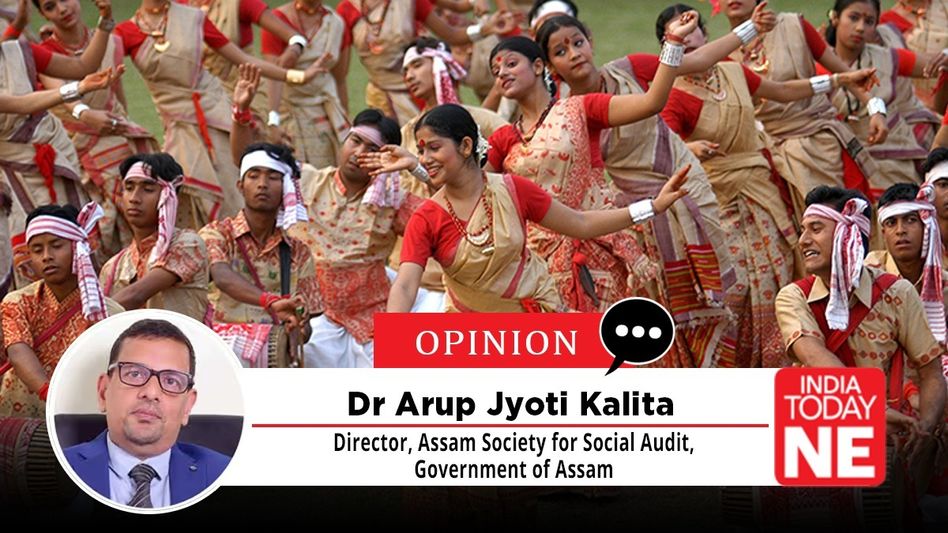
Founded in 1926 in the socio-cultural landscape of Rampur, South Kamrup, the Rampur Bihu emerged at a time when indigenous expressions like Rongali Bihu were being questioned, even marginalised, by sections of an emergent colonial-educated middle class. What some dismissed as rustic excess, the founders recognised as civilisational wealth. By institutionalising Bihu in a public, collective space, they did something profoundly democratic: they reclaimed culture for the people.A century later, that decision resonates with renewed urgency.
At the heart of this year’s centenary celebration lies a conscious effort to bridge the past and the present. The programme, expansive in both vision and design, draws from the deep reservoirs of folk traditions i.e. Ojapali, Dhuliya, Chaitali Naam, Bihu Naam while simultaneously introducing new cultural interventions aimed at engaging a rapidly changing generation. This duality is not incidental; it is essential. For Bihu, as a living tradition, has always thrived on its ability to negotiate continuity and change.
One of the most symbolically powerful inclusions in the centenary programme is the formal and centralised observance of Goru Bihu on April 14. While Goru Bihu has always been integral to the Assamese agrarian calendar, its ceremonial elevation within the centenary framework is both timely and profound. The ritual bathing and worship of cattle, the congregation of livestock rearers, and the recognition of exemplary farmers are not mere acts of tradition, they are acts of cultural remembrance.In an era where the distance between people and the sources of their sustenance is widening, Go-Bihu serves as a vital reminder of Assam’s ecological and agrarian ethos. The cow, in the Bihu worldview, is not just livestock; it is a partner in cultivation, a symbol of sustenance, and a marker of rural prosperity. By foregrounding Go-Bihu, the Rampur centenary reasserts an ethical relationship between humans, animals, and the land, an ecological consciousness that modernity often risks eroding.
Equally significant are the new cultural interventions that seek to engage younger generations through contemporary idioms without diluting the core of Assamese identity. Among these, the music competitions themed around the works of Bhupen Hazarika and Zubeen Garg stand out as inspired additions.The inclusion of these two towering figures is not merely a tribute; it is a strategic cultural bridge. Bhupen Hazarika, with his timeless compositions rooted in humanism, riverine civilisation, and social justice, represents the philosophical depth of Assamese cultural expression. Zubeen Garg, on the other hand, embodies its contemporary dynamism - fluid, experimental, and deeply connected to popular sentiment. By instituting competitions around their music, the organisers are effectively creating a continuum: from the lyrical soul of the past to the vibrant pulse of the present.
Such initiatives carry deeper implications. They position Bihu not just as a site of performance, but as a pedagogic spacewhere cultural literacy is cultivated, where young voices reinterpret inherited traditions, and where identity is negotiated through participation rather than passive inheritance.
The centenary programme, as outlined, also reflects a broader understanding of Bihu as a composite social institution. Traditional sports like hudukudu and tug-of-war, state-level marathons, community Bihu workshops, exhibitions, and the unfurling of one hundred Bihu flags collectively transform the festival into a space of social cohesion. These are not peripheral activities; they are integral to the Bihu ethos, where celebration and community-building are inseparable.
The publication of Rangili, the souvenir brought out on the occasion of the Rampur Anchalik Rangali Bihu, is itself a testament to this tradition of cultural self-documentation. Year after year, Rangili has captured local voices, local histories, and local creative expression a living archive of what Bihu means to the people of this region.
What makes the Rampur Bihu particularly remarkable is its historical role as a cultural equaliser. For a hundred years, it has brought together people across caste, class, and creed, creating a shared public sphere rooted in participation and mutual recognition. In doing so, it has quietly but consistently strengthened the social fabric of the region.
Today, as Assam navigates the complexities of globalisation, digital transformation, and shifting socio-economic realities, the relevance of such institutions becomes even more pronounced. The threats to indigenous culture are no longer overt; they are subtle, embedded in homogenised media consumption, migration, and the gradual erosion of community life. In this context, festivals like the Rampur Anchalik Rangali Bihu are not relics of the past, they are instruments of cultural resilience.
The centenary, therefore, is not just a moment of pride; it is a moment of responsibility. It compels us to ask: how do we carry this legacy forward? How do we ensure that Bihu remains both authentic and adaptive? How do we engage a generation that is as global in its outlook as it is local in its roots?The answer perhaps lies in the very spirit that has sustained Rampur Bihu for a hundred years, a spirit of collective ownership, cultural confidence, and openness to evolution.
As the dhol echoes once again across the Rampur Bihu Toli, as husori troupes move in Rampur ‘mukali bihu’, as cattle are bathed in ceremonial reverence, and as young voices rise in song, old and new - we are reminded that Bihu is not merely celebrated. It is lived.And in choosing to live it, year after year, generation after generation, the people of Rampur have ensured that this is not just a centenary of a festival. It is a centenary of belonging.