
A Life Lost to Prejudice: The Death of Anjel Chakma and the Question of Identity in India
Anjel Chakma's death has brought to light the discrimination faced by indigenous communities in India. The incident calls for urgent action to promote social harmony and protect minority rights

- Jan 04, 2026,
- Updated Jan 04, 2026, 2:47 PM IST

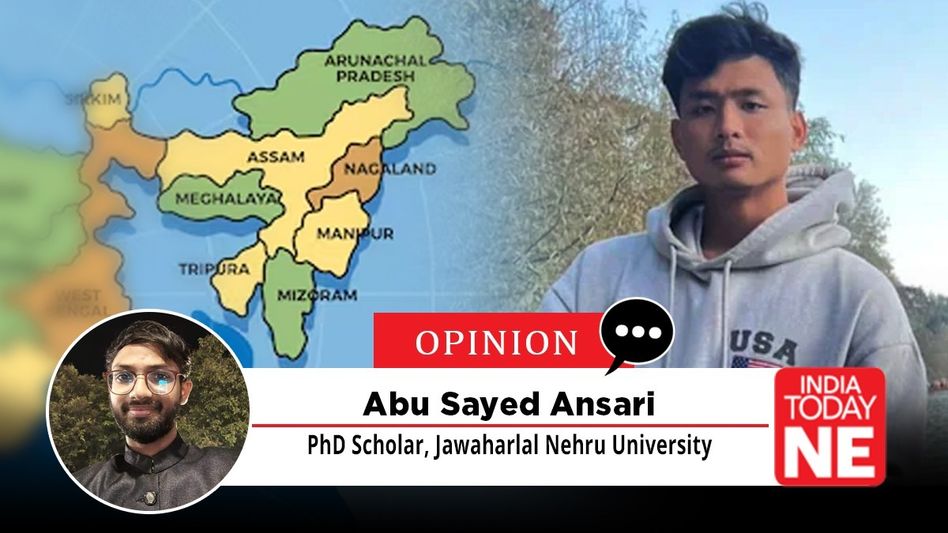
The death of Anjel Chakma, a young student from India’s North-Eastern region, has caused profound grief and an unsettling silence. More than the loss of a young life, the incident forces us to confront a difficult but essential question: how does everyday Indian society perceive and respond to differences of identity, physical appearance, and regional belonging?
Anjel Chakma was enrolled in an MBA programme in Dehradun, Uttarakhand, far from his home state of Tripura. Like many young Indians, he had moved across the country in pursuit of education, personal development, and improved prospects. His experience shows the ideals of a contemporary India, where students routinely cross regional, linguistic, and cultural boundaries to seek opportunity. Tragically, this journey came to an abrupt end.
Those who knew Anjel recall him as a quiet and hardworking student who is committed to his studies. Living in Dehradun for academic purposes, he was exploring life in a new city with an adjustment to unfamiliar surroundings and a different cultural environment, which is a transition that many students experience when they leave home for the first time.
On the evening of 9 December 2025, Anjel and his brother were reportedly involved in an altercation near their residence. What began as a disagreement escalated into violence that left Anjel with serious injuries. Despite medical treatment, he later passed away. The incident sent shockwaves through student communities across the country, particularly among students from the North-Eastern states.
While the legal process continues, the social implications of this tragedy demand attention, not with anger or blame, but with careful reflection and responsibility.
Anjel Chakma’s case has reminded the nation that words, attitudes, and assumptions matter. What may appear insignificant to one person can deeply affect another, especially in unfamiliar surroundings.
At the centre of this tragedy is a concern that always remains overlooked: prejudice rooted in physical appearance and regional identity. Such bias does not always take the form of open hostility. More commonly, it is expressed subtly through assumptions, stereotypes, jokes, or casual comments. Over time, these everyday attitudes can promote distance, discomfort, and misunderstanding.
Many citizens from North-Eastern states recount being asked questions like, “Where are you really from?” or being mistaken for foreigners because of their physical features. Even when no harm is intended, such encounters can leave individuals feeling excluded, unrecognised, or compelled to justify their belonging within their own country.
For students studying away from their home states, daily life requires continuous adjustment. They must adapt to unfamiliar languages, food practices, social customs, and expectations. Educational hubs such as Dehradun draw students from across the country, creating a vibrant mix of cultures while also underscoring the importance of mutual sensitivity.
In such settings, educational institutions, host communities, and students alike share the responsibility of ensuring that diversity becomes a source of learning rather than unease. Practices of respectful communication, patience, and openness are essential to prevent everyday differences from turning into deeper misunderstandings.
Angel’s death serves as a reminder that young people living away from home require not only academic support, but also emotional safety and social inclusion.
In the aftermath of the incident, students and members of the community came together to hold peaceful candlelight gatherings in several cities. These were not expressions of anger or confrontation, but collective moments of solidarity. Those present remembered Anjel as a student, a son, and a brother, not merely as a statistic or a victim.
These gatherings showed a shared call for unity and understanding rather than division. Many participants stressed the need for compassion, dialogue, and greater awareness in addressing social differences.
Educators and social commentators have also drawn attention to the role of schools, universities, and families in shaping attitudes toward diversity. They argue that respect for difference must be nurtured from an early age through education that encourages empathy, sensitivity, and cultural awareness.
India is among the most diverse societies in the world, created by a wide range of cultures, languages, and traditions. From the North-East to the South, from hill regions to the plains, each part of the country contributes in its own way to the national fabric.
Yet diversity also carries responsibility. It calls upon citizens to listen, learn, and adapt. It requires that difference be approached with openness rather than suspicion, and with respect rather than judgment.
The loss of Anjel Chakma urges society to ask an important question: Are we doing enough to make every Indian feel equally accepted, regardless of appearance or origin?
Preventing such tragedies does not depend solely on laws or institutions. It depends equally on social awareness. Conversations about diversity, regional history, and cultural understanding must move beyond textbooks and into everyday life.
Educational institutions can play an important role by encouraging intercultural interaction, providing support systems for students from different regions, and promoting inclusive campus environments. Host communities, too, can benefit from greater exposure to India’s internal diversity.
Simple acts such as respectful language, willingness to listen, and openness to difference, can significantly reduce misunderstanding and tension.
It is necessary that Anjel Chakma’s death does not become a source of further division or hostility. Instead, it should serve as a moment of collective reflection. The aim must not be to point fingers, but to ask how society can grow kinder, safer, and more understanding.
Tragedies many a times reveal weaknesses within social structures. They also offer an opportunity to improve. Remembering Anjel means committing to human dignity, empathy, and shared responsibility.
Anjel Chakma’s life was brief, but his story has touched many. He represents countless young Indians who leave home with dreams of education and contribution. Honouring his memory means ensuring that future students can pursue their goals without fear, isolation, or misunderstanding.
National unity is not measured only by borders or symbols, but by how citizens treat one another in daily life. When respect becomes habitual and understanding becomes natural, tragedies like this can be prevented.
The loss of Anjel Chakma reminds us that every life matters and that building a truly inclusive society requires effort, empathy, and continuous learning from all.
MORE NEWS












Copyright©2026 Living Media India Limited. For reprint rights: Syndications Today
