A Tale of Two Roles: Politician or Businessman?
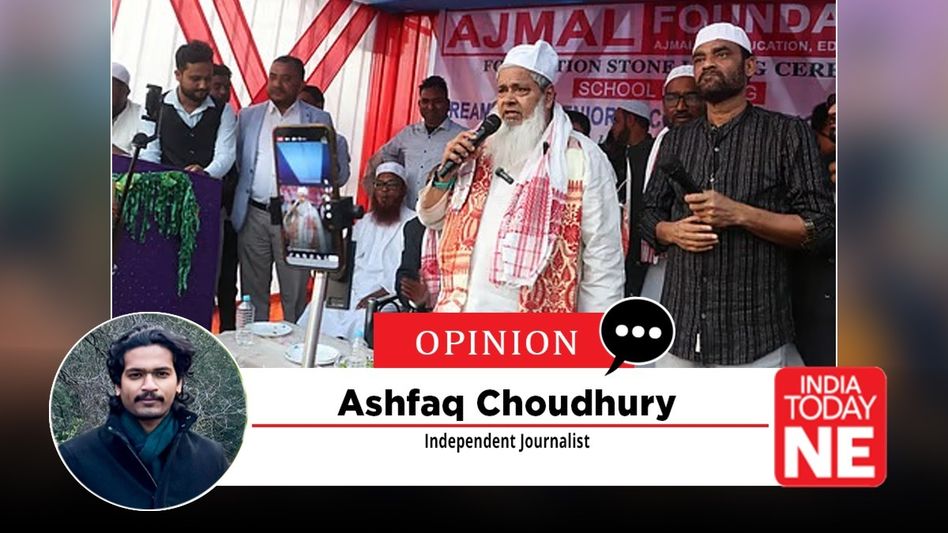
Former Dhubri MP and current Binnakandi MLA, Maulana Badruddin Ajmal, has never shied away from commenting on films he believes carry political or communal implications.

- Jun 30, 2026,
- Updated Jun 30, 2026, 5:14 PM IST

Former Dhubri MP and current Binnakandi MLA, Maulana Badruddin Ajmal, has never shied away from commenting on films he believes carry political or communal implications.
In 2022, he strongly opposed the release of The Kashmir Files, calling for the film to be banned and arguing that it could deepen social divisions. His position echoed that of several opposition leaders, including Asaduddin Owaisi, who has often shared political platforms with Ajmal.
Fast forward to 2026.
The trailer of Dhurandar sparked a similar wave of criticism from many opposition politicians, minority leaders, and commentators. Asaduddin Owaisi reportedly dismissed it as "bakwas" and accused it of being propaganda. Social media was flooded with debates over the film's political messaging.
Yet one voice was notably absent: Badruddin Ajmal's.
The silence became even more intriguing when, during the film's release week, its lead actor, Ranveer Singh, was announced as the brand ambassador for Ajmal Perfumes—Ajmal's internationally recognised fragrance business.
There is no evidence that these two developments are connected. However, the timing inevitably raises questions. Was this merely a coincidence, or did business interests encourage political restraint? In public life, perception often carries as much weight as reality.
Ajmal has built two distinct identities over the years. One is that of a businessman who transformed Ajmal Perfumes into a global brand. The other is that of a politician who has consistently projected himself as a defender of Assam's minorities. The challenge arises when these two identities appear to intersect.
If a leader is vocal against one film because it allegedly harms a community, but remains silent on another that attracts similar criticism while simultaneously entering into a commercial partnership with its lead actor, people are bound to ask whether the standards being applied are consistent. This is not an accusation; it is a question of political consistency.
Politics demands conviction. Business demands pragmatism. When the two coexist in the same individual, difficult questions are inevitable. In Ajmal's case, the question is whether his political positions remain independent of his commercial interests or whether business sometimes dictates when politics should speak, and when it should remain silent.
For someone who has long presented himself as a guardian of minority interests, this silence deserves scrutiny. Ultimately, voters must decide which Badruddin Ajmal they see more clearly: the politician committed to a cause, or the businessman who knows precisely when silence serves his interests best.
(The views expressed in this article are those of the author and do not necessarily reflect the views of India Today NE or its affiliates.)