Anarchy Is Not Dissent: Why Peaceful Protest Still Works
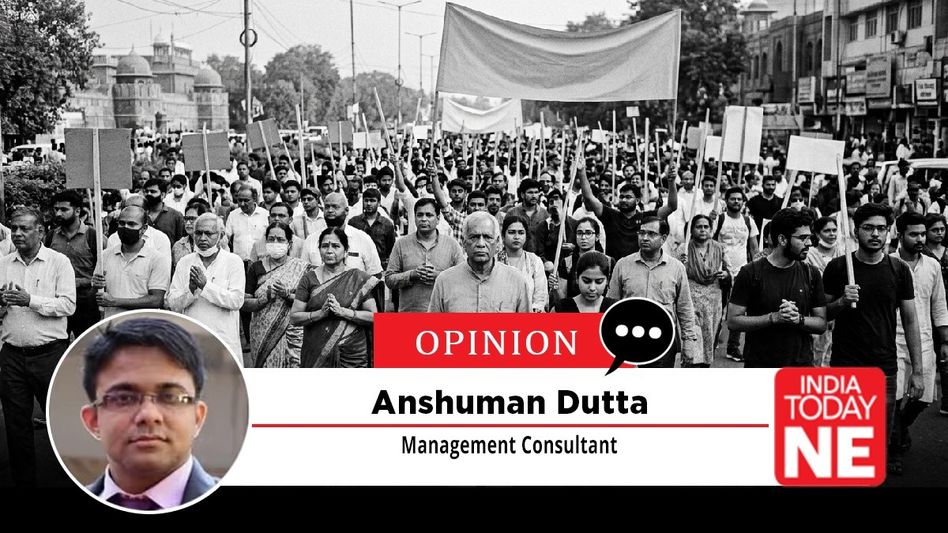
Peaceful, organised protest is the one form of pressure that has reliably made Indian governments listen, and the past weeks has shown why that case needs making again.

- Oct 25, 2026,
- Updated Oct 25, 2026, 3:17 PM IST

Peaceful, organised protest is the one form of pressure that has reliably made Indian governments listen, and the past weeks has shown why that case needs making again.
In remarks reported on 15 October, YouTuber Dhruv Rathee asked what a government could do if the police or the Army raised their voice together, or resigned at once. He framed the appeal as Ambedkar's call to educate, agitate and organise. Few days later, Shiv Sena (UBT) MP Sanjay Raut posted on X that the people of Albania had burned down their Supreme Court for helping corrupt prime ministers, and that every country, India especially, should learn from it. Raut has since said he has faith in the Supreme Court. His party colleague Priyanka Chaturvedi said the lesson was to respect the judicial system. Reports differ on where the fire in Tirana actually began.
Both men called for anarchy in India in so many words. The trouble is the logic. When an institution disappoints, the argument runs, pressure should come from breaking it or turning its guns around. That logic appeals because courts, commissions and police forces do fail people. It is dangerous because nothing in it stops at the institution you dislike.
Start with what a burned court achieves. Whatever brought people onto the streets of Tirana, whether corruption, joblessness or schooling, a damaged courthouse answers none of it. It removes a forum, and the forum matters most to those with the least power: the detained, the evicted, the small party, the citizen suing the state. Every opposition eventually needs a court it can walk into. India's opposition is in one right now, arguing the electoral roll revision before a Supreme Court bench.
The record favours patience. Political scientists Erica Chenoweth and Maria Stephan studied hundreds of campaigns between 1900 and 2006 and found that nonviolent ones succeeded roughly twice as often as violent ones, largely because they draw wider participation. India's own history agrees. The Salt March, the campaign that produced the Right to Information Act in 2005, and the year of largely peaceful farmer sit-ins that ended with three farm laws repealed in 2021 all rested on a crowd's moral authority. One burning vehicle can hand the state the story.
Inviting the armed forces into the argument is the most serious error. A government that falls because soldiers and police stopped obeying it has not been replaced by the people. It has been replaced by whoever holds the weapons, and a force that learns its voice decides governments will not unlearn it. Pakistan, Myanmar and Egypt are the cautionary tales. Grievances over pay and working hours in the police are real and can be pressed through associations, commissions and courts. Mutiny is a whole different thing.
Peaceful protest also places duties on the state, and recent weeks have tested them. Delhi Police refused permission for the 10 October gathering at Jantar Mantar, and Al Jazeera reported more than 2,000 people detained, including opposition politicians, journalists and lawyers. Rathee says he was held for 22 to 23 hours without access to a lawyer. Delhi Police say he was released at 3 am the next morning. A government that makes lawful protest impractical hands the case for the street to people who would not otherwise make it. Permitted venues, no pre-emptive mass detentions and prompt access to counsel are what make peaceful dissent a realistic choice.
Critics owe the same discipline. Judges can and should be criticised. But a charge built on a false claim hurts the cause it was meant to serve. The photographs said to show judges playing badminton in London were, according to the Supreme Court Bar Association, taken at a stadium in Delhi, and the Attorney General called the claim false. That gives institutions a reason to answer the messenger instead of the message.
The tools that work are slower and less thrilling: petitions, litigation, RTI filings, sustained campaigns and, in the end, the ballot. They also leave courts and commissions standing for the next grievance, which will come. Anyone who wants a government held to account should want institutions that survive the argument. The fire in Tirana is a story about a country in distress, not a template. India's template is already written. It is a march that stays peaceful, a demand that stays specific, and a state that stays willing to hear it.
The views expressed in this article are those of the author and do not represent the positions of any organization, employer, or publication with which the author is affiliated.
Anshuman Dutta is an analyst covering Northeast India politics, policy, and geopolitics. He is a member of the Forbes Communications Council and writes forIndia TodayNE, The Assam Tribune, nenow.in, and Free Press Journal, Dy365. He hosts The Meridian Dialogue, an independent leadership interview series.