
Assam’s move against APSC coaching ads raises a larger question
If a civil service rank can double as advertising space, the meaning of merit itself begins to change. The real question then is not who cleared the examination, but who owns the story of that success.

- Mar 09, 2026,
- Updated Mar 09, 2026, 3:08 PM IST

When toppers become billboards, civil service preparation risks turning into a marketplace of fear, aspiration and profit.
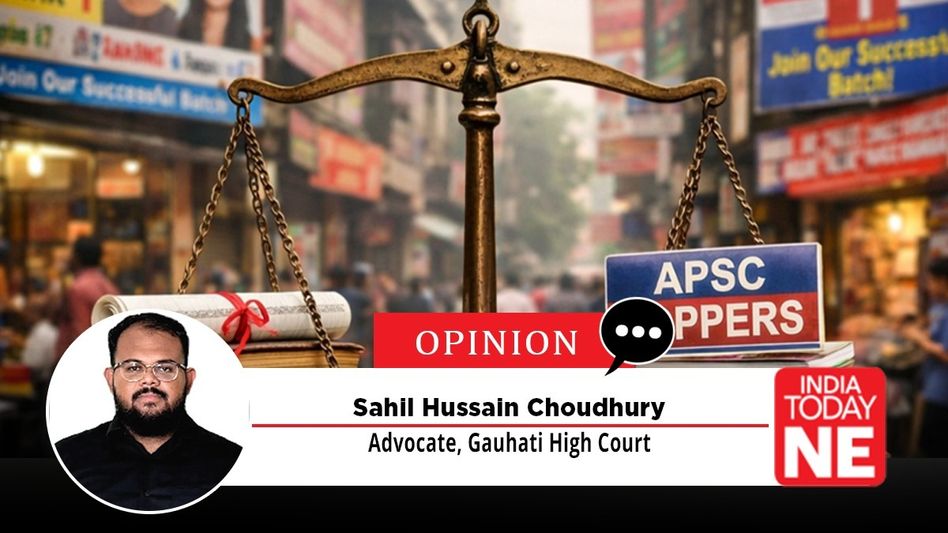
On 4 March 2026, Assam Chief Minister Himanta Biswa Sarma directed coaching centres to withdraw advertisements featuring successful APSC candidates within a week and urged newly appointed officers not to allow their names or photographs to be used for promotional gain. At first glance, the directive may appear to be a routine administrative intervention aimed at coaching institutes. In reality, it touches a deeper question that India has long avoided confronting: when did success in a public examination begin to resemble a marketing campaign?
Every year, within hours of civil service results being announced, a familiar spectacle unfolds. Posters appear across coaching hubs and social media pages celebrating “our student.” Promotional interviews surface online. Sometimes, the same rank holder appears in advertisements of multiple institutes, each claiming a share of the achievement. What should be the culmination of years of individual labour quickly becomes a commercial story.
The candidate disappears behind the brand.
For millions of aspirants watching from small towns and villages, the message is unmistakable. Success begins to appear as something produced by an institute rather than earned through years of discipline and persistence. Gradually, the public understanding of merit itself begins to shift: effort becomes invisible while branding becomes visible.
Anyone who has spent time inside the civil services preparation ecosystem knows that the reality is very different. Preparing for these examinations is rarely glamorous. It is a long and often lonely journey of reading the same books repeatedly, rewriting notes, failing preliminary examinations, missing interview lists and beginning again with stubborn determination. Many aspirants spend years in small rented rooms with little certainty about the future. For middle-class families across India, preparation becomes a collective investment of time, savings and emotional hope.
Success, when it finally arrives, belongs first to that perseverance.
Yet the moment results are declared, that personal journey is often absorbed into a commercial narrative. Institutes present the candidate as proof of their teaching method, their strategy or their guidance. The implication may not always be stated openly, but the effect is unmistakable: the institute, not the individual, begins to look central to the story.
Anyone who has walked through Delhi’s civil services hubs such as Mukherjee Nagar or Old Rajinder Nagar can see how deeply this perception has taken root. Entire neighbourhoods revolve around aspirants. Coaching advertisements compete for attention, each institute promising a slightly sharper method or a slightly better strategy.
The costs behind this ecosystem are central to how it sustains itself. In major centres, civil services coaching programmes often cost between one and two lakh rupees for a single course, excluding rent, books and living expenses. For many families, this becomes one of the most consequential financial decisions they make.
Coaching itself is not inherently the problem. Many institutes do provide structure, mentorship and access to useful study material. The difficulty begins when guidance slowly turns into monopoly and aspiration turns into marketing.
Advertisements featuring toppers create a powerful psychological effect. For a student beginning preparation in Assam, Manipur, Meghalaya or Nagaland, such images quietly suggest that success without coaching may be impossible.
This perception today is reinforced through a growing media ecosystem built around civil service success. Coaching institutes regularly organise “topper talks”, podcasts and interview guidance sessions where newly selected candidates narrate their preparation journey. Short clips from these conversations are widely circulated on social media and often presented as evidence of the institute’s role in producing the result.
For a newcomer watching these videos, the impression can be powerful. The selected candidate appears confident, articulate and intellectually refined. What remains largely invisible is the long process behind that transformation — years of reading, failure, self-doubt and persistence. In a few minutes of edited footage, perseverance is compressed into performance.
This is where the ethical question becomes impossible to ignore.
Civil service aspirants spend months studying ethics, integrity and public responsibility as part of the examination itself. They write essays about conflicts of interest, accountability and the moral obligations of public officials. Yet soon after the results are declared, some successful candidates allow their names and photographs to appear in advertisements endorsing coaching institutes.
The contradiction is difficult to miss.
If the study of ethics does not survive the first moment of professional success, it raises an uncomfortable question about what that learning really meant.
The ethics paper teaches that public office requires independence from private influence. But when a rank becomes promotional material, the line between public achievement and private marketing begins to blur. Even when such endorsements are made out of gratitude, the public message remains troubling: merit appears to have a sponsor.
For aspirants who already struggle with limited financial resources, this signal can quietly shape belief. Preparation begins to look less like an intellectual pursuit and more like entry into an expensive ecosystem. The fear of falling behind without coaching becomes stronger.
The industry’s influence extends far beyond the classroom. It shapes expectations, and expectations shape decisions.
At times, the pressures within this ecosystem have surfaced in deeply troubling ways. In July 2024, three UPSC aspirants died after the basement of a coaching centre in Delhi’s Old Rajinder Nagar flooded during heavy rainfall. The tragedy forced a national conversation about the conditions in which thousands of aspirants live and study and about the rapid expansion of the coaching economy with limited oversight.
The concerns, however, had already begun to attract regulatory attention. Earlier in 2024, the Union government introduced guidelines aimed at regulating coaching centres, while the Central Consumer Protection Authority issued Guidelines for Prevention of Misleading Advertisements in the Coaching Sector, acknowledging the growing problem of deceptive promotional practices by coaching institutes.
Seen against this broader background, Assam’s directive assumes greater significance. By asking coaching institutes to remove advertisements featuring successful candidates, the state has challenged a practice that has quietly become normal across the country.
The directive is not an attack on coaching itself. Guidance and mentorship will always play a role in any competitive examination system. What the decision questions is the culture of claiming ownership over individual success.
A civil service rank is not the product of a marketing strategy. It belongs to the candidate who spent years reading, revising and persevering despite uncertainty. It belongs to intellectual labour and personal discipline.
More importantly, it belongs to a public system that still promises social mobility through education.
This promise carries particular meaning in regions such as the Northeast, where civil service examinations often represent one of the few pathways through which education can transform a life. When success stories from these regions are quickly absorbed into national coaching advertisements, the candidate’s own journey risks disappearing behind a brand.
Assam’s intervention therefore matters not because it will instantly transform the coaching industry, but because it raises a necessary question: who should receive credit for merit?
Civil service examinations were designed to ensure that knowledge, not privilege, determines entry into public administration. They were meant to keep the doors of opportunity open to anyone willing to work hard enough to pass through them.
If those doors begin to resemble a marketplace, the credibility of the system itself begins to weaken.
Assam’s directive reminds us of something simple that has gradually been forgotten. A rank earned through years of perseverance is not a commodity.
It is a recognition of effort. And it should remain exactly that.
A public examination was meant to reward learning, not to manufacture advertising material.
MORE NEWS












Copyright©2026 Living Media India Limited. For reprint rights: Syndications Today
